>Dark Clouds: Looking Back at Security Preparations for the G20

>

States are not moral agents, people are, and can impose moral standards on powerful institutions.

~ Noam Chomsky
Wars, foreign policies, economic meltdowns, immigration laws, state of the union addresses, military budgets, pomp, closed door meetings, state secrets, police forces, fear, all point to what Jesus referred to as the Kingdom of the World. It is a world of “power over” others, as Greg Boyd describes in his book, The Myth of a Christian Nation. Power clings to power, wealth builds protection around itself, and for good reason. Those without power, without wealth, sometimes what to tear down, or at minimum call into question, power and wealth. And for good reason as well. Power over others inevitably leads to cruelty and death, to loss of fundamental rights and freedoms, and to official lies and false promises.
“Power over” also produces tactics of self-protection, including violence and overwhelming force.
A lot of people claim to like or even love Jesus. I would guess that many, maybe most, of those people also cling to and justify kingdom of the world ideologies. We have a tendency to seek security and comfort. We we often give up many freedoms as long as we are promised personal peace and prosperity. We like the example of Jesus, but all too often fall into the trap of believing in the safety of “power over” social structures. Sometimes, however, people rise up to challenge “power over” assumptions.
The first three videos below, from Press for Truth, were made in the weeks prior to the recent G20 Summit that took place in Toronto. The fourth video documents some actions at the summit, including members of the Black Bloc causing property damage, and large numbers of police harassing protesters in the official protest zone. The fourth video also asks the question of whether disguised police infiltrated the Black Bloc and helped to lead some of the riots in order to justify other police actions and an enormous security budget. The news reported that the protest riots got out of hand at the summit. Hundreds of people were arrested.
I find these reports fascinating.
Clearly, the use of violence is exactly not in the tradition of Jesus. In fact, the Black Bloc is committed to a “power over” position as much as the bankers of the WTO or the IMF, or the police forces they so love to hate. Their use of violence, regardless of anything else they might say, gives them away. But the others, those that seek a new paradigm through peaceful protest (that is designed to publicly call into question the prevailing ideologies), are living, at least in part, within the tradition of Jesus – even if they would never call themselves Christian or darken the door of a church.

Climbing Mount Thielsen

The mountains will always be there, the trick is to make sure you are too.
~ Hervey Voge
The three rules of mountaineering:
  1. It’s always further than it looks.
  2. It’s always taller than it looks.
  3. And it’s always harder than it looks.
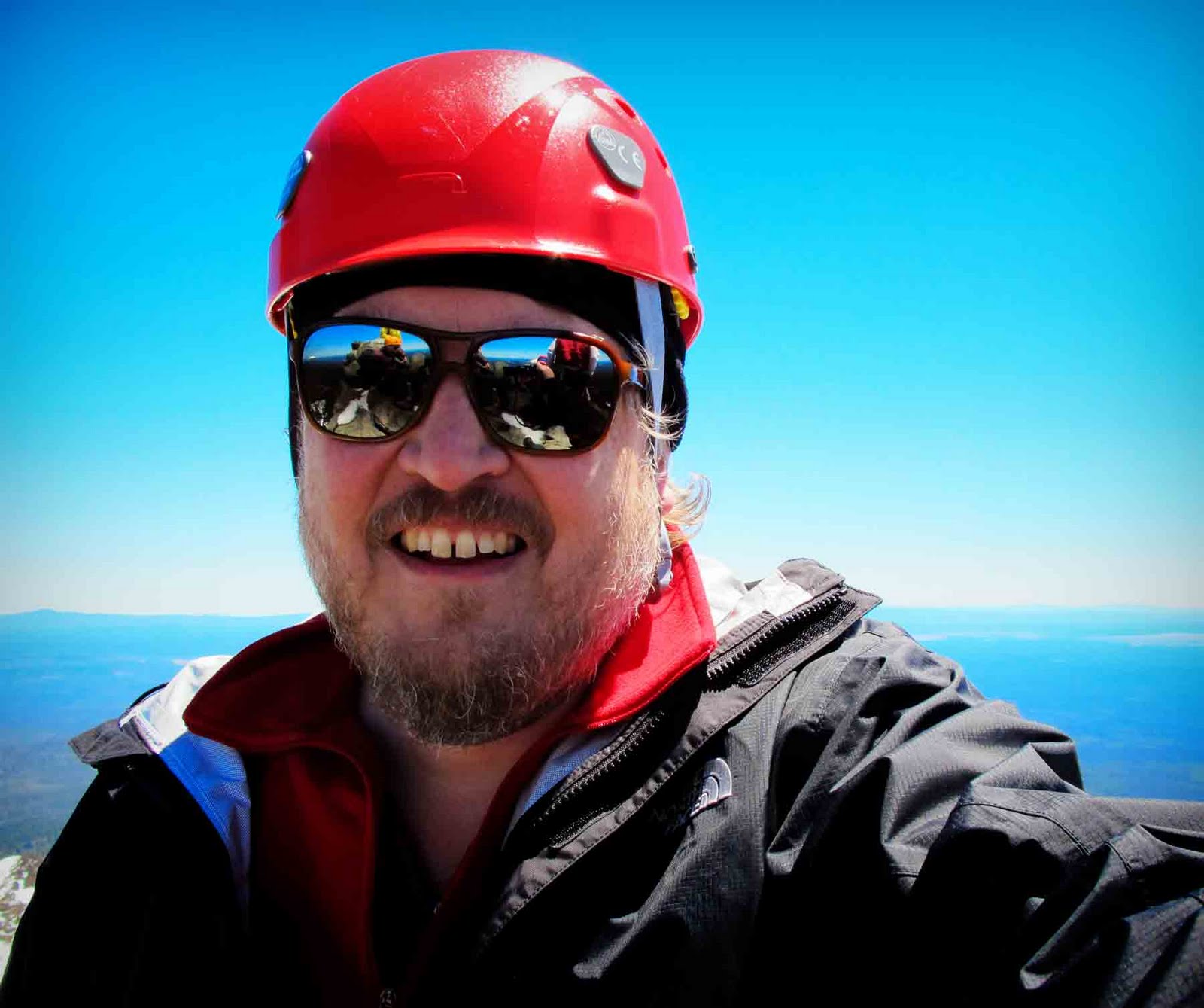
This past weekend I summited Mount Thielsen. This was the first real summit for me in many years and it became a test of my endurance and will. Climbing mountains is something I love, but in recent years my climbing trailed off and shifted to reading climbing stories and getting out of shape – the summits beckoned from the couch but the couch won out. Finally I got off the couch.
This climb was both a test of my current capabilities and, I hope, a jump start to more of the same. In short, I want to get back into climbing and climbing shape and, I have the say, I’ve got a long ways to go.

We arrived at the trailhead on Friday around 10PM and set up our tents in the dark. The sunset on Mount Bailey was beautiful. I crawled into the tent and began getting my gear sorted for the next day. I was not sure what I was going to need so I stared at my choices for a while and then decided I would make the final choice in the morning. The night was cool but not terribly cold, probably got down to about 30 degrees. I read some of Thomas Mann’s The Magic Mountain (not trying to be ironic) and then listened to my iPod – Arvo Pärt for a while and then John Zorn, and then I fell into an uneasy sleep. I don’t usually sleep on the ground and I was anxious about the climb.

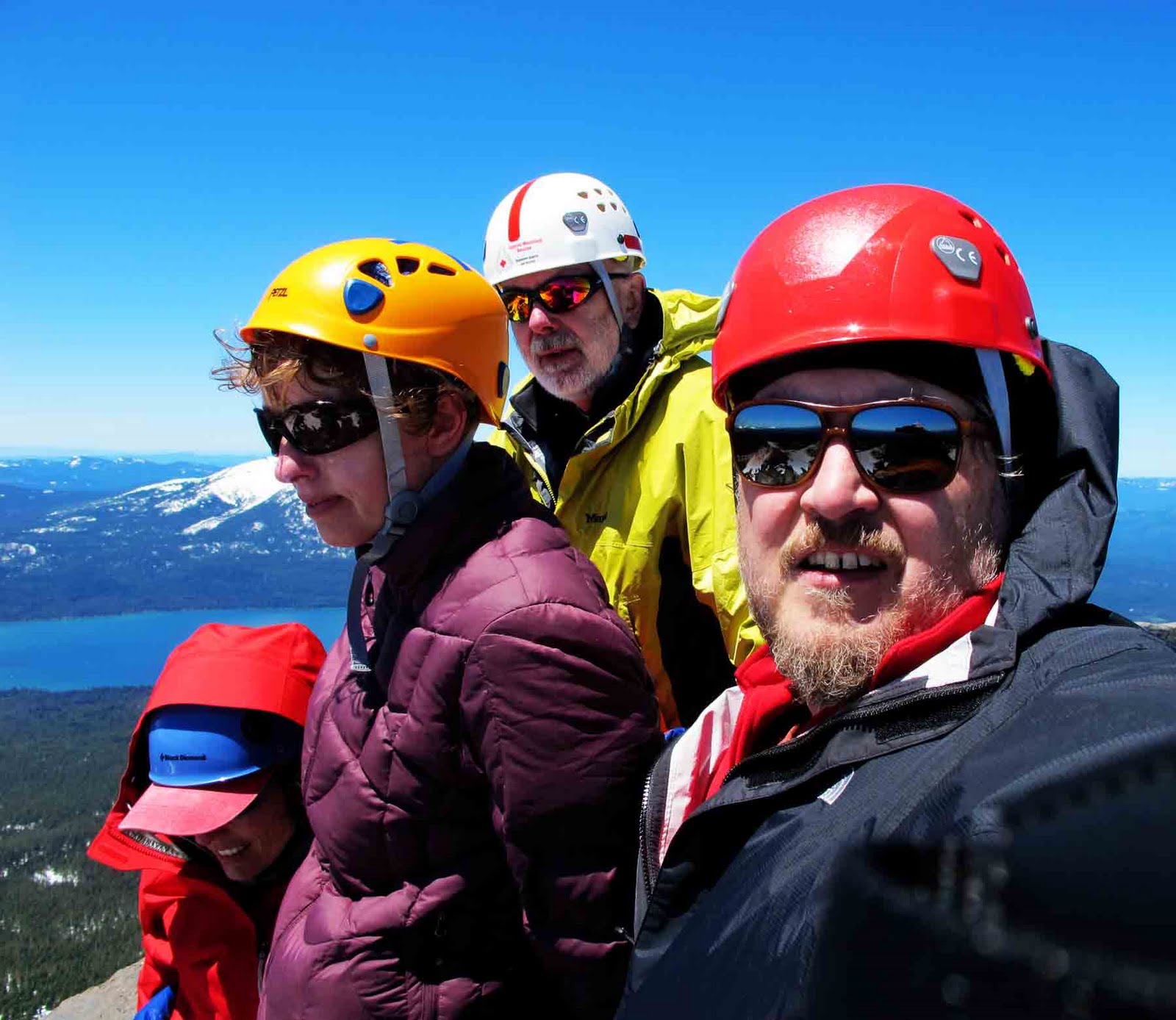
In the morning I opted for a cold breakfast of a Cliff bar and water. I decided not the bring my crampons since no one else was. Our climb coordinator/leader was Wayne from The Obsidians – a Eugene-based outdoor group that organizes hikes and climbs and other trips. The others were Bob, Wendy, and Chrissy.

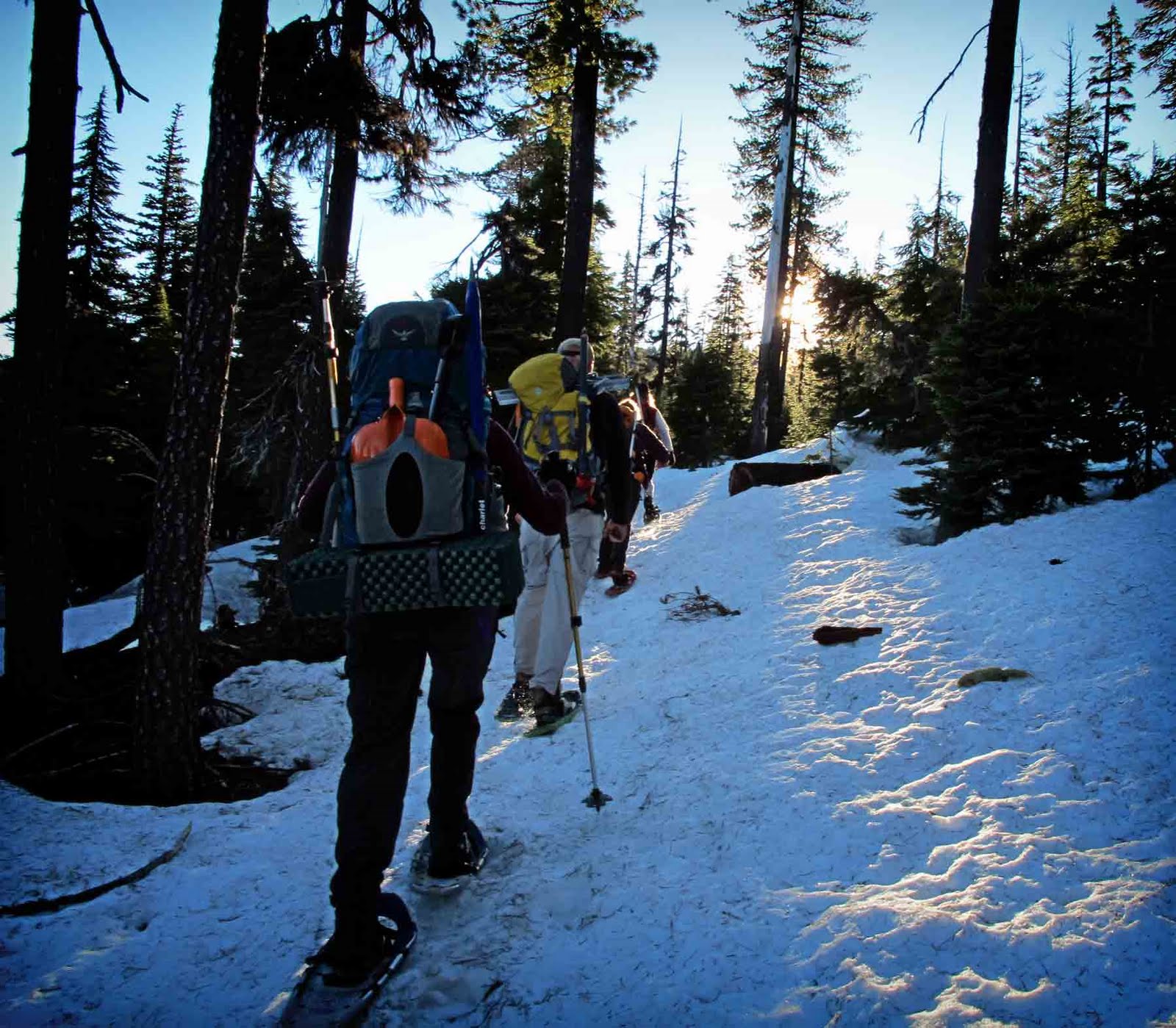
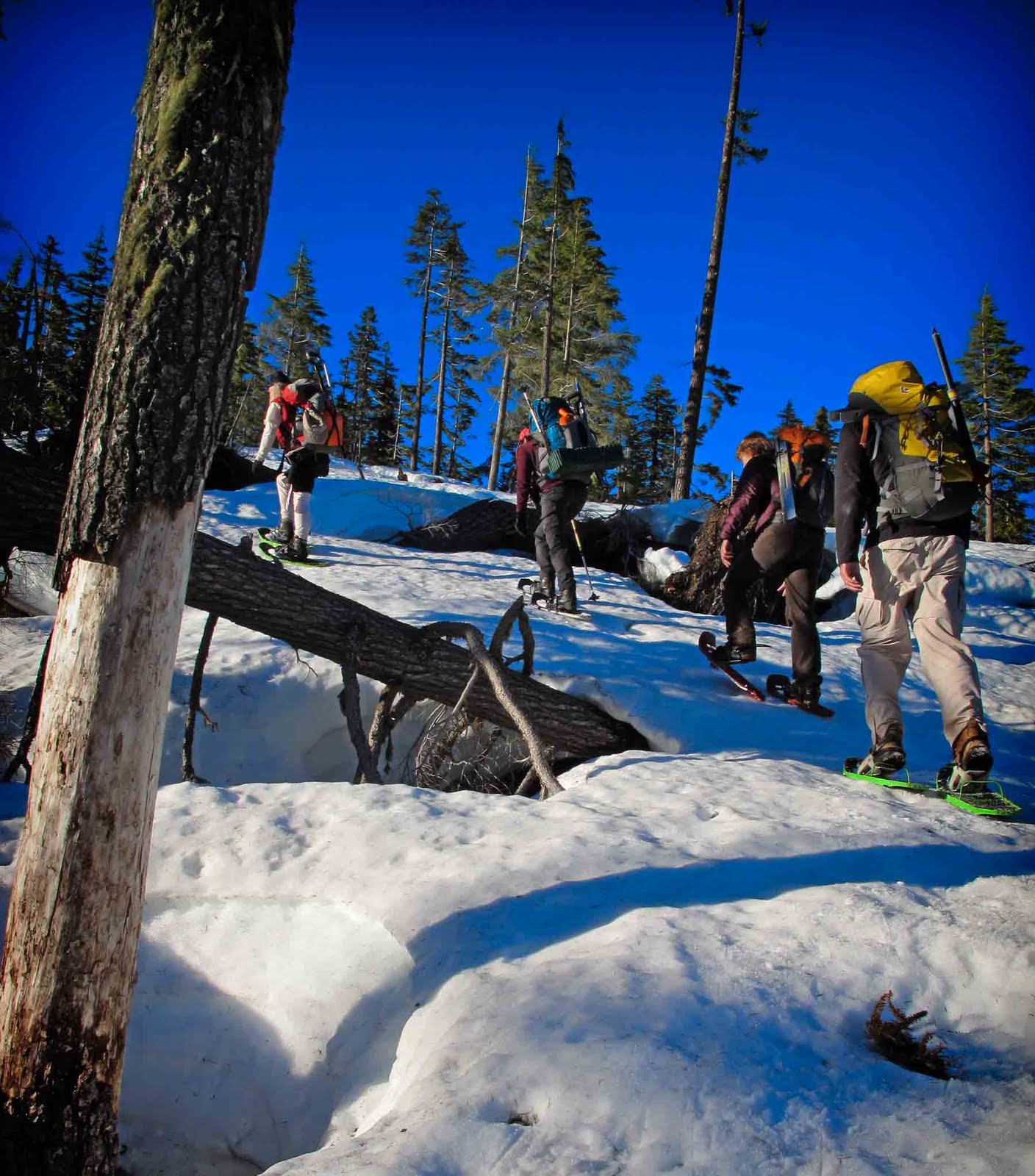
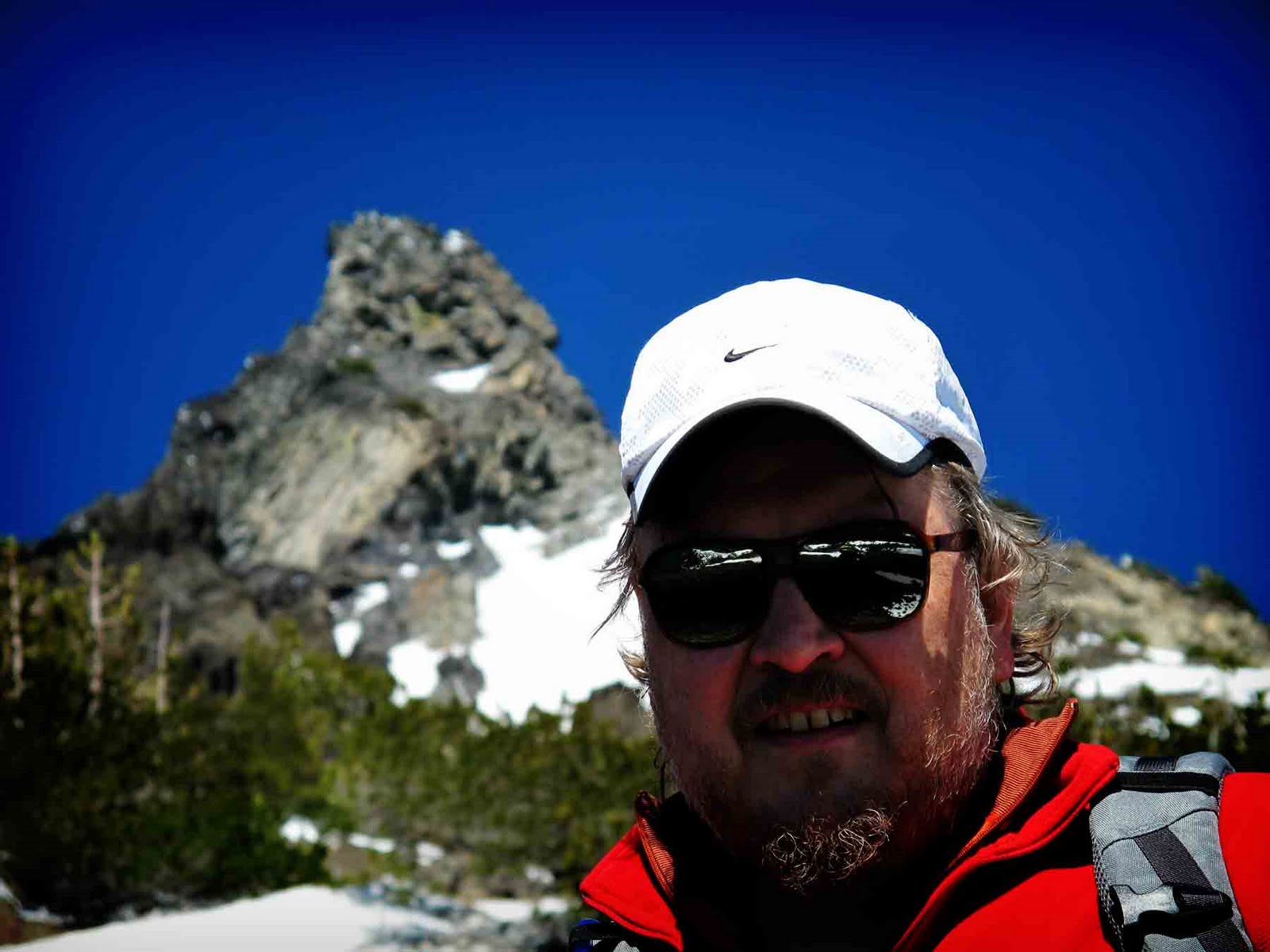
We started hiking around 5:40AM and in a short while I could feel the altitude. A mile in we began to encounter snow patches and eventually we put on our snow shoes. At times we could see the imposing summit peak through the trees. The trail steepened and we powered on. Because of the snow we took a shortcut through a “blow down” area where many large trees were scattered on their sides. It was eerily impressive. I began to tire severely and wondered several times if I would make it. My heart rate maxed out and my breathing was heavy and labored. I felt like I had bit off more than I could chew. I could tell I was getting clumsy. Finally we stopped for about 15 minutes. This allowed me to down some trail mix and electrolyte bites, lots of water, and catch my breath. After that I felt much better, though I was still only hanging on the the back of the group as we continued up the mountain.

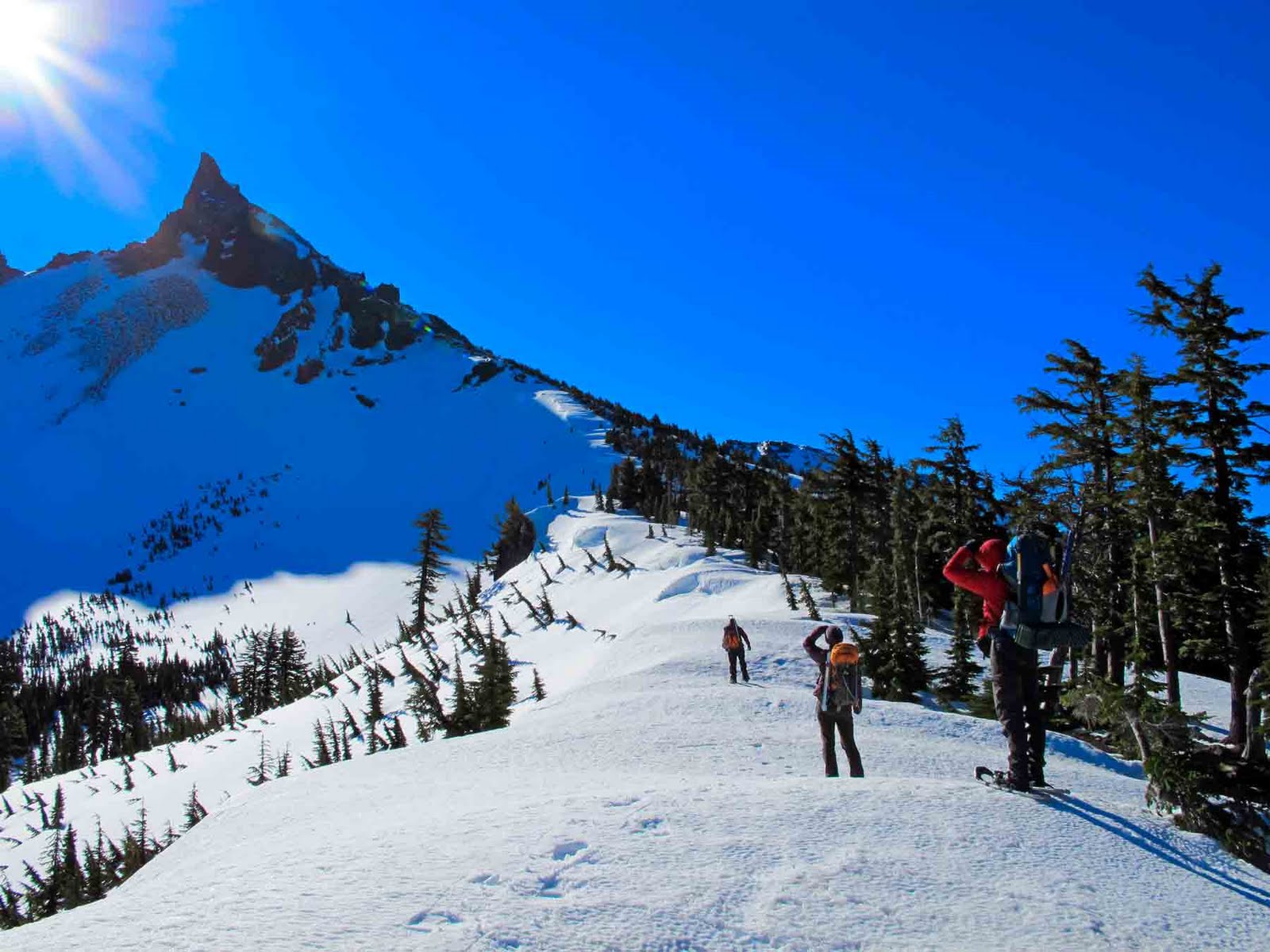
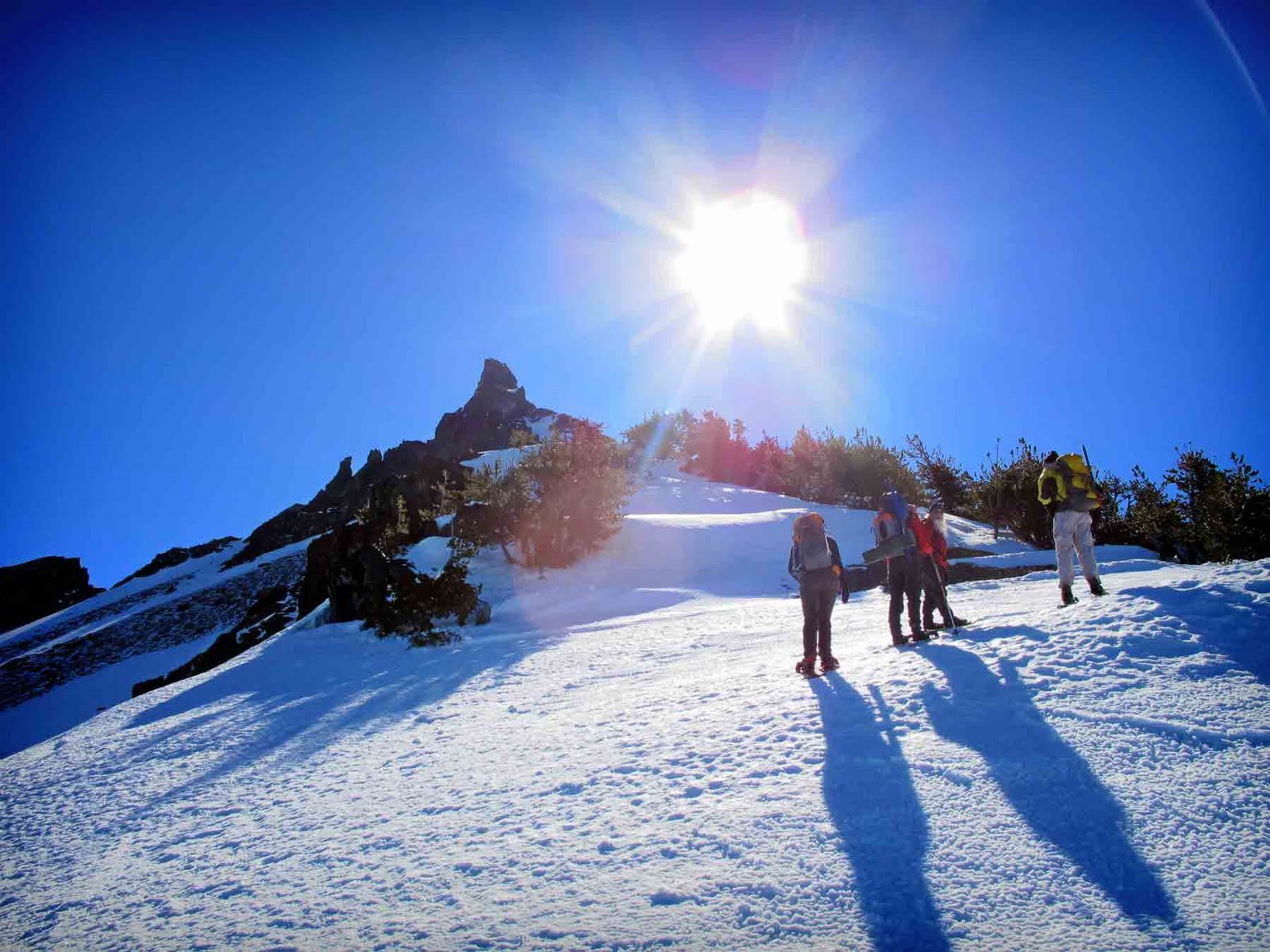
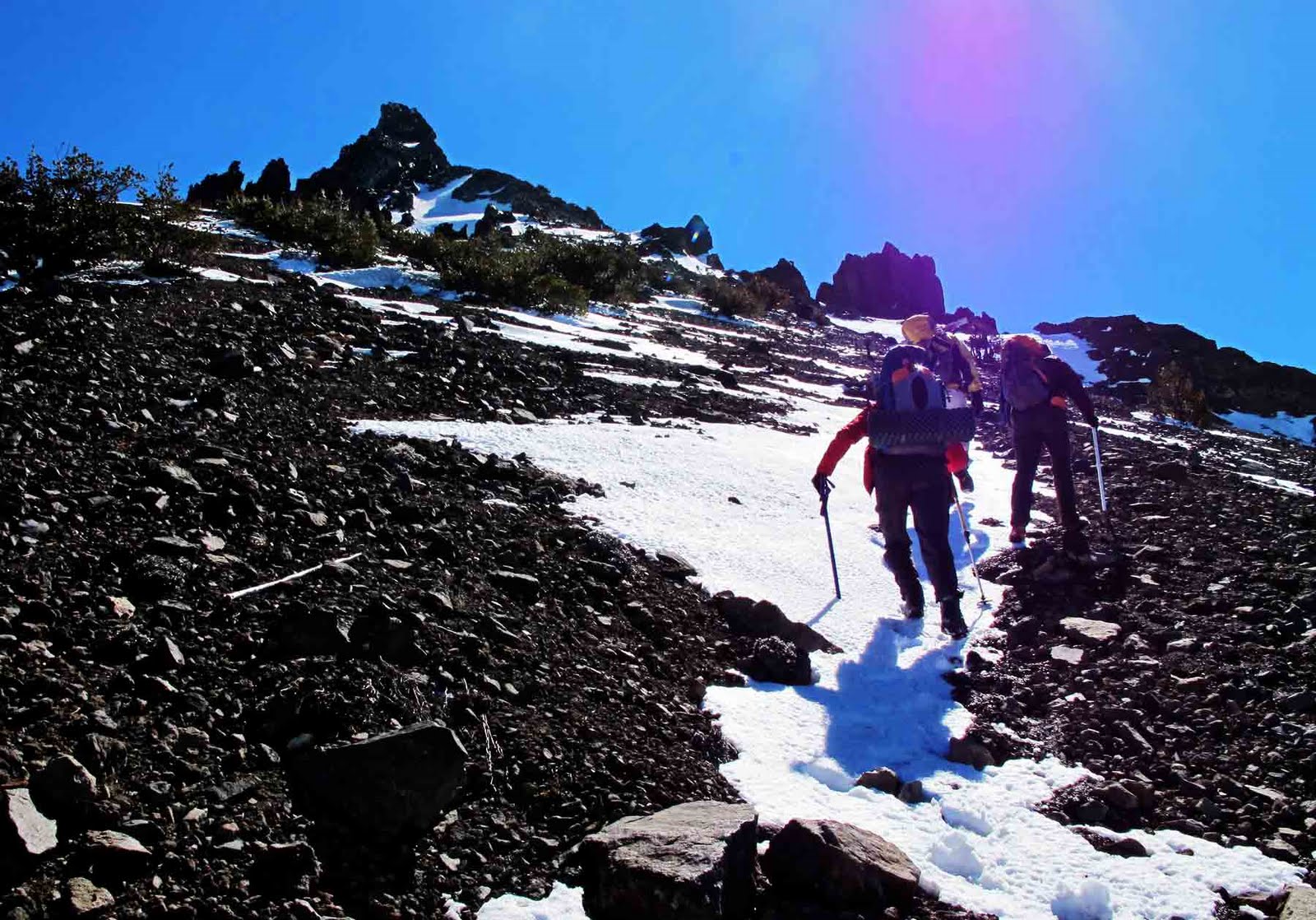
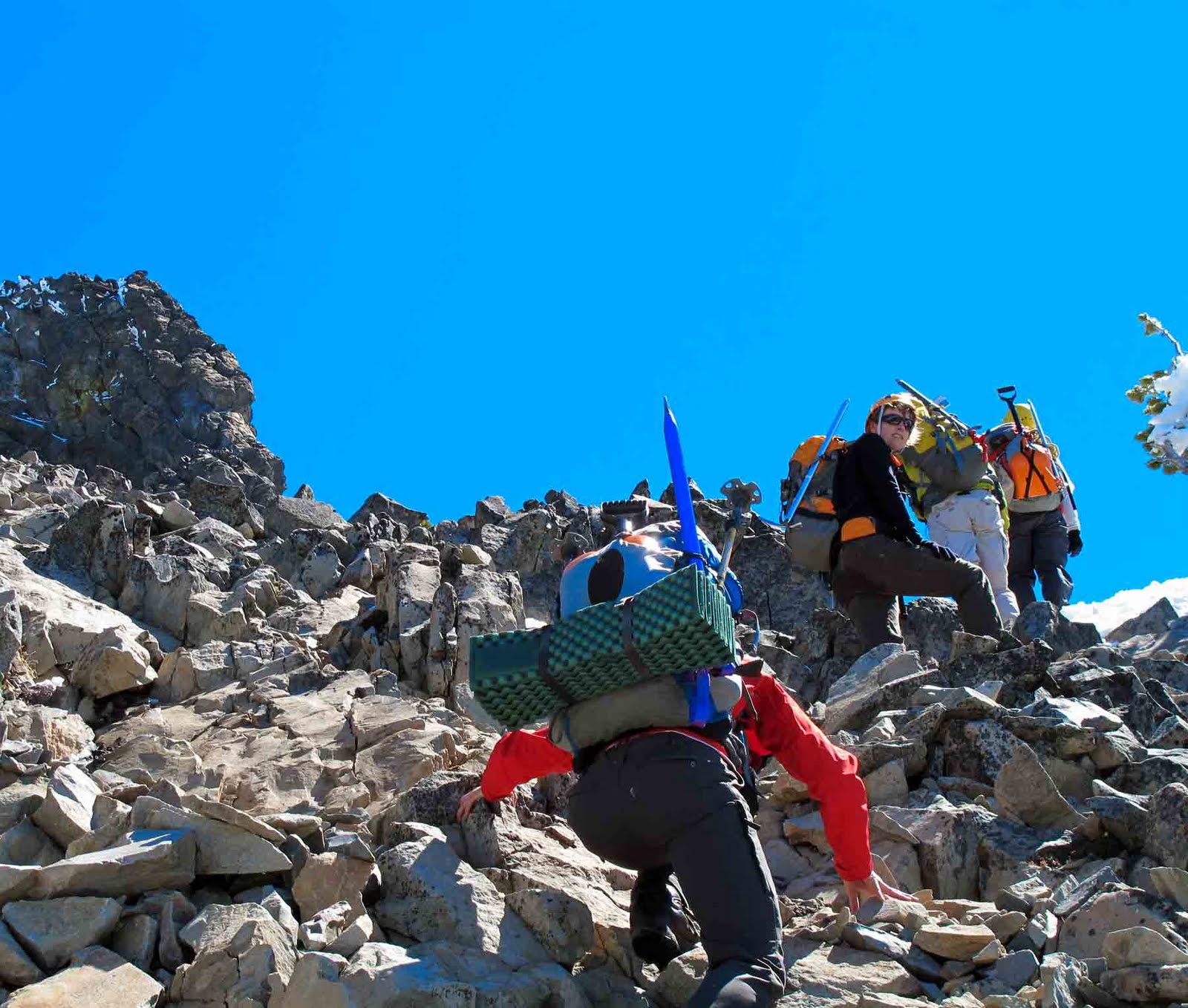
The snow got too steep for snow shoes so we abandoned them by a tree. Wayne marked the way point on his GPS unit so we could find them on the way down. We climbed into a bright sun which rose behind the mountain. The trees on the ridge now thinned out to twisted scrub and the wind picked up for a while. As the ridge steepened we left the snow and climbed scree and then loose rock we called the dinner plates. At this point the route began to get quite steep and our group slowed down. Some in the group said they did not want to “look down” at that point. I appreciated the slowing. It allowed me to catch my breath, but I also began to feel more in my element. Though I am not in mountaineering shape like I should be, I enjoy when the terrain becomes more challenging and alpine. For the first time I felt that I would make it to the summit. We ran into a couple coming down the mountain. They had passed us going in but they had not brought proper gear and were unable to go any further up the mountain. They were moving slowly because one of them was clearly scared of the steep angle of the slope and was going slowly down the mountain scooting on her bottom.
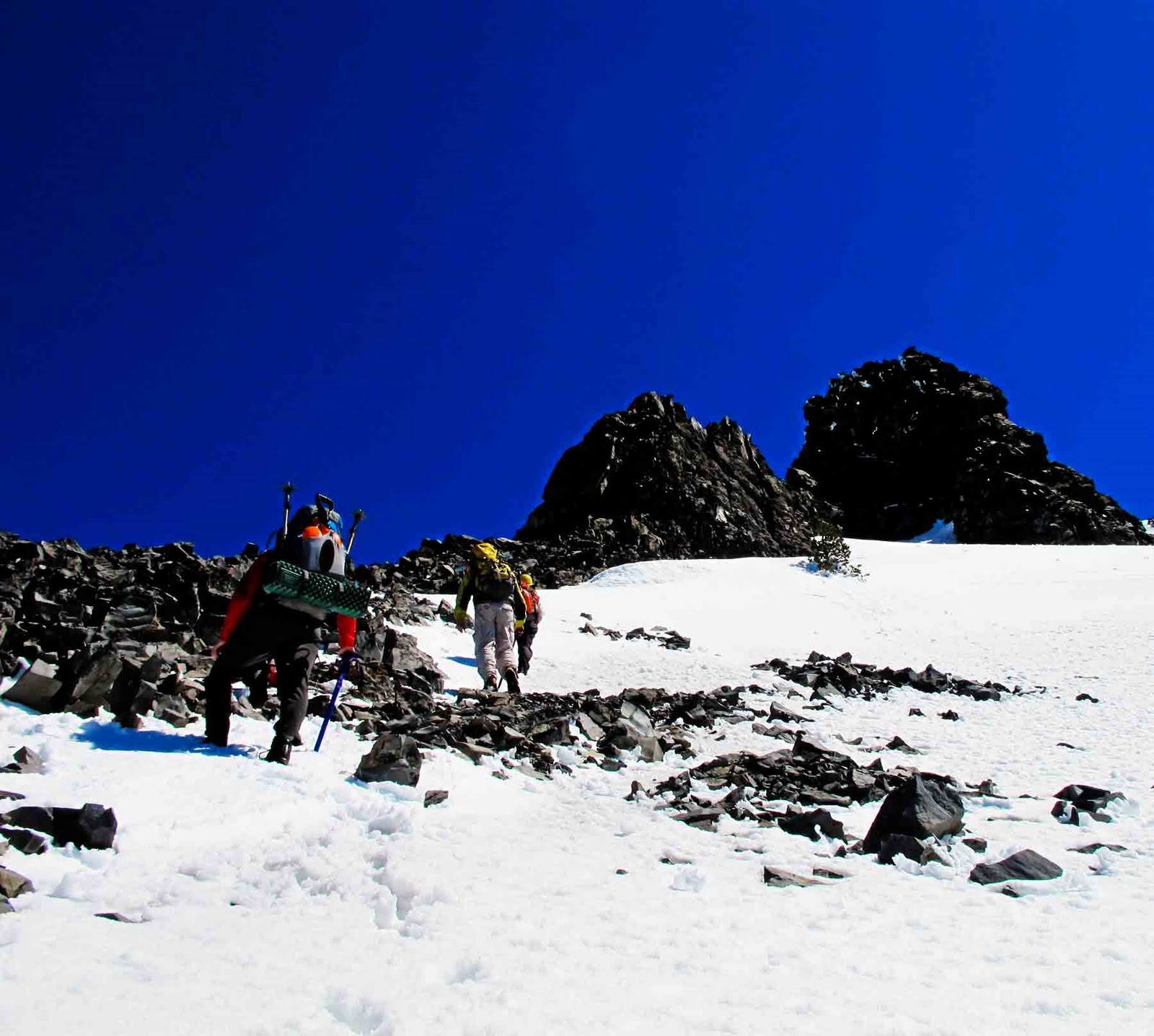
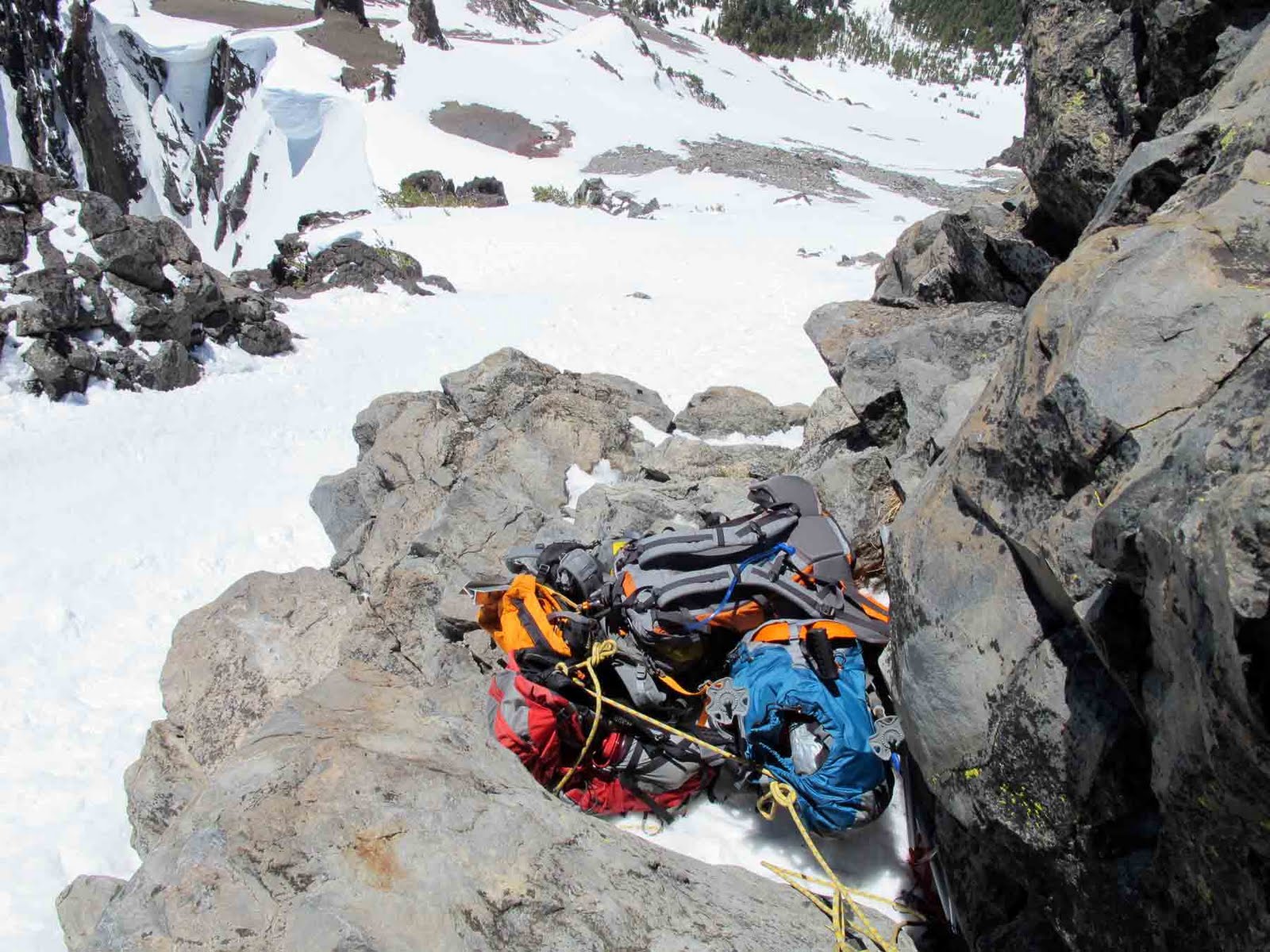
After the dinner plates we hit steep snow and out came the ice axes. The snow was firm but not too hard. We kicked steps at we moved carefully higher across the snow field. The exposure steepened dramatically. We opted not to set up a fixed line though a fall could have sent one of us quite a ways down. But our feet felt solid under us and we felt confident. Finally the slope curved from east to north under the summit block and got very steep and the snow got quite hard. We carefully kicked steps up to a small ledge where the six of us were just able to stand and trade spots as we took off our packs and put on our climbing harnesses.
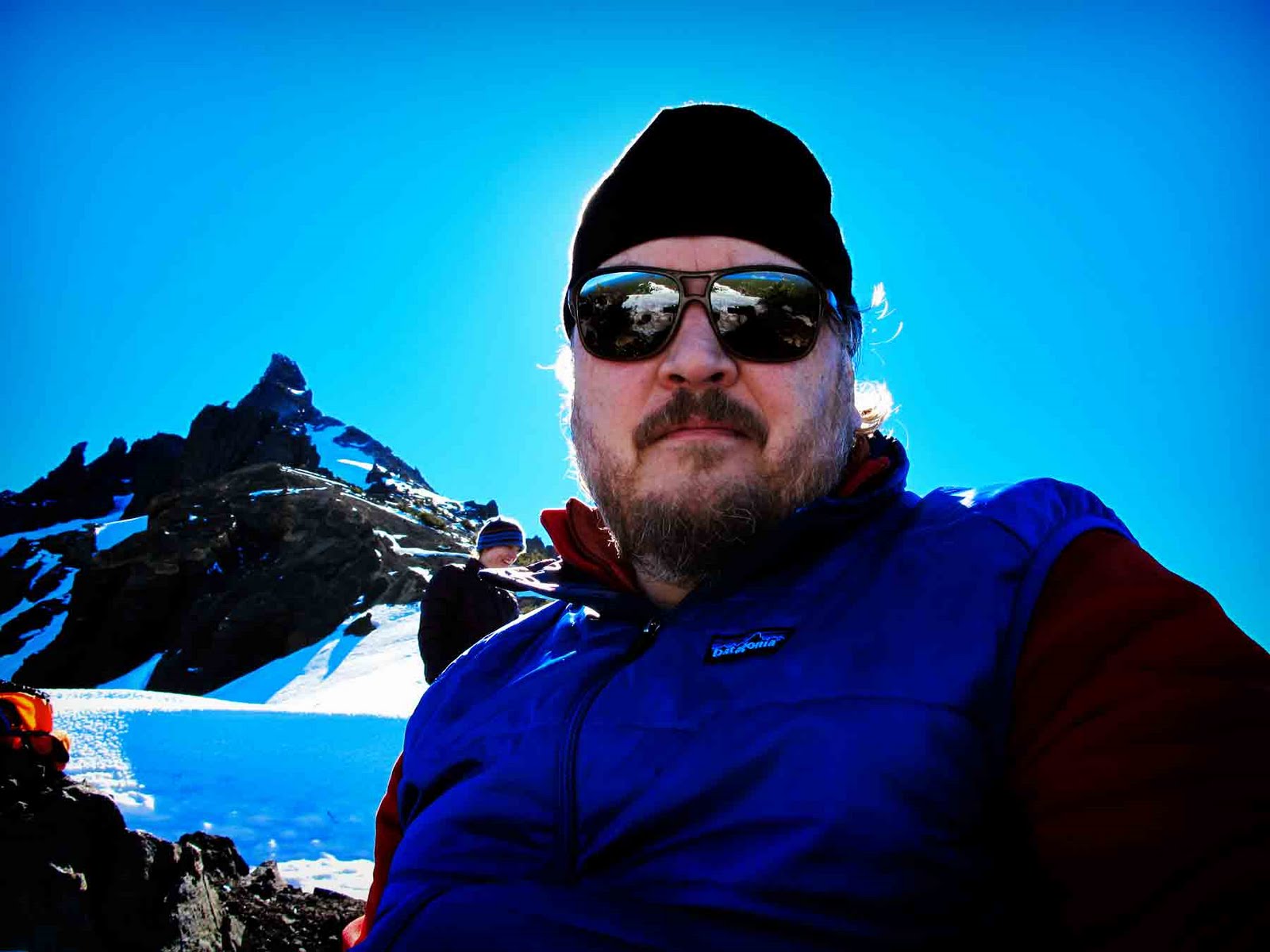
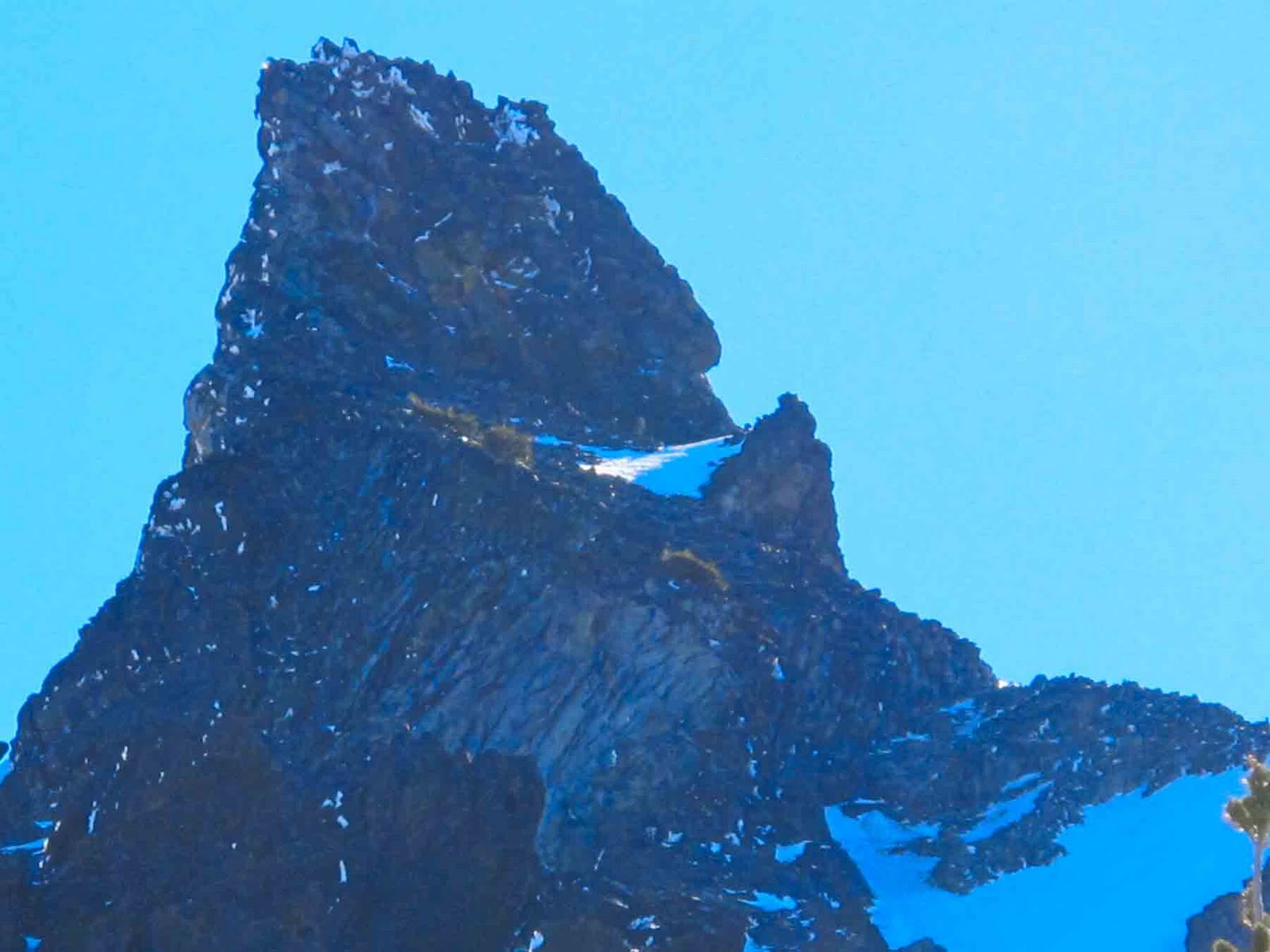
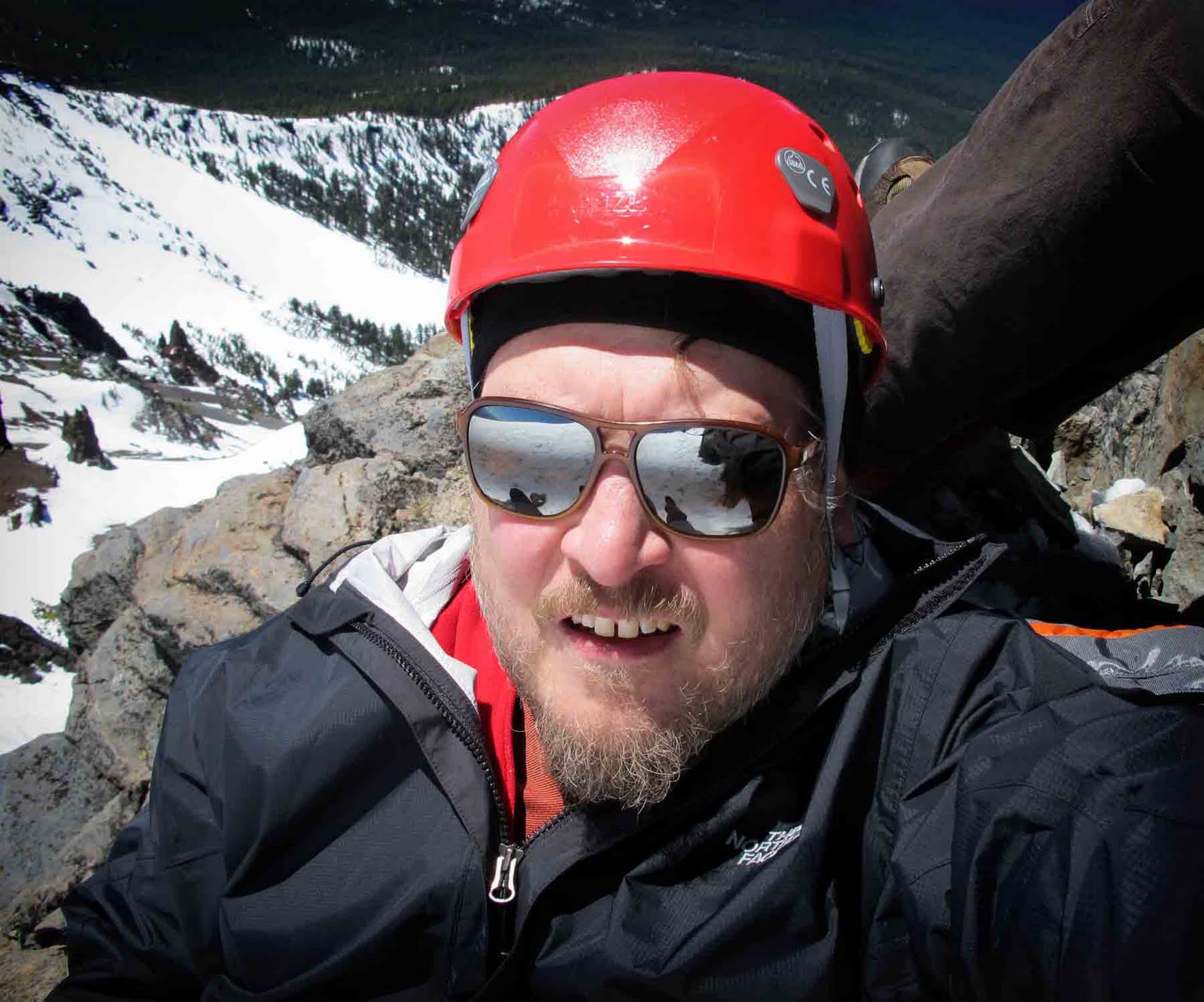
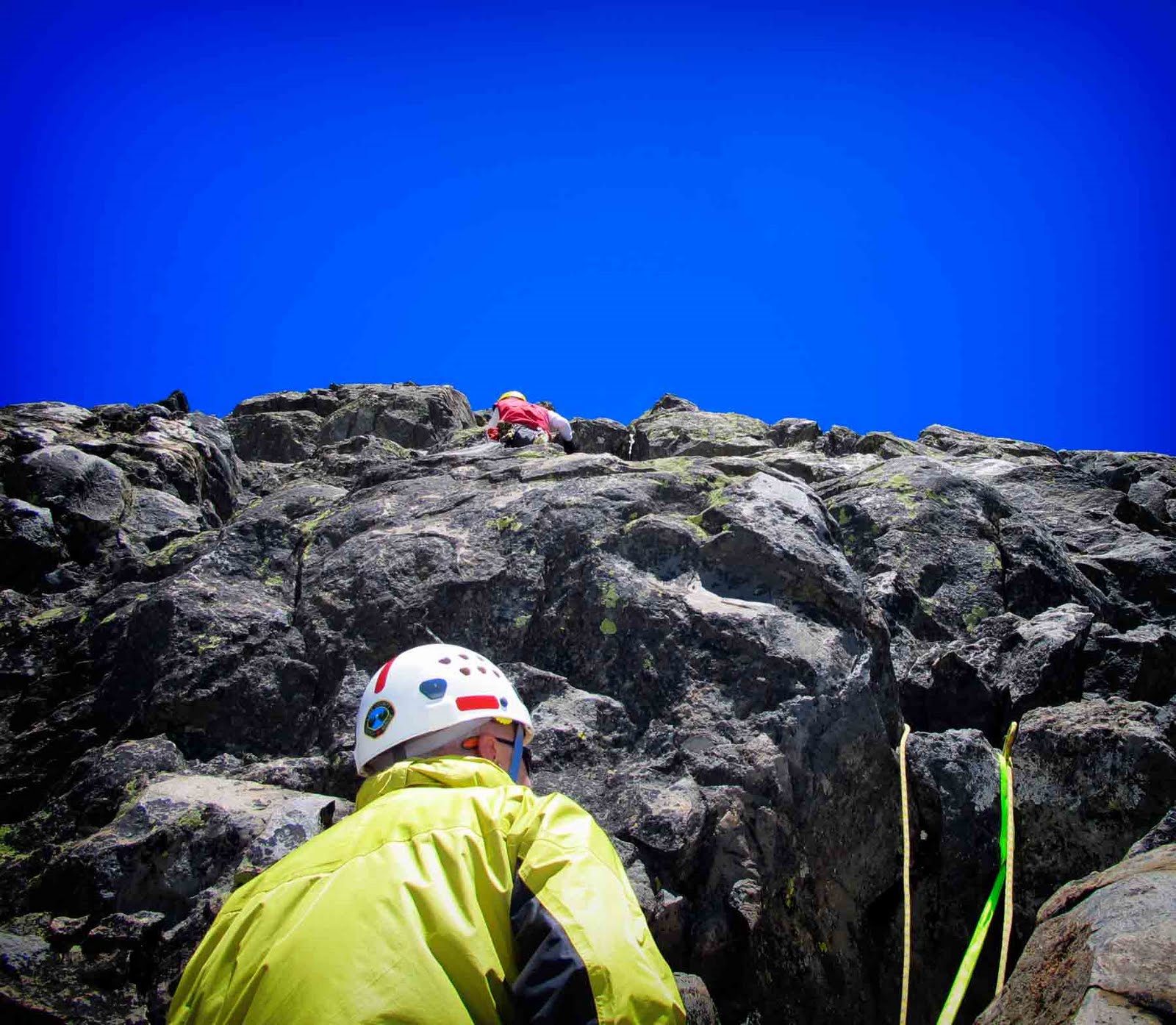
Wayne then led the summit block – 80 feet of near vertical scramble – with Bob belaying him. Once the rope was secured at the top each of us took our turn climbing, using prusiks for self belay. The summit block is a jumble of solid rock with many good foot and hand holds. The exposure, though, is extreme and the running belay was welcome. Finally I stood on the small summit of Mt. Thielsen at 9,184 ft (2,799.3 m).
The pinnacle of Mt. Thielsen can only hold about six to eight people. It is known as the lighting rod of the Cascades. On the east side one can look down a couple thousand vertical feet to the glacier. After taking a few photos we each had to down climb to our packs. Going down is usually where climbers get into trouble, so we were very careful. Once we got to our packs as the base of the summit block, we decided to set up anchors and drop the rope down the steep snow slope. It was still icy where we were and some in the group didn’t like down climbing on the ice. I offered to go first to test the slope. The first 20 or so feet was still icy and I gingerly kicked steps backwards. Then the snow became very soft and I turned around and plunge stepped down to the end of the rope and slid my prusik off the end and continued down to a patch of loose rock where the others eventually joined me and we rested, ate, distribute the group gear, and then continued on down the mountain.
Like most hikes out it is easier going down than up, but one’s feet begin to ache and mine did considerably. We got back to the trailhead by 7:30 PM, hiking the last couple miles through mosquitoes. The drive home was long but good. I got a ride from Bob and he and I talked about search and rescue – for which he does a lot of volunteer work.

As I write this my legs are very sore and my sunburn hurts, but I feel very good. I carried sunscreen to the summit and back but forgot to put any on, so my face is as red as a ripe tomato and beginning to peel. I’ll take my sunburn as a temporary badge of honor though. I have been living as an armchair mountaineer for too long. My heart longs to be off the couch and hiking through alpine regions. This climb means a lot to me in that respect. One thing for sure, I need to get into better shape if I am to climb again. Another thing for sure, I loved this experience and can hardly wait for the next.

>Tuesday 3:00 PM Jean-Luc Godard…

>

From 1968 to 1973, [Jean-Luc Godard] stated repeatedly that he was working collectively. He was never tied to a party or a Maoist group, although the politics evidenced in his films seem loosely “Maoist.” For about three years he drastically reduced the technical complexity and expense of his filming, lab work, compositions, and sound mix. Partly he wanted to demonstrate that anyone could and should make films. He did not concern himself with creating a parallel distribution circuit. He said most political films were badly made, so the contemporary political filmmakers had a twofold task. They had to find new connections, new relations between sound and image. And they should use film as a blackboard on which to write analyses of socio-economic situations. Godard rejected films, especially political ones, based on feeling. People, he said, had to be led to analyze their place in history.

1968: Godard films some events
(Photo by Serge Hambourg, Hood Museum of Art)

1972: Jean-Luc speaks on intellectuals making films for the oppressed…

Are not these questions still relevant today? Possibly today there are more alternative voices being committed to various media because the means of production (e.g. ultra-lightweight HD cameras and laptop editing) and the means of distribution (e.g. the Internet) make it possible to do so. However, the questions facing media producers have not significantly changed. As Godard states, making a film “in the name of…” comes with a host of issues that, though intentions are good, may sabotage from within and without the film and its message. In the U.S. we are less likely to call filmmakers “intellectuals.” Certainly, U.S. filmmakers may not be intellectuals to the same degree (or as obviously so) as those in France once were. On the other hand, anyone who actively seeks to understand the world beyond the given and controlled ideological constructs we all inherit should be called an intellectual. Many social documentary filmmakers, it could be argued, fall into that category.

There is a trap, however, for contemporary would-be revolutionaries (filmmakers or otherwise) to borrow from the past what should be left in the past. The struggles of the 1960s (the period from 1956 to 1974) are inspiring and worth studying, but today’s struggles must be dealt with directly and not through a process of memory and hagiography. Today’s issues require their own terms. On the other hand, it is worth noting that (probably) all revolutions/reformations start from a re-examination and re-interpretation of the past – in particular the primary documents of the past.

In 1972 Godard had just completed Tout va bien. The interview above was made in relation to the film. Here is the “supermarket scene” from the film:

On a side note, doesn’t Godard (in the interview clip above) look like a slightly crazed hipster? I mean it’s apparent he just had a double cappuccino before the interview and afterward will ride away on his fixed gear. Also, is that a red bathrobe he is wearing? Marxist morning dress? Leftist lounge wear?

*From Jump Cut, no. 28, April 1983, pp. 51-58 copyright Jump Cut: A Review of Contemporary Media, 1983, 200. This is a great article on Godard’s movement from his Nouvelle Vague and more popular period of 1960-1968 to his more overtly political and less popular (but maybe more interesting) period of 1968-1973. Note: Julia Lesage was my thesis committee chair for my MA.

In Our Nature

To one who has been long in city pent,
‘Tis very sweet to look into the fair
And open face of heaven, – to breathe a prayer
Full in the smile of the blue firmament.

~John Keats, Sonnet XIV
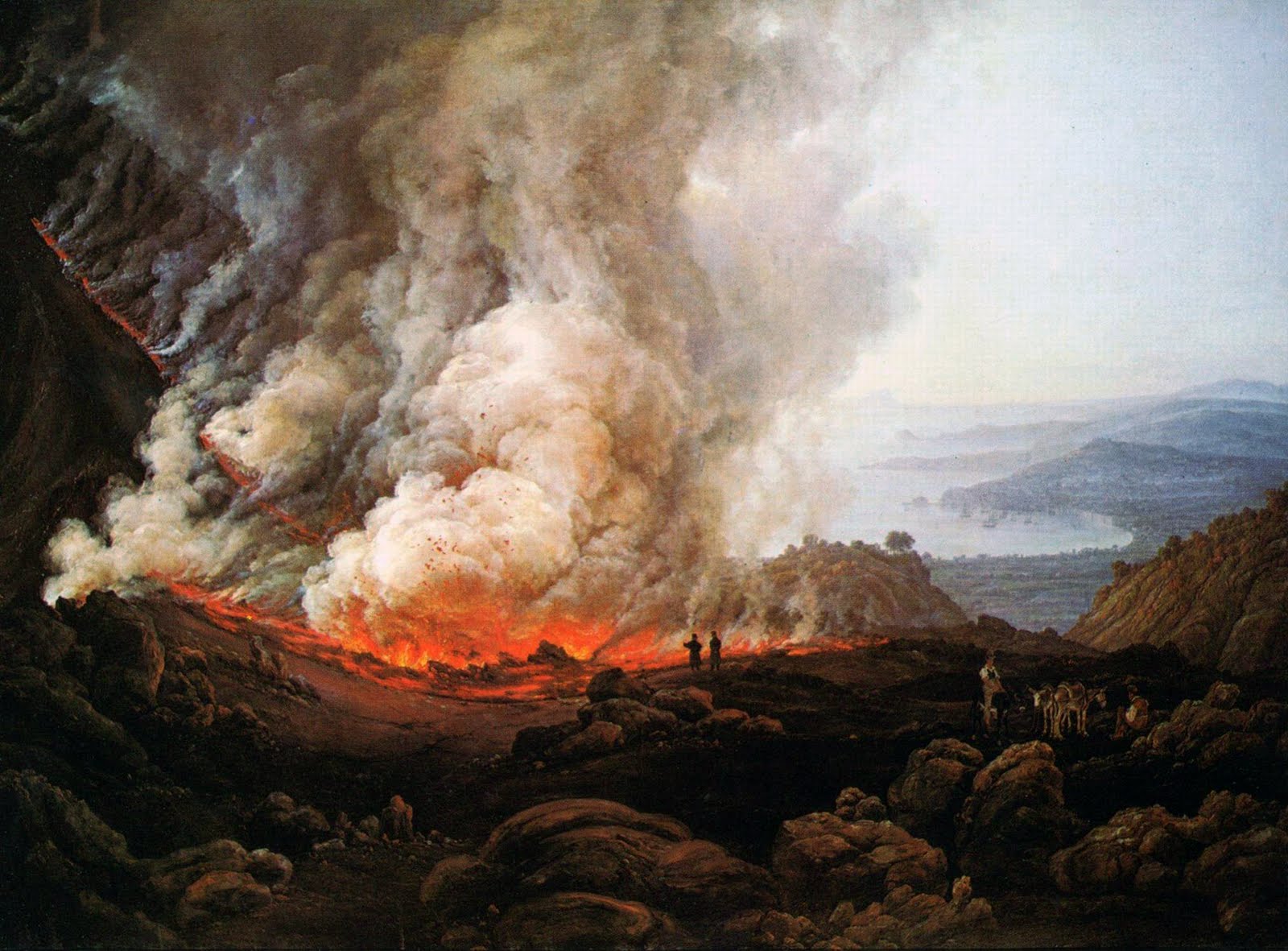
Or maybe to look into a volcano.
“Outbreak of the Vesuvius”, painting by Johan Christian Claussen Dahl (1826), 
collection Städelsches Kunstinstitut, Frankfurt am Main.
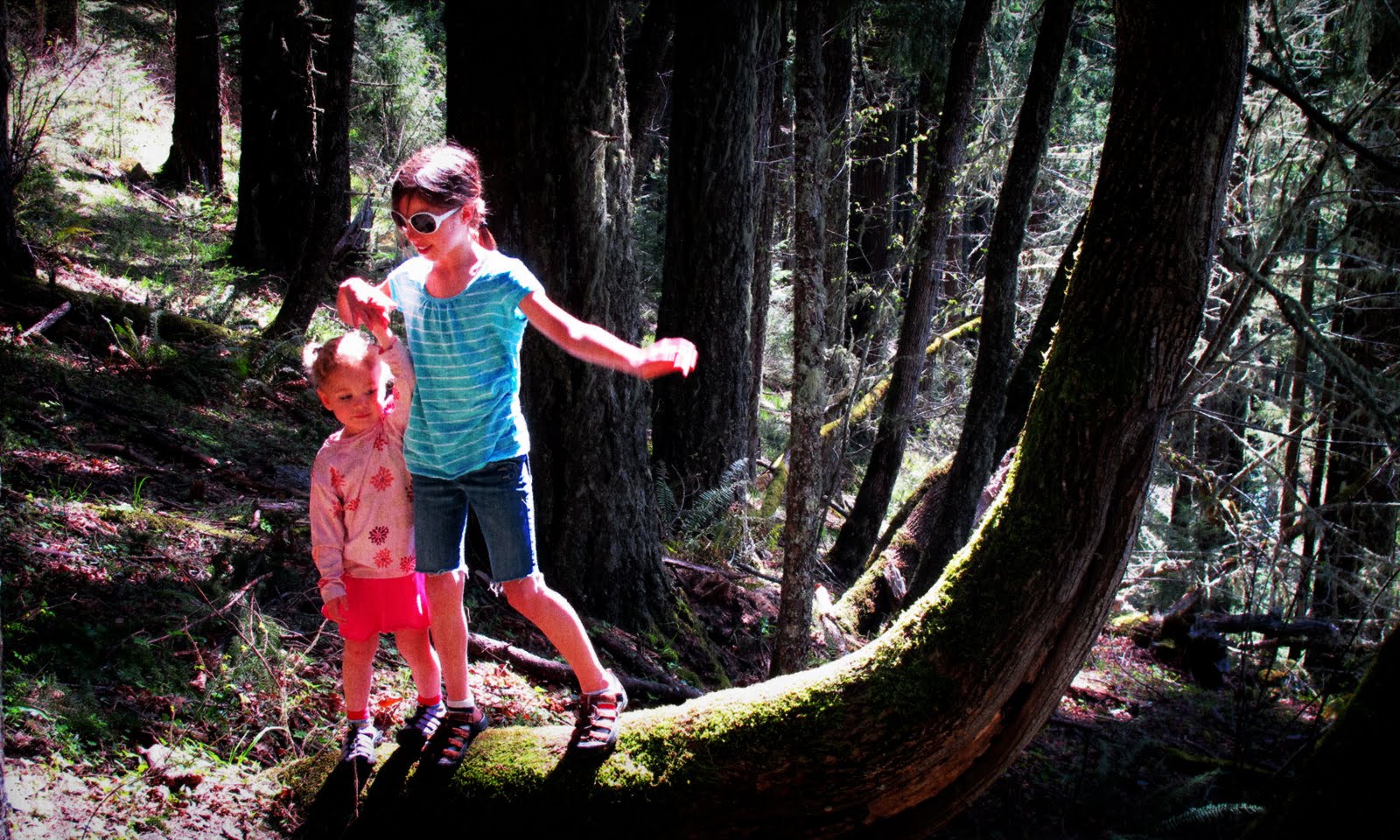
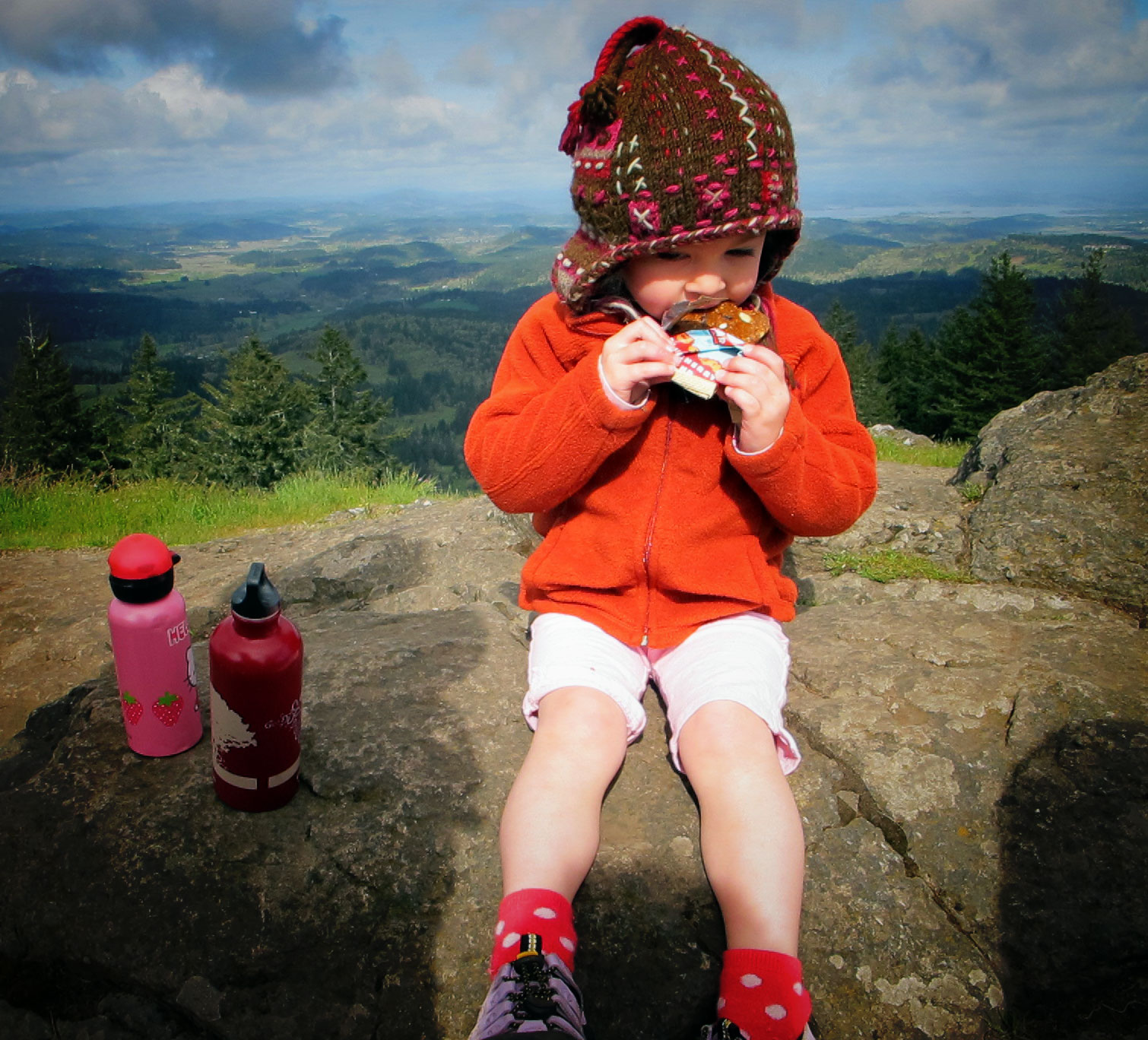
You can probably tell from a number of my recent posts that I have a goal to get myself and my family into nature, to confront it, embrace it, wallow in it. Nature is a transformative force. It is possibly far more important that we realize. Non-nature, those places we create that keep nature at bay, make us feel safe and make life seem more predictable, but we also lose out on something (or many things) intrinsic to ourselves and our sanity. An overly safe and controlled world is a pathway to a troubled mind and, I would argue, a troubled soul. Confronting the less predictable and sometimes frightening wildness of nature has got to be a key aspect of the mind’s design. We need nature. I believe John Muir was right when he said, “Everybody needs beauty as well as bread, places to play in and pray in, where nature may heal and give strength to body and soul.” But are we raising our children to love nature?

“I like to play indoors better ’cause that’s where all the electrical outlets are.”

~ spoken by a fourth grader, reported in Last Child in the Woods by Richard Louv
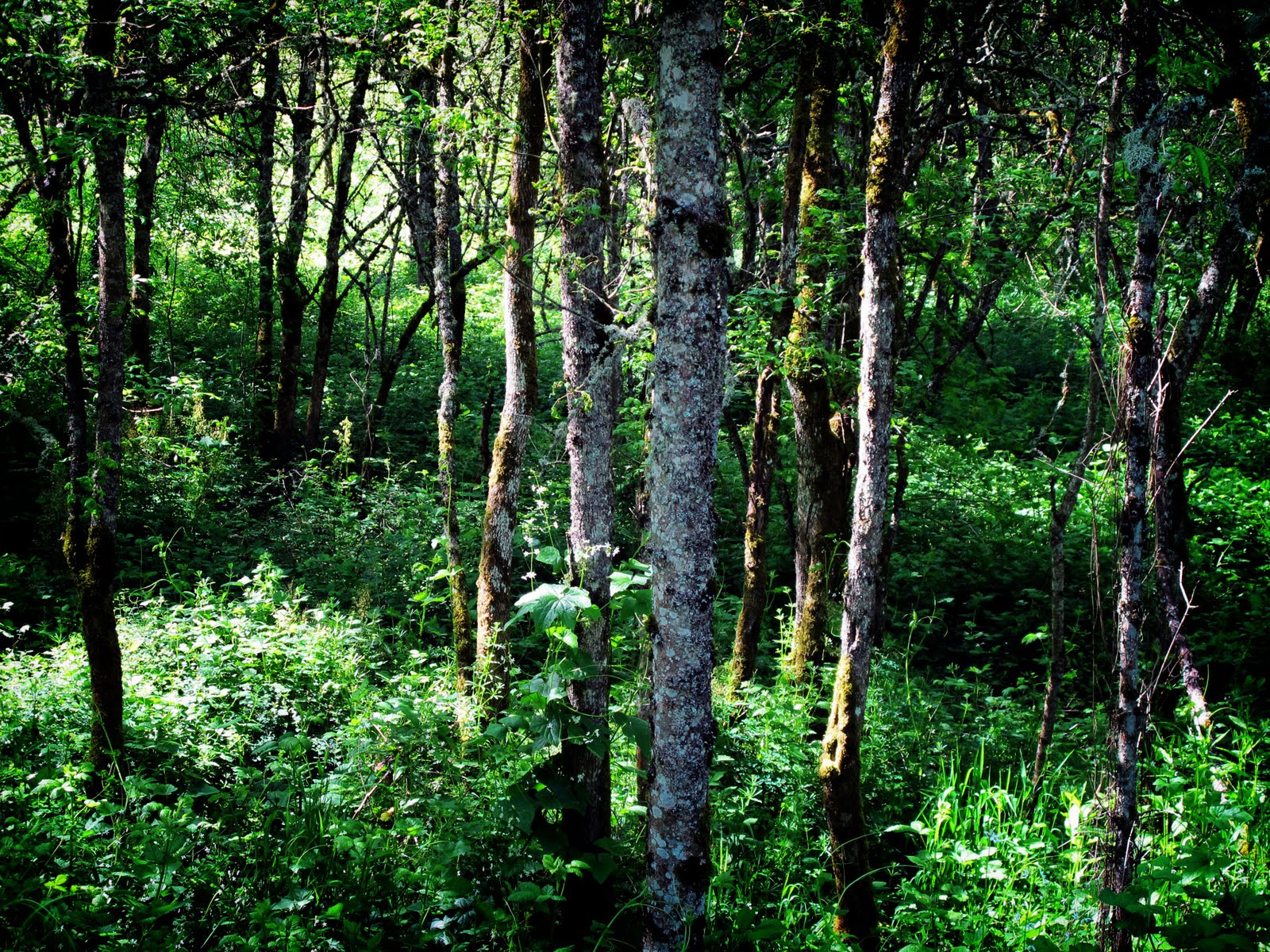
A grove of trees along the bike path near our home.
Feel free to just stare at it for a while.
We often hear people say they feel more alive when they are in nature, or facing into the kinds of ambiguity that adventure brings. What does this mean? Certainly one is not truly more or less alive in a strict sense. And yet, in nature one’s senses come more alive. One’s spirit is lifted or engaged more fully. There is something about the infinite variety, the ambiguity, the perfection of nature that seems to be ideally suited to the needs of our brains and spirits. That has got to be one of the reasons we own pets and buy potted plants, but also why we need wilderness. Could it be that the wildness of nature is a kind of correlative to the wildness of God?
Being in nature is important for children. We often have fears about letting kids run wild in the wild. And yet, when we do, we find kids come alive in nature in a way they never do (nor never will) in school, at home, playing video games, etc. It is as though nature was made for kids, or maybe it’s the other way around. I am convinced that many of the apparently psychological/emotional issues with children today stem from not enough nature time. Richard Louv takes this on in his important book Last Child in the Woods. He describes that the last few years have seen a significant shift in how, and how often, kids interface with nature. Here is a clip where he talks a bit about this topic:
My problem is that I am lousy at getting off the couch. I have a talent for dreaming but not so much for doing. But I’m trying to change that. I and a friend are starting a kids outdoor club of sorts. We hope to do lots of outdoor activities, but mostly just get kids and nature together and let the magic happen. Of course we will bring along lots of bandaids and bactine. What is critical is that there is, at least, a repeated experience of nature and a moving away from radically lesser forms of play and entertainment, such as video games and television.
Now, with this in mind, a Cub Scout can earn awards (“Belt Loop” and “Academics Pin”) in video games. Gasp! I find this disturbing. Below are the requirements taken from the Boy Scouts of America (BSA) web site.
REQUIREMENTS
Tiger Cubs, Cub Scouts, and Webelos Scouts may complete requirements in a family, den, pack, school, or community environment. Tiger Cubs must work with their parents or adult partners. Parents and partners do not earn loops or pins.
Earning the “Belt Loop” award
Complete these three requirements:
  1. Explain why it is important to have a rating system for video games. Check your video games to be sure they are right for your age.
  2. With an adult, create a schedule for you to do things that includes your chores, homework, and video gaming. Do your best to follow this schedule.
  3. Learn to play a new video game that is approved by your parent, guardian, or teacher
Earning the “Academics Pin” award
Earn the Video Games belt loop and complete five of the following requirements:
  1. With your parents, create a plan to buy a video game that is right for your age group.
  2. Compare two game systems (for example, Microsoft Xbox, Sony PlayStation, Nintendo Wii, and so on). Explain some of the differences between the two. List good reasons to purchase or use a game system.
  3. Play a video game with family members in a family tournament.
  4. Teach an adult or a friend how to play a video game.
  5. List at least five tips that would help someone who was learning how to play your favorite video game.
  6. Play an appropriate video game with a friend for one hour.
  7. Play a video game that will help you practice your math, spelling, or another skill that helps you in your schoolwork.
  8. Choose a game you might like to purchase. Compare the price for this game at three different stores. Decide which store has the best deal. In your decision, be sure to consider things like the store return policy and manufacturer’s warranty.
  9. With an adult’s supervision, install a gaming system.
In my opinion this an important failing on the part of the BSA as well as a symptom of a deeper malaise in our culture. In fact, I would argue the huge popularity of video games in our culture is the result of a profoundly pervasive nihilism. This is not to say video games are bad, or that anyone playing them is a nihilist, but the ubiquitous nature of video games is not unlike other forms of popular drug use. It seems that we have become a society of mass dissipation and escapists from life. Who we are, what we value, and what our world view is, comes to the fore in the kinds of entertainment we choose. If life is meaningless then playing video games hours on end (or watching television hours on end, or many other things) might makes some sense. But life is not meaningless and we need to teach our children that fact (and live that fact ourselves). We need to lead our kids away from cheap, easy, and empty escapism and toward the fullness of an examined life. Frequently unplugging from the electrical outlets is important. Getting into nature is a part of the solution.

>first hike for the nameless outdoor club

>

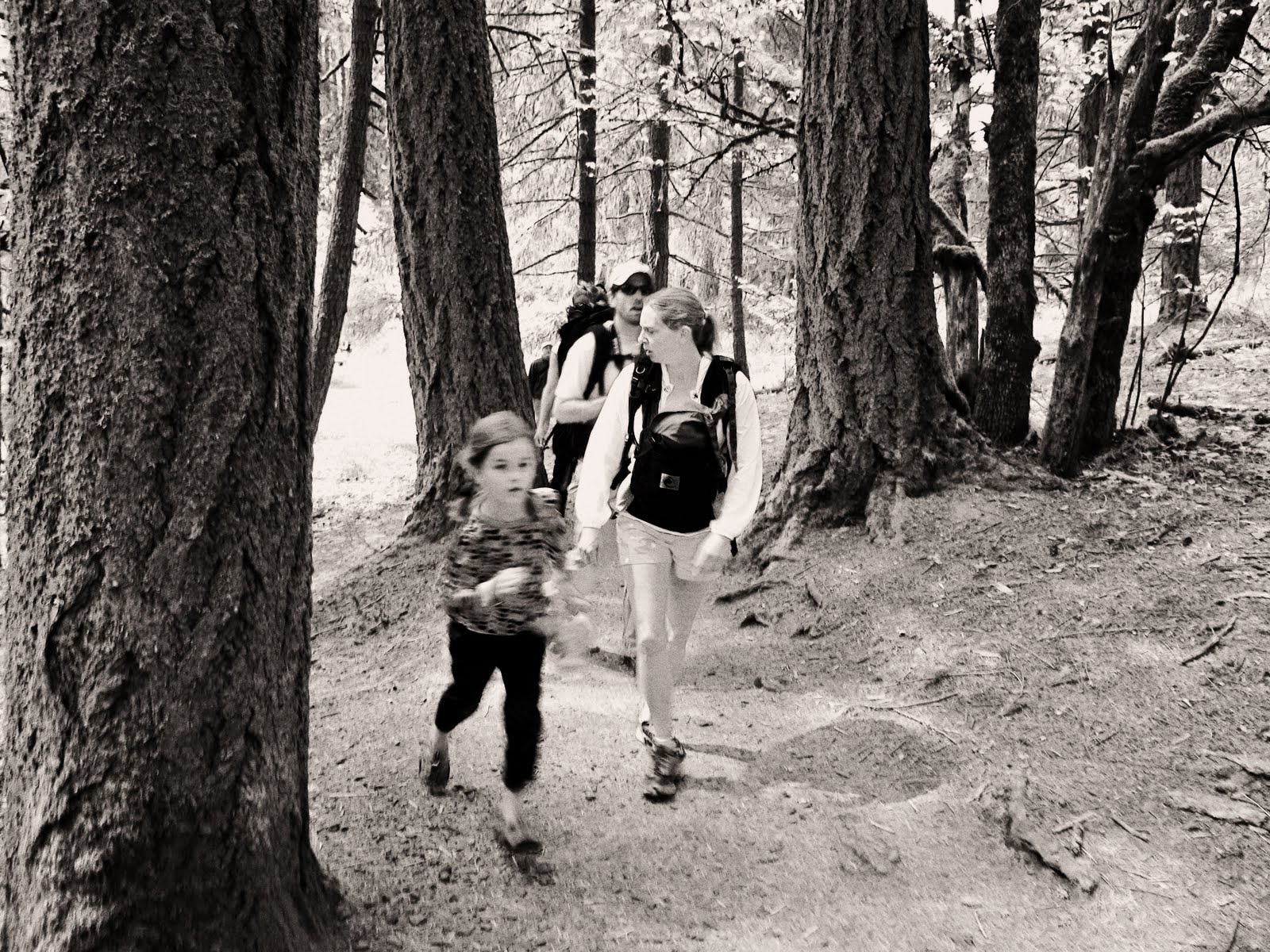
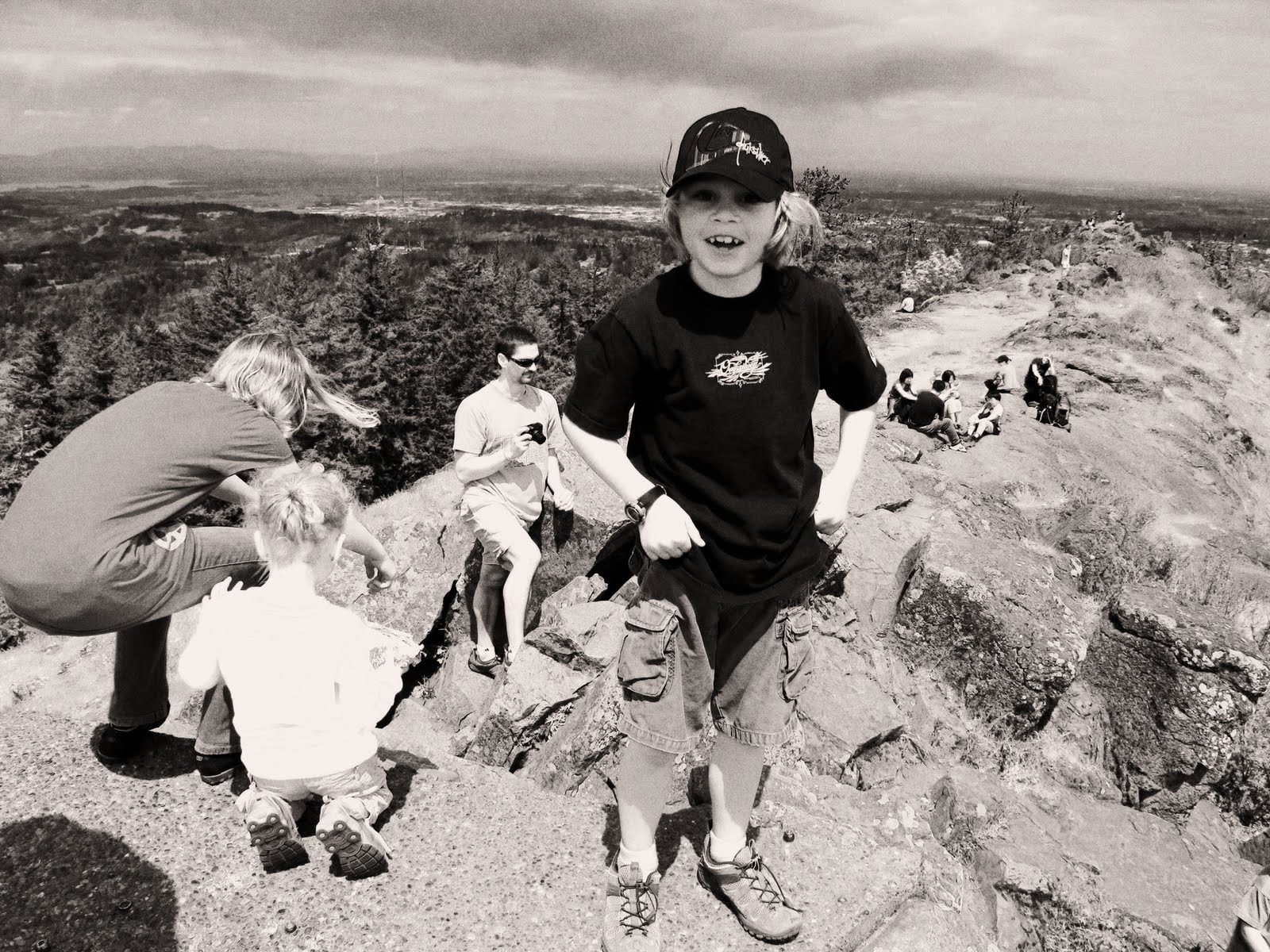
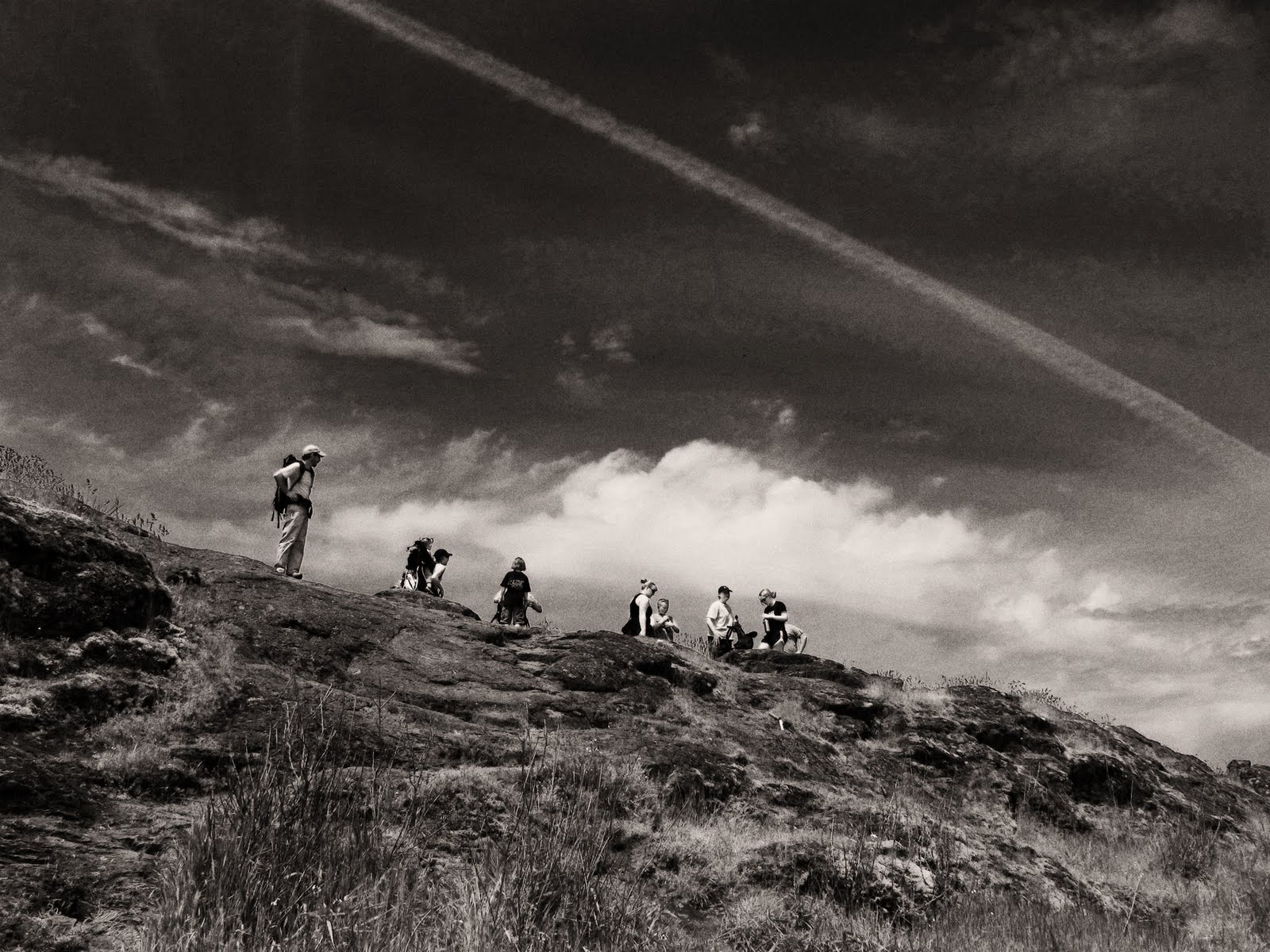
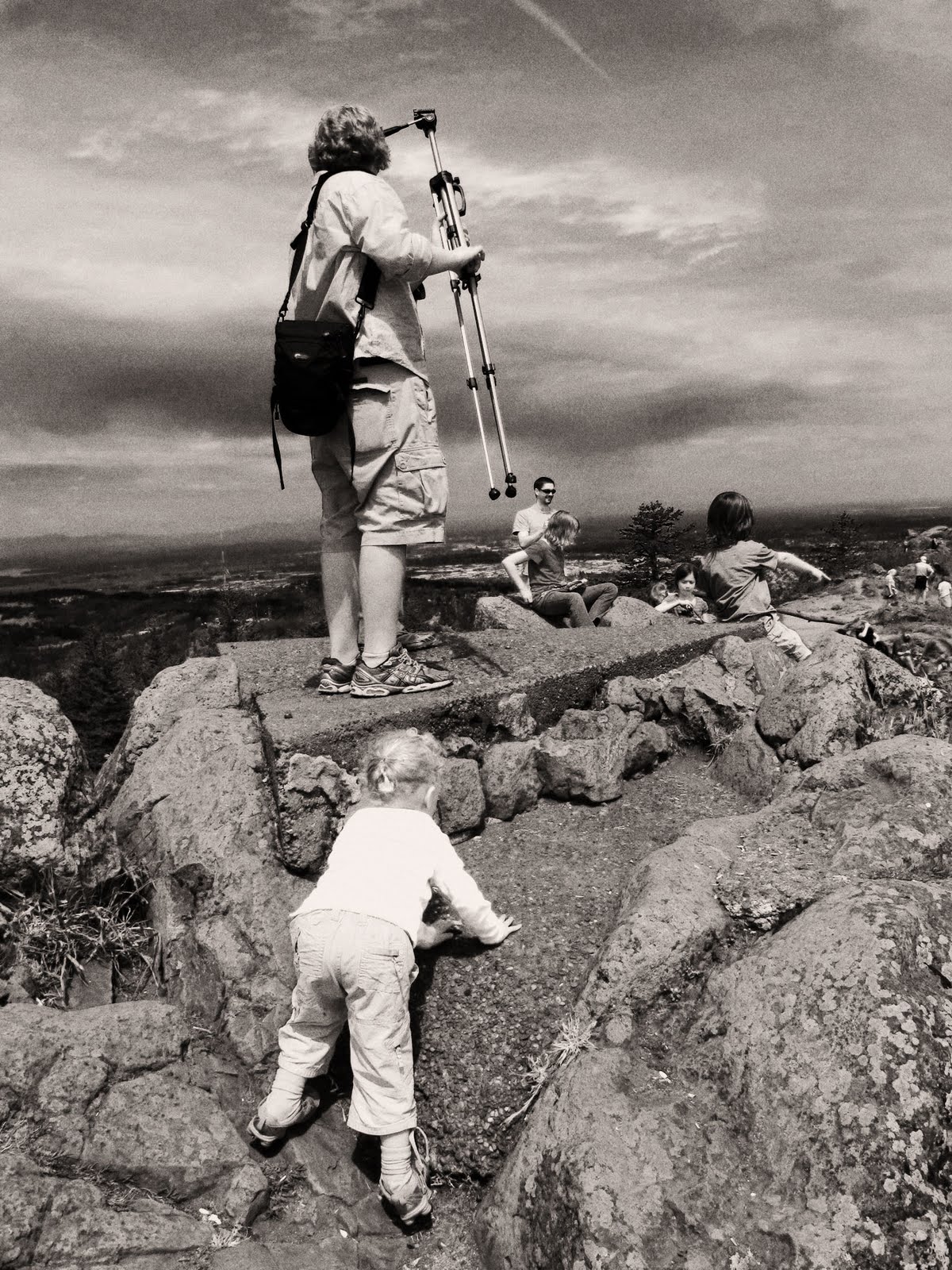
We just did our first “outdoor club” hike. We don’t yet have a name for the club. Four families went and it was a great, easy-going time. The weather was perfect. However, the poison oak (see previous post) was out in force. 
Our plans are to do more hikes, rock climbing, camping, rafting, etc. We are gearing the club towards the 5 to 12 year old range. And parents are expected to participate too. I suppose this comes from our homeschooling perspective. 
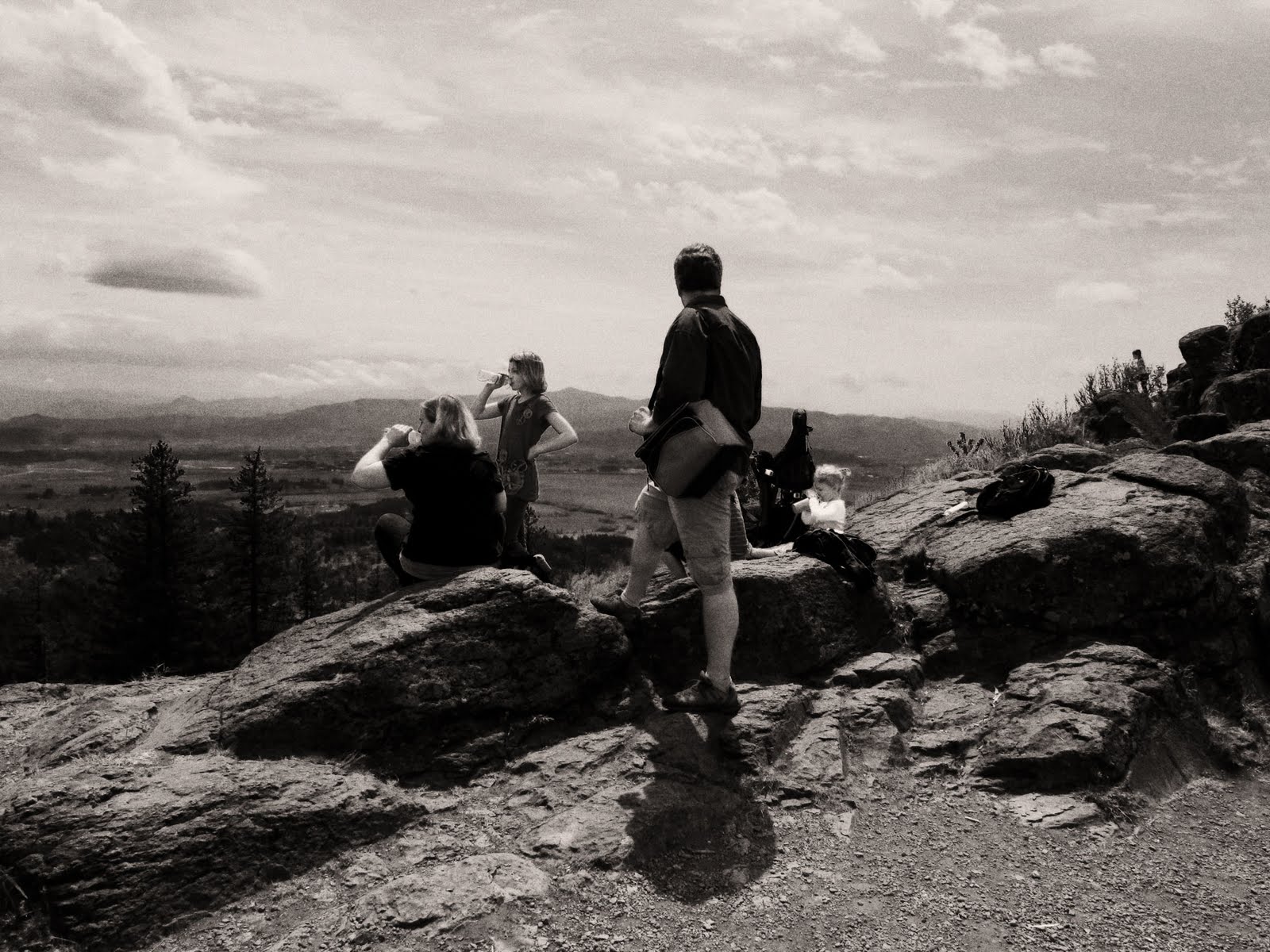
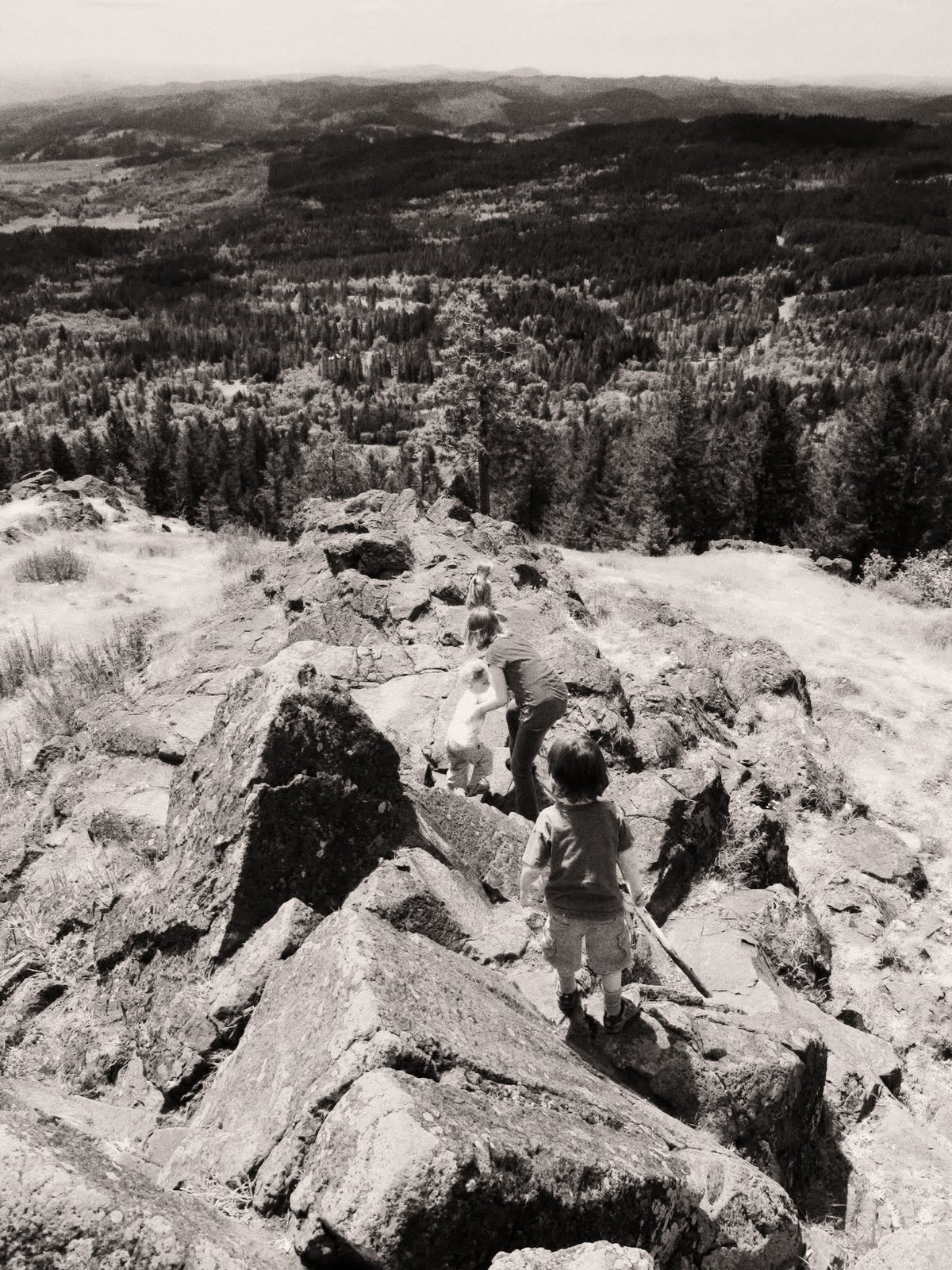
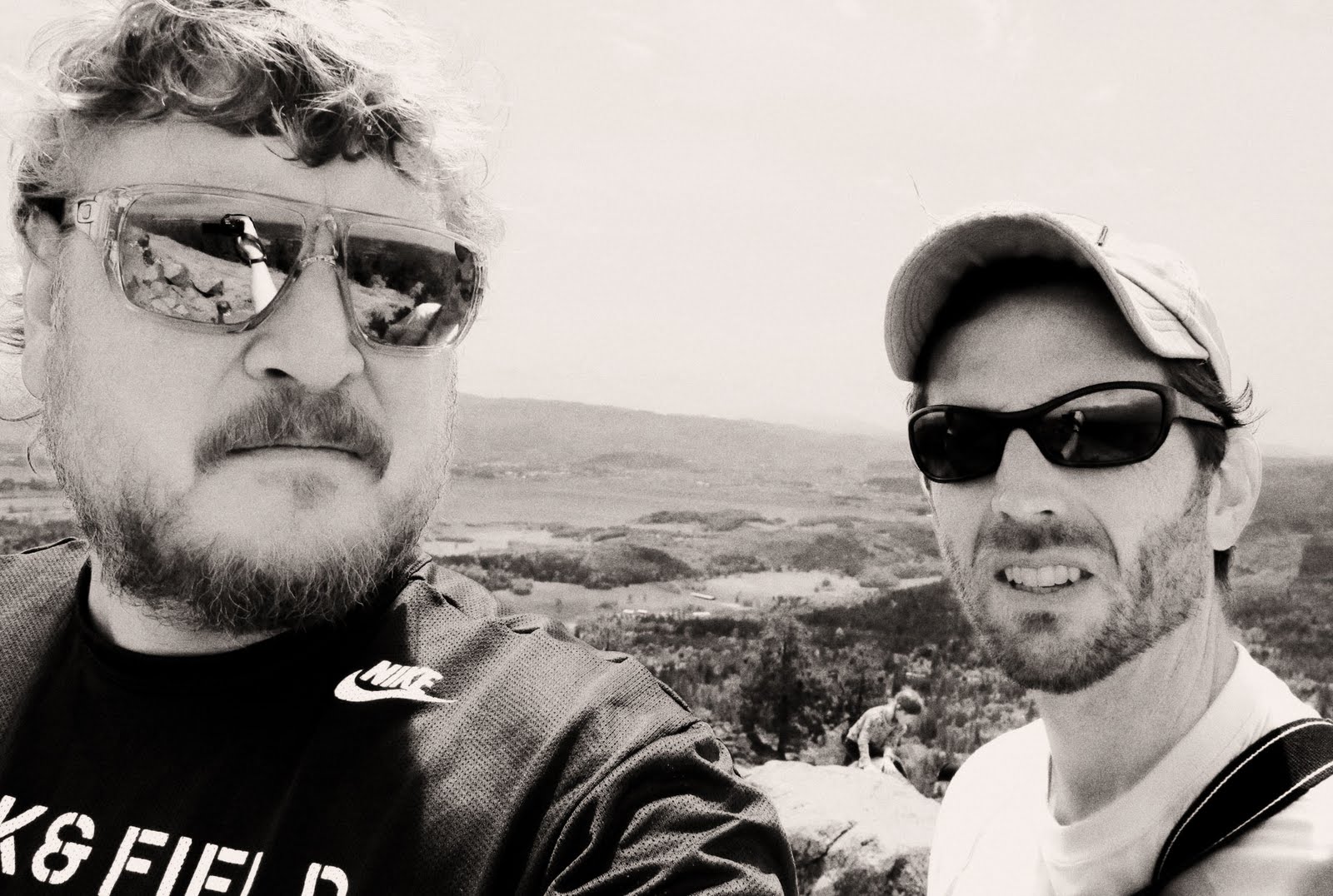
This hike was up Spencers Butte. Here are a few quick pics I snapped:
These are the guys who “planned” this thing. Seriously, would you really trust’em?
My thoughts exactly.

poison oak

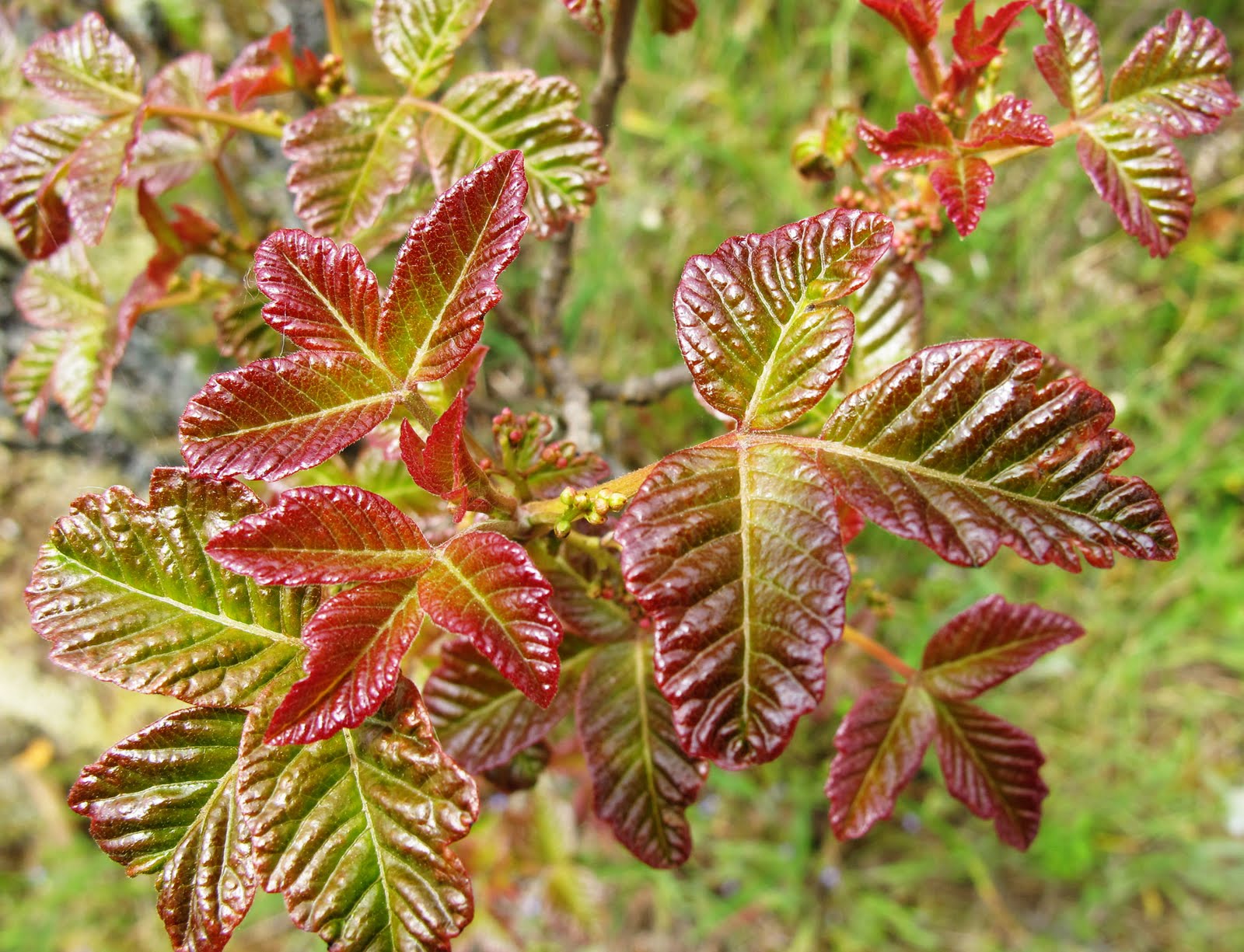
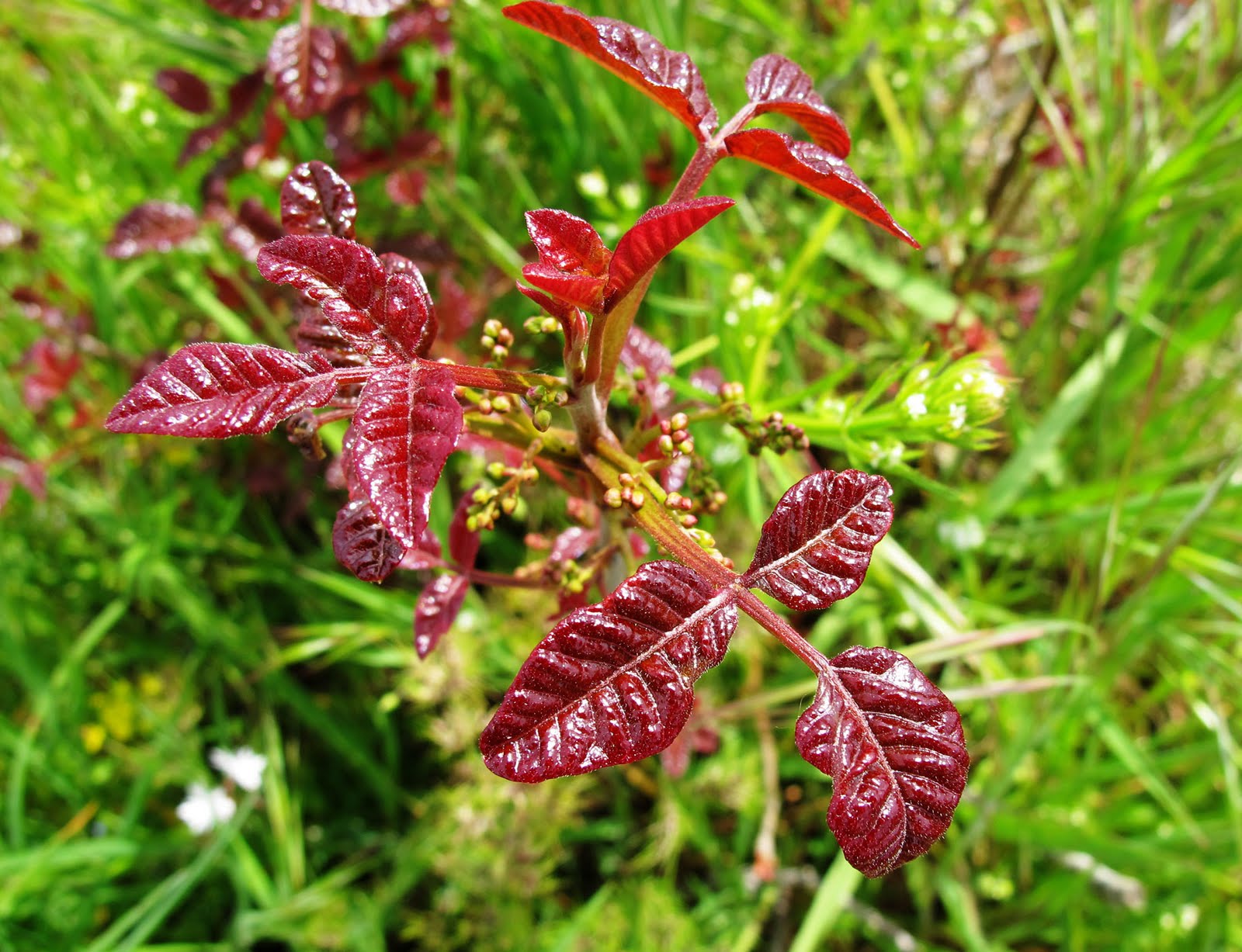
I don’t want to be an alarmist but it’s poison oak season people! Every year we go on hikes and warn the kids not to frolic in the poison oak. Naturally the kids ask what it looks like and we always say, “Well…it’s a bush, and it’s got leaves that are maybe green, or red, or greenishredish. And they’re shiny.” But honestly, we can never remember until we are upon it, or more likely until someone says, “Is that a large poison oak bush you’re standing in?”

So here are some closeups – taken as great risk – for your edification.
The greenishredish version:

The just-plain-redish version:

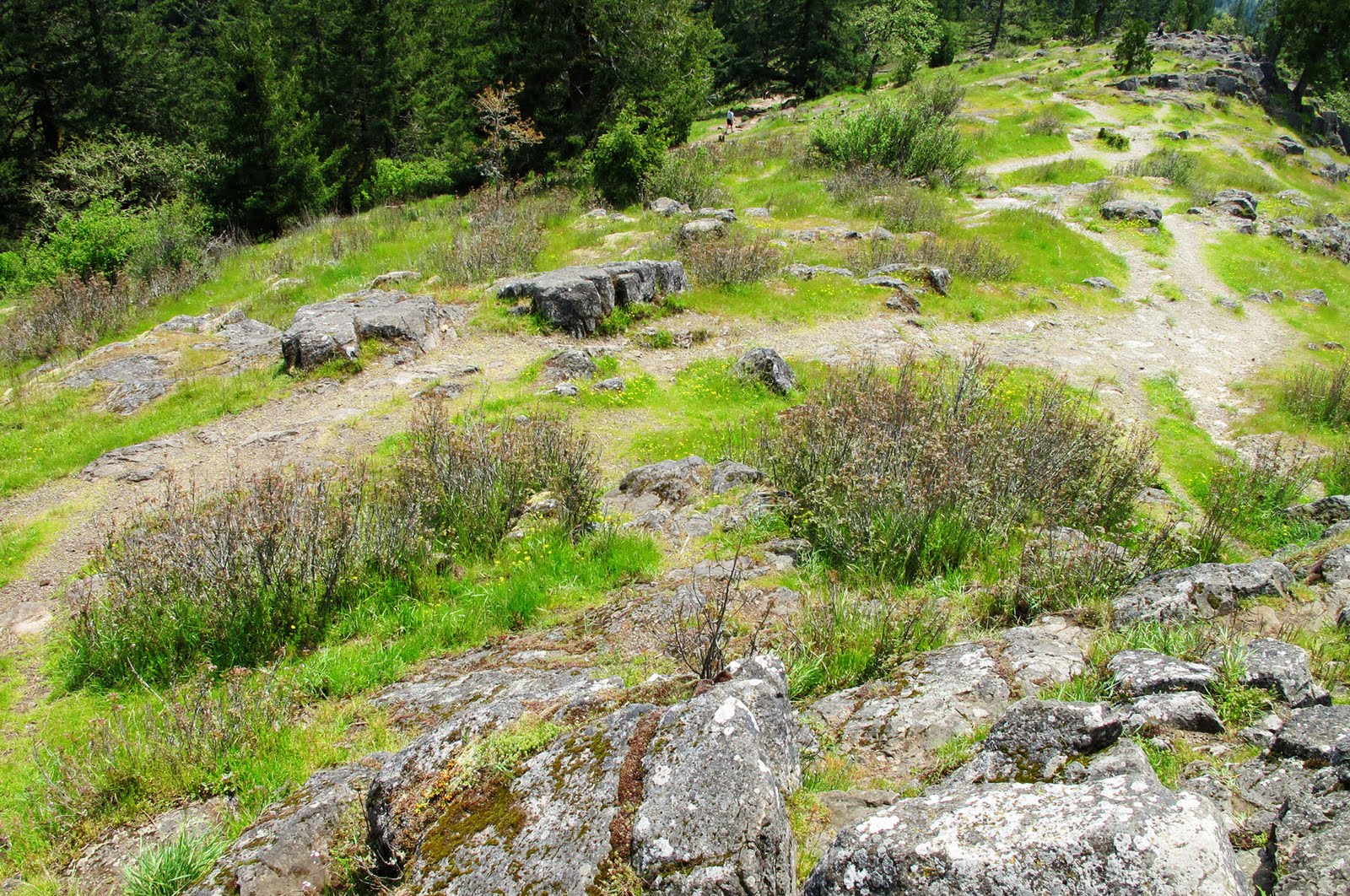
A lovely trail-laced hillside. A perfect
place for the kids to run amok:

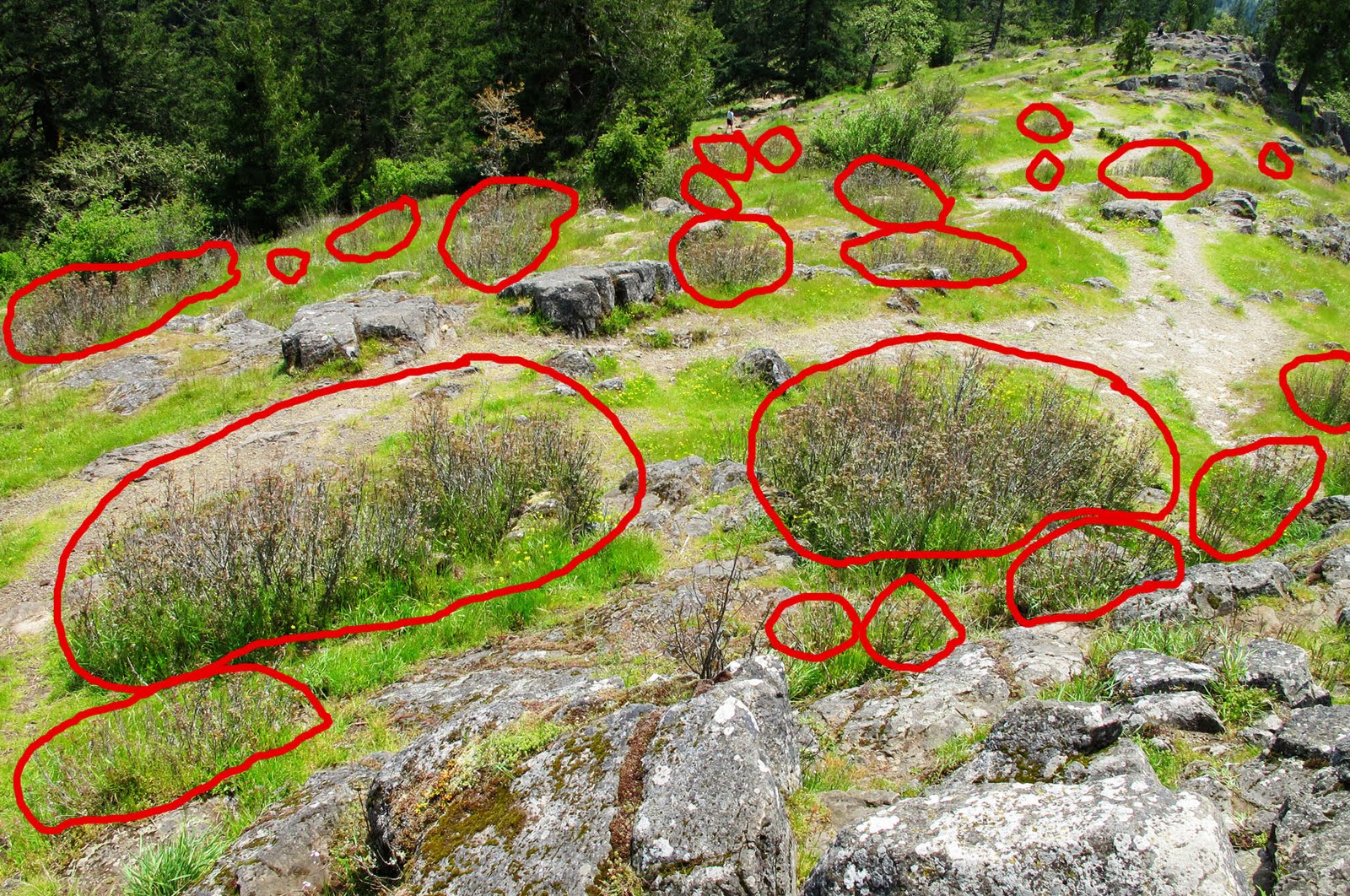
A perfect place LACED WITH EVIL:

Poison oak can be nasty. Some people get it real bad, others not as much (15% to 30% don’t seem to be adversely affected). Earlier in the year the leaves are small and green (no red). But even a bare branch in winter can get you.
The question you’re asking right now is, “What in tarnation is poison oak for?” The purpose of poison oak is so that you will, at some point in your life, face the existential choice: Do I want to believe in a god who would create poison oak and put it where I want to walk? Or, why would a loving god allow me to get such an uncomfortable rash? Just remember that, though the testing of your faith may result in an itchy rash, the testing of your faith also develops perseverance.

>40 years ago today

>Quoted from Democracy Now:

[F]orty years ago today, the Ku Klux Klan bombed the transmitter of Pacifica station KPFT in Houston, Texas. The bombing came just months after KPFT went on the air. The bombing forced the station off the air for several weeks. The station’s transmitter was bombed again on October 6, 1970. At the time, George H.W. Bush was a congressman representing Houston. He condemned the October bombing, saying, “It’s outrageous. It’s against everything this country stands for.” In 1981, the Grand Wizard of the Ku Klux Klan admitted that his greatest feat “was engineering the bombing of a left-wing radio station.” The KKK understood how dangerous Pacifica was, as it allowed people to speak for themselves.
Pacifica was playing Arlo Guthrie’s Alice’s Restaurant at the time of the bombing. If you ever needed some visuals to get you through the 20 minute song…

>changes to this blog

>

I have been making some changes to this blog. I have cleaned up the sidebar links lists quite a bit, and changed the overall format. Having a lot of links may be nice, but it gets cluttered, some links no longer work, some bloggers have stopped blogging, and you all know how to find the blogs & sites you like anyway.

I have also started a new blog where I can focus more on my thoughts and musings on faith, theology, Christianity, and religious cultures. That blog is SatelliteSaint.

My desire is to have PilgrimAkimbo be more about general life things (family, education, outdoors) and to have another place for the stuff mentioned above…not that they don’t go together, but it just makes sense to me.

>go outdoors

>

The clearest way into the universe is through a forest wilderness.

~ John Muir

Never does nature say one thing and wisdom another.

~ Juvenal, Satires

The poetry of the earth is never dead.

~ John Keats

Do not look to the ground for your next step; greatness lies with those who look to the horizon.

~ Norwegian Proverb

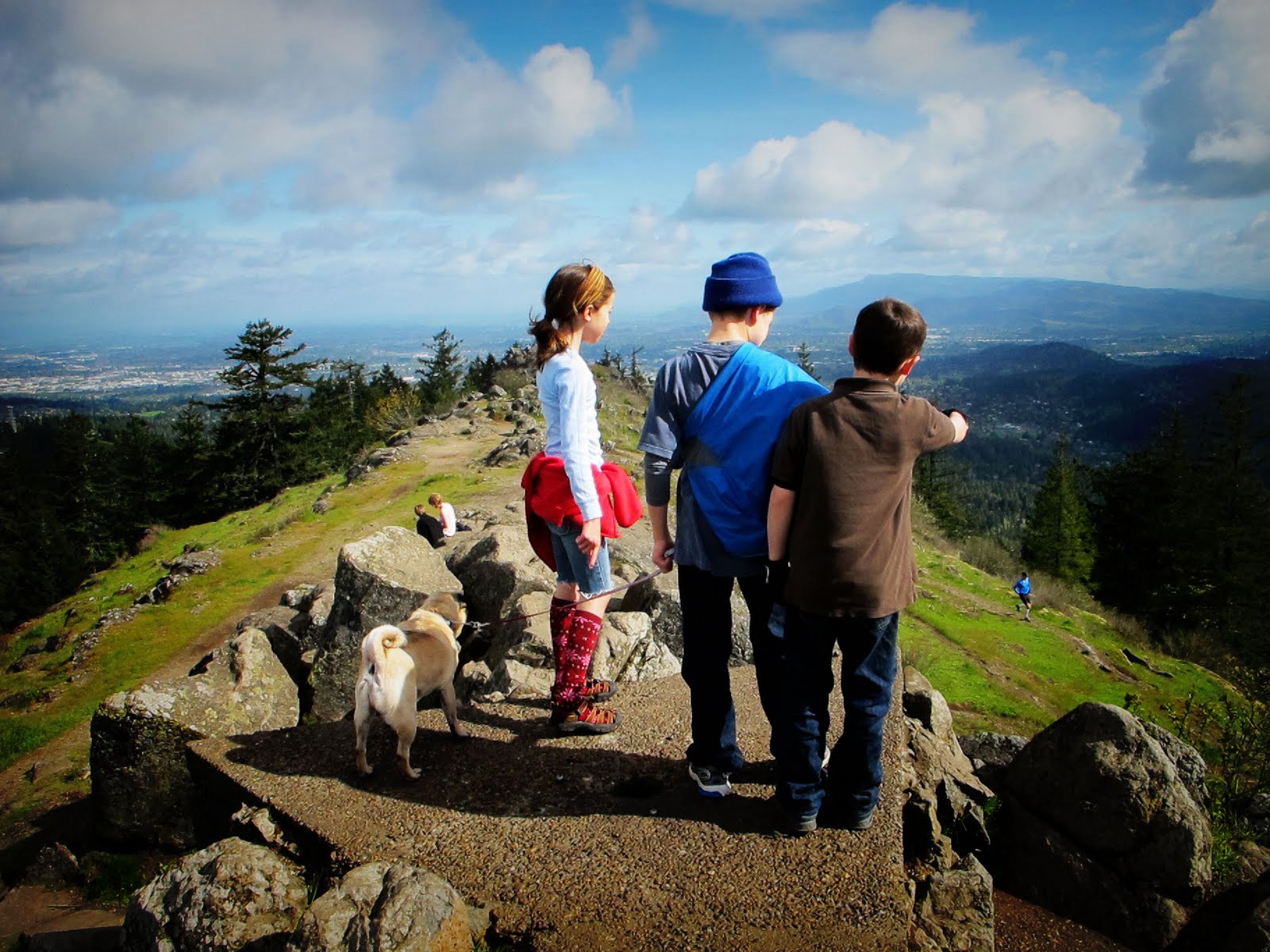
A man does not climb a mountain without bringing some of it away with him, and leaving something of himself upon it.
~ Sir Martin Conway

And this, our life, exempt from public haunt, finds tongues in trees, books in the running brooks, sermons in stones, and good in everything.

~ William Shakespeare