>Vive le tour (1962)

>

Following today’s top bicycle racers leaves one with the impression that it is a sport of the superhuman. This is true of following them in the press, but I assume also on your bike, though I have never tried. The best cyclists seem almost machine-like. But underneath it all is the very human struggle of athletic competition. Strip away all the hype and gloss and one might find something like this wonderful 1962 documentary directed by Louis Malle, Vive le tour.
Notice at 8:31 in Part 1 you hear in English one of the reporters saying, “Doping or not doping, that is the question.”
At 1:43 in Part 2 the film addresses doping. The excuse the riders gave? They had eaten some “bad fish.” Sound familiar?

Descending in the fog looked dreadful. 

It is interesting that the take on doping is about riders wanting to block the pain so they don’t stop rather than about riding faster. The film almost takes a sympathetic stance, as though doping only lets us know just how tough this race truly is.

Challenging books: Adler and reading for one’s mind

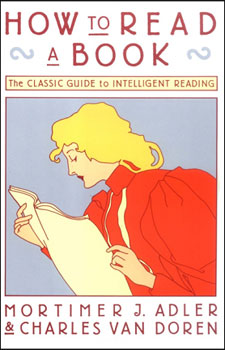
It is easy to get excited about the idea of a classical education, especially if one naturally loves both books and history. We are trying to offer a modified classical education to our children via homeschooling. The modern idea for a classical education via classical books comes, in part, from Mortimer J. Adler and his book How to Read a Book.
Adler was an advocate of reading books more difficult than one’s current level can easily handle, thus stretching and elevating one’s mind. The best books require one to work at understanding them. The secret is that the process (the labor) of trying to understand is actually part of the joy of reading. Only reading books as escape, as easy pickings, is like eating only cake for dinner: in the short run it seems great, but in the long run it leaves one unfulfilled and anemic.
Adler also put together his canon of what a classical reading list should look like. I love reading lists; they give me more reasons to buy more books. But I hate reading lists too because they remind me of how much I have yet to read and that I am a notoriously slow reader. My desire is the get through the list below. I doubt I will read half the list before I die. Still, it’s worth a shot, isn’t it?

From Wikipedia: The following is an example list from How to Read a Book:

  1. Homer: The Iliad, The Odyssey
  2. The Old Testament
  3. Aeschylus: Tragedies
  4. Sophocles: Tragedies
  5. Herodotus: Histories
  6. Euripides: Tragedies
  7. Thucydides: History of the Peloponnesian War
  8. Hippocrates: Medical Writings
  9. Aristophanes: Comedies
  10. Plato: Dialogues
  11. Aristotle: Works
  12. Epicurus: “Letter to Herodotus“, “Letter to Menoecus
  13. Euclid: The Elements
  14. Archimedes: Works
  15. Apollonius: The Conic Sections
  16. Cicero: Works
  17. Lucretius: On the Nature of Things
  18. Virgil: Works
  19. Horace: Works
  20. Livy: The History of Rome
  21. Ovid: Works
  22. Plutarch: Parallel Lives; Moralia
  23. Tacitus: Histories; Annals; Agricola; Germania
  24. Nicomachus of Gerasa: Introduction to Arithmetic
  25. Epictetus: Discourses; Enchiridion
  26. Ptolemy: Almagest
  27. Lucian: Works
  28. Marcus Aurelius: Meditations
  29. Galen: On the Natural Faculties
  30. The New Testament
  31. Plotinus: The Enneads
  32. St. Augustine: “On the Teacher”; Confessions; City of God; On Christian Doctrine
  33. The Song of Roland
  34. The Nibelungenlied
  35. The Saga of Burnt Njál
  36. St. Thomas Aquinas: Summa Theologica
  37. Dante Alighieri: The New Life (La Vita Nuova); “On Monarchy”; The Divine Comedy
  38. Geoffrey Chaucer: Troilus and Criseyde; The Canterbury Tales
  39. Leonardo da Vinci: Notebooks
  40. Niccolò Machiavelli: The Prince; Discourses on the First Ten Books of Livy
  41. Desiderius Erasmus: The Praise of Folly
  42. Nicolaus Copernicus: On the Revolutions of the Heavenly Spheres
  43. Thomas More: Utopia
  44. Martin Luther: Table Talk; Three Treatises
  45. François Rabelais: Gargantua and Pantagruel
  46. John Calvin: Institutes of the Christian Religion
  47. Michel de Montaigne: Essays
  48. William Gilbert: On the Lodestone and Magnetic Bodies
  49. Miguel de Cervantes: Don Quixote
  50. Edmund Spenser: Prothalamion; The Faerie Queene
  51. Francis Bacon: Essays; The Advancement of Learning; Novum Organum; The New Atlantis
  52. William Shakespeare: Poetry and Plays
  53. Galileo Galilei: Starry Messenger; Two New Sciences
  54. Johannes Kepler: The Epitome of Copernican Astronomy; Harmonices Mundi
  55. William Harvey: On the Motion of the Heart and Blood in Animals; On the Circulation of the Blood; On the Generation of Animals
  56. Thomas Hobbes: Leviathan
  57. René Descartes: Rules for the Direction of the Mind; Discourse on Method; Geometry; Meditations on First Philosophy
  58. John Milton: Works
  59. Molière: Comedies
  60. Blaise Pascal: The Provincial Letters; Pensées; Scientific Treatises
  61. Christiaan Huygens: Treatise on Light
  62. Benedict de Spinoza: Ethics
  63. John Locke: A Letter Concerning Toleration; Of Civil Government; Essay Concerning Human Understanding; Some Thoughts Concerning Education
  64. Jean Baptiste Racine: Tragedies
  65. Isaac Newton: Mathematical Principles of Natural Philosophy; Opticks
  66. Gottfried Wilhelm von Leibniz: Discourse on Metaphysics; New Essays Concerning Human Understanding; “Monadology
  67. Daniel Defoe: Robinson Crusoe
  68. Jonathan Swift: “A Tale of a Tub“; A Journal to Stella; Gulliver’s Travels; “A Modest Proposal
  69. William Congreve: The Way of the World
  70. George Berkeley: Treatise Concerning the Principles of Human Knowledge
  71. Alexander Pope: “Essay on Criticism“; “The Rape of the Lock“; “Essay on Man
  72. Charles de Secondat, baron de Montesquieu: Persian Letters, Spirit of the Laws
  73. Voltaire: Letters on the English, Candide, Philosophical Dictionary
  74. Henry Fielding: Joseph Andrews, Tom Jones
  75. Samuel Johnson: “The Vanity of Human Wishes“, Dictionary, Rasselas, Lives of the Poets
  76. David Hume: A Treatise of Human Nature, Essays Moral and Political, An Enquiry concerning Human Understanding
  77. Jean-Jacques Rousseau: Discourse on the Origin of Inequality, On Political Economy, Emile, The Social Contract
  78. Laurence Sterne: Tristram Shandy, A Sentimental Journey through France and Italy
  79. Adam Smith: The Theory of Moral Sentiments, The Wealth of Nations
  80. Immanuel Kant: Critique of Pure Reason, Groundwork of the Metaphysics of Morals, Critique of Practical Reason; The Science of Right; Critique of Judgment; Perpetual Peace
  81. Edward Gibbon: The Decline and Fall of the Roman Empire; Autobiography
  82. James Boswell: Journal; The Life of Samuel Johnson, LL.D.
  83. Antoine Laurent Lavoisier: Traité Élémentaire de Chimie (Elements of Chemistry)
  84. Alexander Hamilton, John Jay, and James Madison: The Federalist Papers
  85. Jeremy Bentham: Introduction to the Principles of Morals and Legislation; Theory of Fictions
  86. Edmund Burke: Reflections on the Revolution in France
  87. Johann Wolfgang von Goethe: Faust; Poetry and Truth
  88. Jean Baptiste Joseph Fourier: Analytical Theory of Heat
  89. Georg Wilhelm Friedrich Hegel: The Phenomenology of Spirit; The Philosophy of Right; Lectures on the Philosophy of History
  90. William Wordsworth: Poems
  91. Samuel Taylor Coleridge: Poems; Biographia Literaria
  92. Jane Austen: Pride and Prejudice; Emma
  93. Carl von Clausewitz: On War
  94. Stendhal: The Red and the Black; The Charterhouse of Parma; On Love
  95. Lord Byron: Don Juan
  96. Arthur Schopenhauer: Studies in Pessimism
  97. Michael Faraday: The Chemical History of a Candle; Experimental Researches in Electricity
  98. Charles Lyell: Principles of Geology
  99. Auguste Comte: The Positive Philosophy
  100. Honoré de Balzac: Le Père Goriot; Eugénie Grandet
  101. Ralph Waldo Emerson: Representative Men, Essays, Journal
  102. Nathaniel Hawthorne: The Scarlet Letter
  103. Alexis de Tocqueville: Democracy in America
  104. John Stuart Mill: A System of Logic; On Liberty; Representative Government; Utilitarianism; The Subjection of Women; Autobiography
  105. Charles Darwin: The Origin of Species; The Descent of Man; Autobiography
  106. Charles Dickens: Pickwick Papers; David Copperfield; Hard Times
  107. Claude Bernard: Introduction to the Study of Experimental Medicine
  108. Henry David Thoreau: “Civil Disobedience“; Walden
  109. Karl Marx and Friedrich Engels: Capital; The Communist Manifesto
  110. George Eliot: Adam Bede; Middlemarch
  111. Herman Melville: Moby-Dick; Billy Budd
  112. Fyodor Dostoevsky: Crime and Punishment; The Idiot; The Brothers Karamazov
  113. Gustave Flaubert: Madame Bovary; Three Stories
  114. Henrik Ibsen: Plays
  115. Leo Tolstoy: War and Peace; Anna Karenina; What is Art?; Twenty-Three Tales
  116. Mark Twain: The Adventures of Huckleberry Finn; The Mysterious Stranger
  117. William James: The Principles of Psychology; The Varieties of Religious Experience; Pragmatism; Essays in Radical Empiricism
  118. Henry James: The American; The Ambassadors
  119. Friedrich Wilhelm Nietzsche: Thus Spoke Zarathustra; Beyond Good and Evil; The Genealogy of Morals; The Will to Power; Twilight of the Idols; The Antichrist
  120. Jules Henri Poincaré: Science and Hypothesis; Science and Method
  121. Sigmund Freud: The Interpretation of Dreams; Introductory Lectures on Psychoanalysis; Civilization and Its Discontents; New Introductory Lectures on Psychoanalysis
  122. George Bernard Shaw: Plays and Prefaces
  123. Max Planck: Origin and Development of the Quantum Theory; Where Is Science Going?; Scientific Autobiography
  124. Henri Bergson: Time and Free Will; Matter and Memory; Creative Evolution; The Two Sources of Morality and Religion
  125. John Dewey: How We Think; Democracy and Education; Experience and Nature; Logic: The Theory of Inquiry
  126. F. Scott Fitzgerald: The Great Gatsby
  127. Alfred North Whitehead: An Introduction to Mathematics; Science and the Modern World; The Aims of Education and Other Essays; Adventures of Ideas
  128. George Santayana: The Life of Reason; Skepticism and Animal Faith; Persons and Places
  129. Lenin: The State and Revolution
  130. Marcel Proust: Remembrance of Things Past (the revised translation is In Search of Lost Time)
  131. Bertrand Russell: The Problems of Philosophy; Principia Mathematica; The Analysis of Mind; An Inquiry into Meaning and Truth; Human Knowledge, Its Scope and Limits
  132. Thomas Mann: The Magic Mountain; Joseph and His Brothers
  133. Albert Einstein: The Meaning of Relativity; On the Method of Theoretical Physics; The Evolution of Physics
  134. James Joyce: “The Dead” in Dubliners; A Portrait of the Artist as a Young Man; Ulysses
  135. Jacques Maritain: Art and Scholasticism; The Degrees of Knowledge; The Rights of Man and Natural Law; True Humanism
  136. Franz Kafka: The Trial; The Castle
  137. Arnold J. Toynbee: A Study of History; Civilization on Trial
  138. Jean-Paul Sartre: Nausea; No Exit; Being and Nothingness
  139. Aleksandr Solzhenitsyn: The First Circle; Cancer Ward
  140. Ludwig Wittgenstein: Tractatus Logico-Philosophicus; Philosophical Investigations

>On Cycling Clothing for the Non-Fashion Plate: Part 3 of 3

>

See related posts here: Part One and Part Two.

When it’s wet
Dealing with the wet stuff can be a hassle. I live in Oregon. It rains here a lot. Oregonians don’t tan, they rust. But I love the rain and it doesn’t usually get in the way of my riding. I have commuted in driving drizzle and torrential downpours. I have ridden on slippery roads and through foot and a half deep water at flooded intersections. I have tried various configurations of rain gear. The first thing to remember is that it is okay to get wet. If you have ever bathed (which I hear some cyclists do) then you know you will not melt when water hits your skin. The key is not about staying dry as much as not getting too cold. Soaked cotton clothing is miserable and a pathway to hypothermia. Don’t wear cotton anything if it is going to rain. When it rains, and I’m biking, I plan on being wet. I know I will either get wet from the rain or from my own sweat inside my rain jacket. This is a reality for all cyclists and keeps many people from riding. But folks, sweat is okay, even for Thurston Howell:

MR HOWELL 
Ah, looks like water, a'wonder where 
it came from?
 
MRS HOWELL 
Thurston I know what it is! I use to 
see it on our gardener! It's perspiration!
 
MR HOWELL
 It IS!? What can I put it in? I've 
got to send it to dad, he'd be 
fascinated!*

When commuting to work I just bring dry clothes. I hang up my wet clothes so they will dry before I ride home. Usually my shoes do not dry out though, so I wear wool socks in winter and sometimes bring an extra pair for the ride home. I have never used overbooties, but I might try someday.

One does not need a rain jacket to ride in the rain. A good fleece or wool jacket or heavy shirt may be fine. Synthetic fabrics dry fast. Wool often  blocks the wind better. Both keep you warm even when wet. But do not wear any cotton underneath. The same goes for pants. I don’t wear rain pants. I have a pair of synthetic fabric cycling specific pants that have an extra layer of wind-blocking material on the front. If it gets really cold I can wear an extra pair of long underwear under the pants. Even if I get wet I still stay warm. They dry fast too.

If you are carrying dry clothing in you bike bag make sure they are sealed from the rain. Most bags, whether panniers, shoulder bags, or backpacks are never fully waterproof. I always put my clothes into a plastic bag before putting them in my bike bag. Typically I just use one of those plastic grocery bags but you can get light weight waterproof bags of specific volume and dimensions from outdoor retailers; these are known as dry bags. I also hang up my wet cycling clothing at work so they can dry out before I use them to ride home.

In short, you will get wet if you ride in the rain. Wear clothes that will keep you warm even if wet. Bring dry clothes to change into. Keep your dry clothes dry.

Priorities
Finally, I would prioritize clothing (and any other gear) for cycling buying into the following list: Safety first, reliability and comfort second, fashion third. A forth might be ethically sourced, eco-friendly, and corporate responsibility, which may essentially rule out Lycra (read this).

The first two priorities often go together. Uncomfortable or annoying clothing is often unsafe too. Your clothing should be such that you don’t have to think about it while you ride. It should just do its job without fuss. But if you have a choice between brighter and darker fabrics you might want to pick the brighter so you are most visible to motorists. However, and I speak as a non-fashion plate, there is no need whatsoever to wear horrendously ugly, disgustingly neon, or fashionably egregious clothing merely because it makes you more visible. Have some respect for yourself and for others.

Also, remember that simple things, like zipping up a jacket, become more challenging while riding a bike. There is nothing more frustrating than having to stop riding in order to adjust your clothing because the design of the garment requires two hands to manage the adjustment. (Okay, there are probably a few things more frustrating, but you understand.) Buttons can be a challenge, but many zippers are difficult too, especially around the neck. Test out your clothing for ease of use when you try it on. Imagine you are riding in the rain, in a bike lane with traffic immediately on your left, and you want to zip up your coat’s collar. Can you do it with one hand, easily? Or does the zipper and fabric get bunched up and difficult to zip without using two hands?

A final word on priorities: With any activity ask yourself what are you really trying to accomplish. One doesn’t need the most expensive grill if the goal is not keeping up with the Jones’ but to cook the perfect steak. One doesn’t need to buy the latest, coolest cycling gear if the goal is to get to work safely, with minimal hassle, and then back home again. And yet, style is important. Use stuff that you like to use, not merely because it works but also because you just like it. Get clothing that looks good, but also works. Ride a bike that does what it is supposed to do for sure, but ride one you like for other reasons too. But don’t ever put yourself in a position where you find your new spirit-self hovering above your lifeless body thinking that your stylish bike without reflectors, lights, and adequate brakes, your dark clothing without any reflective capabilities, and your lack of helmet, may have added up to one of the darkest and most miserable days for your loved ones still waiting for you to return.

and then…
There is a lot of worship of cycling these days. It’s so hip, so cool, so perfect in many people’s minds. And I agree with all that. But bicycle commuting is also about getting from one place to the next safely, efficiently, and with minimal hassle. Good cycling clothing can make a big difference. If you realize that your choices for cycling clothing range far beyond the neon and Lycra of the old school bike shop then you know you have a surprising number of choices to find what works for you. As they say, the world is your oyster, though I have no idea why they say that.

* Gilligan’s Island, Season One, Episode #3, “Voodoo Something to Me”. If you do not know what Gilligan’s Island is, then consider that you now have homework to do.
>On Cycling Clothing for the Non-Fashion Plate: Part 2 of 3

>

This is part two of a three part series of posts on bicycling clothing for the suburban commuter (non-fashion plate style). Part One is here, which includes the prologue and Rule One.

Rule Two
Rule One (see related previous post) brings me to another “rule,” which is: Bicycling specific gear is not always necessary or the best choice. In our gear crazed world we often feel the need to have very specific kinds of stuff for each activity. However, in each situation we have to ask if we are getting the best value from that philosophy.

Here’s an example of what I am talking about with shoes: We need tennis shoes, running shoes, trail running shoes, walking shoes, gym shoes, etc. etc. When we were kids we just had something generically called “tennis shoes” and an older generation than me generically called “sneakers.” We didn’t need any other kind of shoes, unless our parents made us wear uncomfortable dress shoes for church. Given that brief diatribe, I will say that I currently do use an old pair of cycling specific shoes because I use clipless pedals (which is a whole other issue) and I like them, but I really don’t have to. And there is a problem with these shoes, I have to bring regular shoes with me to change in to for work. Plus they are not as comfortable as regular shoes. Their advantage is merely that they have a cleat attached to the sole to click into the pedals, which for me but is not the best method for many cyclists. Consider these opinions on cycling shoes and pedals from Rivendell Bicycle Works (there are other great opinions on bike stuff there too). Though I like my clipless pedals, maybe because of many years downhill skiing and using ski bindings, and I like that “click,” I do miss my old clip pedals with the handyman-style double straps, and my ancient Vittoria leather shoes (though they were impossible to walk in and therefore terrible for commuting). And sometimes I just want a flat pedal to use with my tennis shoes or sandals. Maybe I will go back someday. The point is this: Cycling specific shoes are not inherently necessary for riding a bike, though the cycling industry would have you believe they are. Use them if you like them, don’t if you don’t, or don’t care for the expense. I use the example of bike shoes merely to show how one can be lead down an apparently necessary path like a cow with a ring in its nose. I have been led many times down that path.

Bike specific jerseys are probably the least necessary item a cyclist can buy, and often the most obnoxious looking. Any shirt, long sleeve or short, will do. Something that breathes well, blocks the wind a little, and wicks away moisture (if you are going to sweat much) is good. For my early morning rides when it’s cold and sometimes a little wet I wear a long sleeve synthetic shirt from either Patagonia or REI (brand doesn’t matter), and over the top I wear a wool long sleeve shirt from Filson. This Filson is a high quality wool that does a great job against both wind and wetness. Plus it breaths well. If it is even colder I wear a Patagonia micro puff insulated vest over the shirts. I also wear a thin wool hat under my helmet on cold mornings. This is just some plain wool beanie type hat that is not cycling specific. I wear the synthetic fabric shirts because I like the feel of them and they work well, but I might change to a soft wool in the future. I wear the wool shirt because its just the best shirt I have for what it does, and it looks great. If it is really raining I wear a coated nylon rain jacket over a synthetic shirt. Remember, if you wear coated nylon you will sweat. And know this, if it is raining then the so-called waterproof/breathable fabrics don’t breathe anyway and you will still get sweaty. 
If you like to wear gloves when you ride, which I do, you can really wear any kind of glove. Gloves can help with grip, especially when one’s palms get sweaty or it is raining. Gloves can also keep one’s hands warm on cold days. Cycling specific gloves have the advantages of padding in the palm. However, padding isn’t really needed if one’s handlebars and seat height are in good agreement for commuting, or less aggressive cycling. If you are not racing then consider raising your bars a bit. That should put less pressure on your hands and therefore less need for padding. If you prefer the superman position then get padded gloves. I have several gloves I choose from. I do have a typical pair of cycling gloves with the cut off fingers and padded palms. But, for my morning commute, I have a pair of soft leather full-finger gloves with Thinsulate interiors that I have just started trying out. These are not cycling specific, but they seem to work great. I added Nikwax to the leather to make them a bit more waterproof. I also have an old pair of alpine ski gloves for even colder weather.
NOTE: Let me say again, as I did in Post One on this topic, that my commute is around seven miles each way. That distance is just short enough to be easy to do, and just long enough to make it verge on being a longish commute. I prefer to ride a bike that is less like an upright urban commuter and more like a road bike suitable to going greater distances
Rule Three
Which brings me to a third rule: Bicycling specific gear is sometimes the best choice. I like bike shorts with good padding. If the weather is not too cold I like typical bike gloves with padding in the palms. Mostly I prefer these items for longer rides. For shorter rides clothing has more to do with the weather and not whether one is riding a bike. For longer rides I like a bike jersey that doesn’t flap in the wind too much and has pockets, for shorter rides anything works. I prefer a genuine bike helmet rather than not. What one needs to decide, usually through experience and experimentation, is what works for you, what gear fits the need, and sometimes you should just buy that expensive cycling specific item. When I discovered bike shorts it was a true godsend. But then I was starting to go on longer rides in the country at the time.

Before buying cycling specific gear do some research. Ask what others are using and why. Look online for reviews and opinions. Then try something and see if you are getting what you need. There is a lot of very expensive cycling gear on the market, much of it is excellent, but much of it can be substituted with cheaper alternatives. A three hundred dollar rain jacket may work well, but a fifty dollar jacket might work just as well. Beware of the lure of well marketed products. Use what works best for you.

NOTE: I am not a retrogrouch. I do not believe that everything that is old is better than everything that is new. I am not so sold on wool clothing that I refuse the new synthetics. I prefer synthetic long underwear. Mid-layer and outerwear can be wool, but they can be synthetic too. Just know this, synthetic fabric is only superior IF it is superior, not because it represents the claimed advancements of new technology. Also, wool has qualities that are hard to quantify or qualify but are there because wool is a natural fabric. Sometimes old is just fine. Sometimes it is better. I have a pair of ancient Shimano mountain bike shoes that I have used for commuting for more than fifteen years. They just will not wear out. They still work great, probably as well as a newer shoe, so I keep using them. Someday I will replace them with a slightly wider pair of shoes, but only for comfort reasons.

This is Part Two of Three. More to come.

>On Cycling Clothing for the Non-Fashion Plate: Part 1 of 3

>

Prologue: My current perspectives on bicycling clothing were born from the fiery crucible of commuting in a bike-friendly city, mostly on bike paths and bike lanes, and in mostly temperate weather. In other words, the following thoughts do not consider issues of riding extremely long distances, or riding in snow, or riding in jungle conditions, or fighting with dragons. Nor am I a gear or clothing tester, or care to be one. Rather, I write only from my own experience as a humble (and sometimes humiliated) bike commuter, who has a very limited budget, and with the mostly suburban commuter in mind. Writing is also my method of exploring my own thoughts and experiences.

I am a suburban cyclist for the most part. I have read a few blogs and books on cycling and commuting, and much of the time they do not make the distinction as clearly as they should. Suburban commuting is different than urban commuting. In the magical land of suburbia the streets tend to be longish and straightish. Stop lights are minimal (sometimes). Speed limits are often 40+ mph for cars, and drivers own the place. In good cities there are usually bike lanes for the higher mph streets. Distances are also longer, which is the biggest factor in how one commutes. Urban cyclists go shorter distances and deal more directly with traffic. In Urbania commutes are typically around 2 to 3 miles (or less) one way. The classic Dutch bike configuration works well for the urbanist who is content to take their time, likes the visibility of sitting upright, and likes to wear tweed jackets and fedoras. But my commute is seven miles in one direction. It’s not so long that I couldn’t ride the thing on just about any bike, but a Dutch style bike is a little too relaxed for my tastes. Plus I want to get to work as quickly as possible, and I want to use my ride as my workout so I don’t also have to get into the gym. Thus my choice of clothing tends towards more cycling appropriate clothing more or less, then I change into work appropriate clothing once I arrive.

I have always been a gear nut and cycling offers plenty of opportunity for accumulating gear. However, the more I commute the more my opinions on cycling gear change from the mere “new is better” or “more is better” or “Ooo that looks shiny!” perspective that has characterized my life. Gear is fun, but it should have a functional purpose too. Plus there is no getting away from gear, regardless of whether you are obsessed with anything new and shiny or will only use gear that reflects a simpler time, like before the internal combustion engine or getting some food began with grabbing one’s spear. You need gear and you will have it. Gear can also be expensive and you don’t want to waste your money. Owning something merely because it makes you happy to have something new may be reason enough, but it is not what I am writing about here. I want both happiness and functionality. Also, life is a process and my ideas are in flux. My goal here is not to list out what (or what not) to use, but to highlight my process and some “rules” that make sense to me.These are preliminary thoughts. The following is in no way a final word on anything.

Rule One
The first rule to follow, if there really are any rules at all, is to use whatever works. If you follow that rule then you probably don’t really need any other rules.* When it comes to cycling form follows function, and good function tends to lead to good form (but not always). Bicycle manufacturers and bicycle gear manufacturers are mostly like other companies; they are prone to follow fashion and the latest trends. They will sometimes discontinue a great item in favor of a not-as-great item because the new sells better than the old. But for the most part cycling companies recognize the value of functionality and create quality, well designed gear. Usually the most functional is also the most beautiful. On the other hand, the rule of using whatever works means you are not tied to cycling specific gear. This requires one to pay attention; notice what gear you actually use and how it functions. Ask around and see what others are using. Move on gear that isn’t working for you. Try new things, and stick with what works, unless something else works better and you want a change. And keep this in mind: A correlative to this rule is that what is most expensive is not necessarily what works best.

An advantage of Rule One is that you can be a gear nut and not go bankrupt. You can explore your obsession with gear (cyclists, like skiers, are inherently gear nuts) without having to fill up your garage with stuff you later find you really don’t need. You can try shiny new stuff and pre-used old stuff. You can search out the latest hi-tech or the ancient and classic. You can also settle on certain items and use them for a long time without feeling the pressure to change. Seeking out what works is a great way to stay in tune with your needs without overdoing it.

This is Part One of Three. More to come.

* This rule works well for many activities, including back-country skiing, mountaineering, and anything where the functional capabilities of one’s gear is important to the success of the activity, including one’s safety and comfort.

>About this blog of mine, and you

>

Eventually every blogger writes a post about his/her blog and why they blog. I think I have written at least two or three before this post. My “readership” has waned here at PilgrimAkimbo. I track the numbers. I see how many people come here, from where, and what they look at. I see the number of comments drop from a few here and there to almost none. I see most of the visitors are coming from Google’s image search and they mostly end up on older posts. Not many people seem interested in following what’s new here. I am faced day after day with the question of whether I should continue writing this blog.

When I began PilgrimAkimbo I did so because I wanted to re-explore my interest in cinema and to connect with like-minded folks. I studied cinema in grad school and I wished to bring some of that interest back up to the surface of my busy life. I wrote a lot about films and made comments on other film-related blogs. There is a loose community of such people, many of whom are far better bloggers than I. But my eclectic interests, as I expected they would, overcame me and I began to blog on other topics as well, from art and poetry, to family and life, to politics and religion. My blog kind of exploded in a way. Topically it became a yard sale, a flea market of personal musings. In short, it got diluted and unfocused. I knew that anyone who had been coming to my blog because I wrote about film would likely start to feel as though this was not as interesting or meaningful a place for them. I also knew that anyone who was new to this blog would wonder what the hell it was all about. PilgrimAkimbo increasingly lost any sense of focus, apart from the “whatever Tucker is interested in today” focus. It’s not a personal diary, but it’s not far from it.
As I began to write more about religion and theology I decided to concentrate that writing into a new blog, SateliteSaint. Apart from that PilgrimAkimbo hasn’t changed all that much, except I am now writing a lot about bicycling. But this is not a bicycling blog. It is a personal blog and its author happens to be exploring the topic of bicycling for the time being. You can expect I will get back to politics and art and cinema, with more family stuff as well.
Which brings me to the purpose of PilgrimAkimbo. We can write blogs for any number of reasons. Many of the best blogs are very focused in their purview, from celebrity gossip blogs to Swedish pastry blogs. Many blogs are fundamentally photo-diaries of a family in process as seen through the eyes of mom. I love many of the those blogs and I applaud the ability of their authors to be focused and consistent with their content. I don’t do that very well.
PilgrimAkimbo is a personal blog. And when I say personal, I mean it is a kind of extension of myself, for better or worse. I do not write this for others, though I do try to consider my audience. I have a hard time staying focused on anything for very long. Maybe I’m a little bit ADD under my calm exterior. I have too many interests, a short attention span, plus an intellectual bent, and the need to talk, talk, talk. Writing is a little like talking and this blog is an outlet.
When I started PilgrimAkimbo I was really into tracking how many people visited my blog. I tracked specific posts, and even wrote posts that I knew would attract more readers. I thought about how to make my blog a place where people would like to come repeatedly. I made long links lists on the sidebar. I had lists of favorite books and films. I tried to post every other day to keep the blog alive and current. I wanted to create the feeling that this was a significant blog. Then I got a little burnt out. But not because of all the work, which I did not mind so much. No, I just could not stay limited in my topics. I figured out that a community of bloggers is not a true community, at least not in the same sense as a community of friends. I didn’t owe other bloggers anything really. I realized that it didn’t matter to me if this blog was all that focused, and I wasn’t that interested in how many people stopped by. I don’t get paid for writing my blog and I don’t care. In fact it is a blessing that PilgrimAkimbo is really just a personal outlet for me. I only feel the pressure I put on myself.

PilgrimAkimbo has value for me. I hope it has at least some value for others. I need a place to write and express my thoughts. Blogging is one way to do that. I want more people to comment on my posts and thereby enter into a kind of dialog, because I love that as well. So, to answer my own question, yes I should keep writing this blog if it has value to me, which it does. But if you frequent this blog you’ll have to put up with my eclectic interests and occasional strangeness. If you are new to this blog and want to know what it is about, I can only apologize.

>Bill Dellinger Invitational 2010

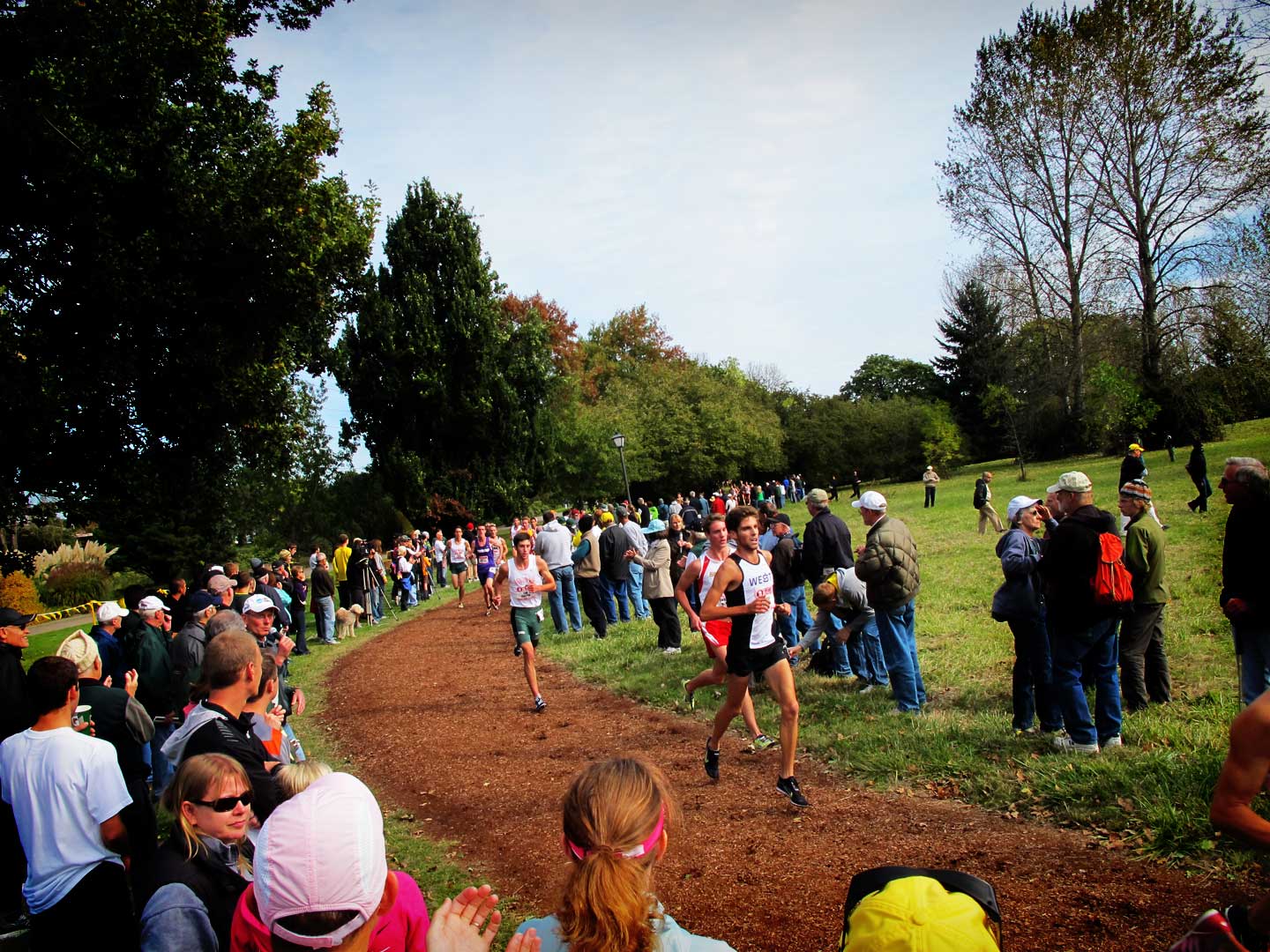
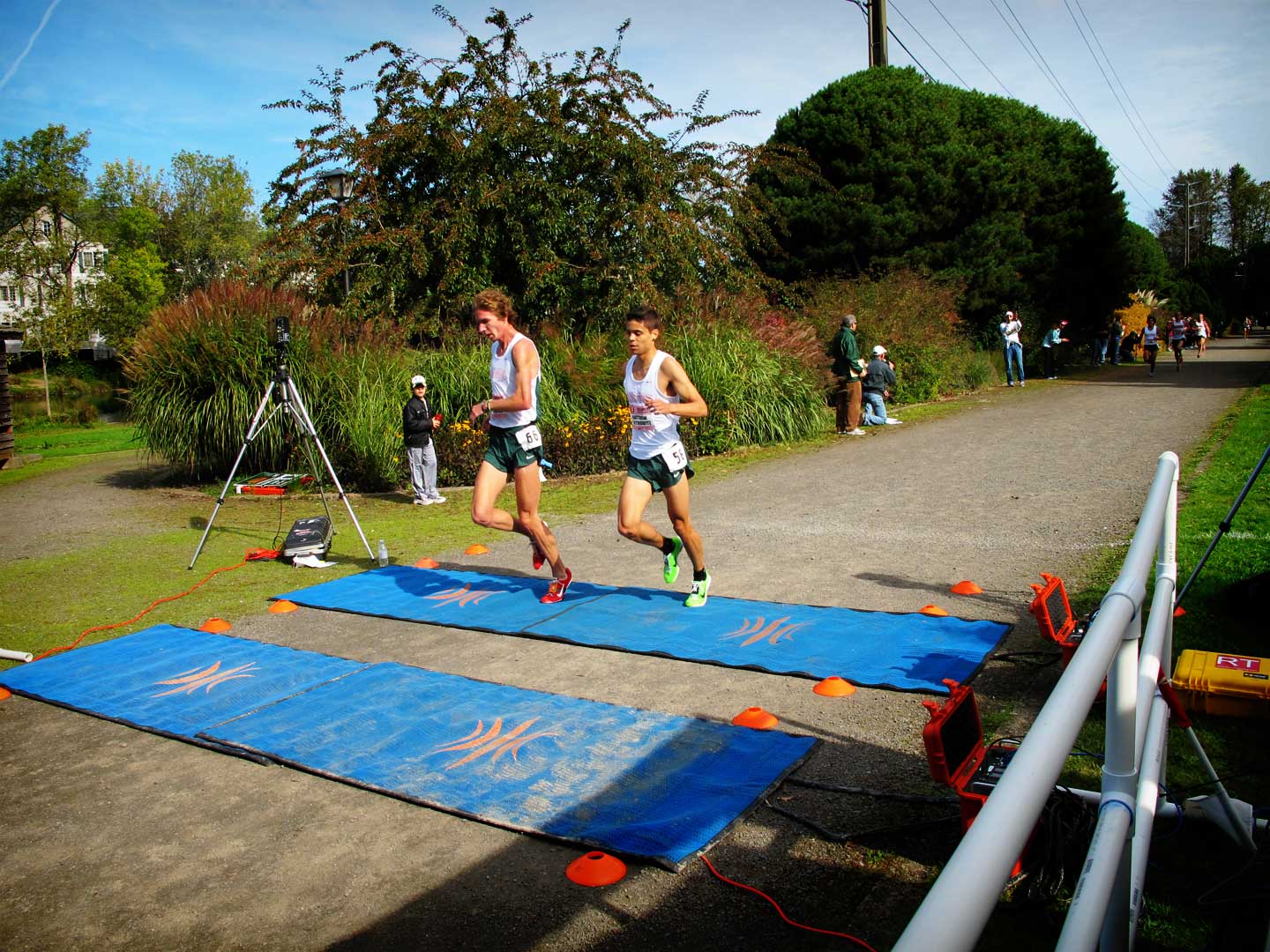
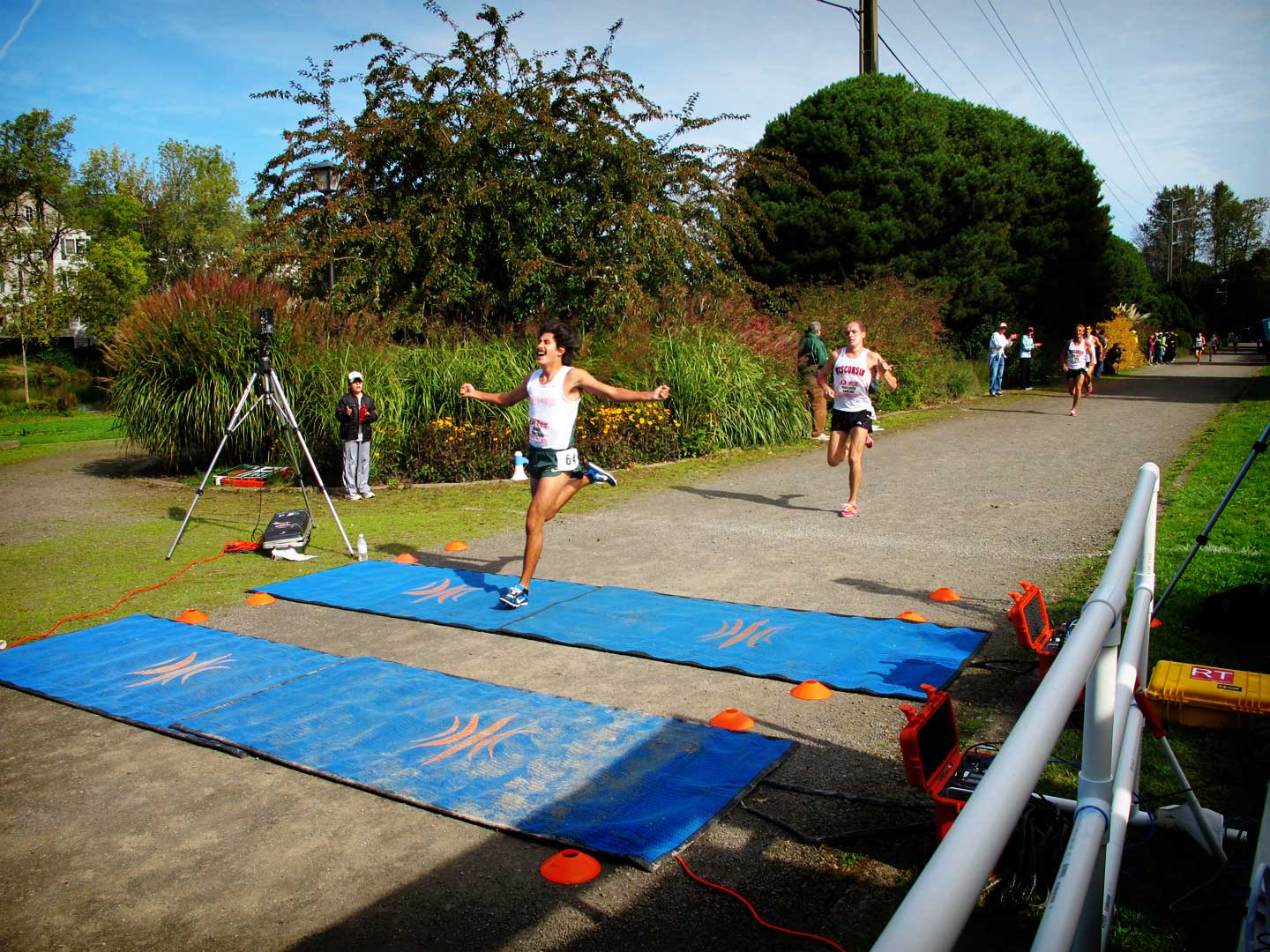
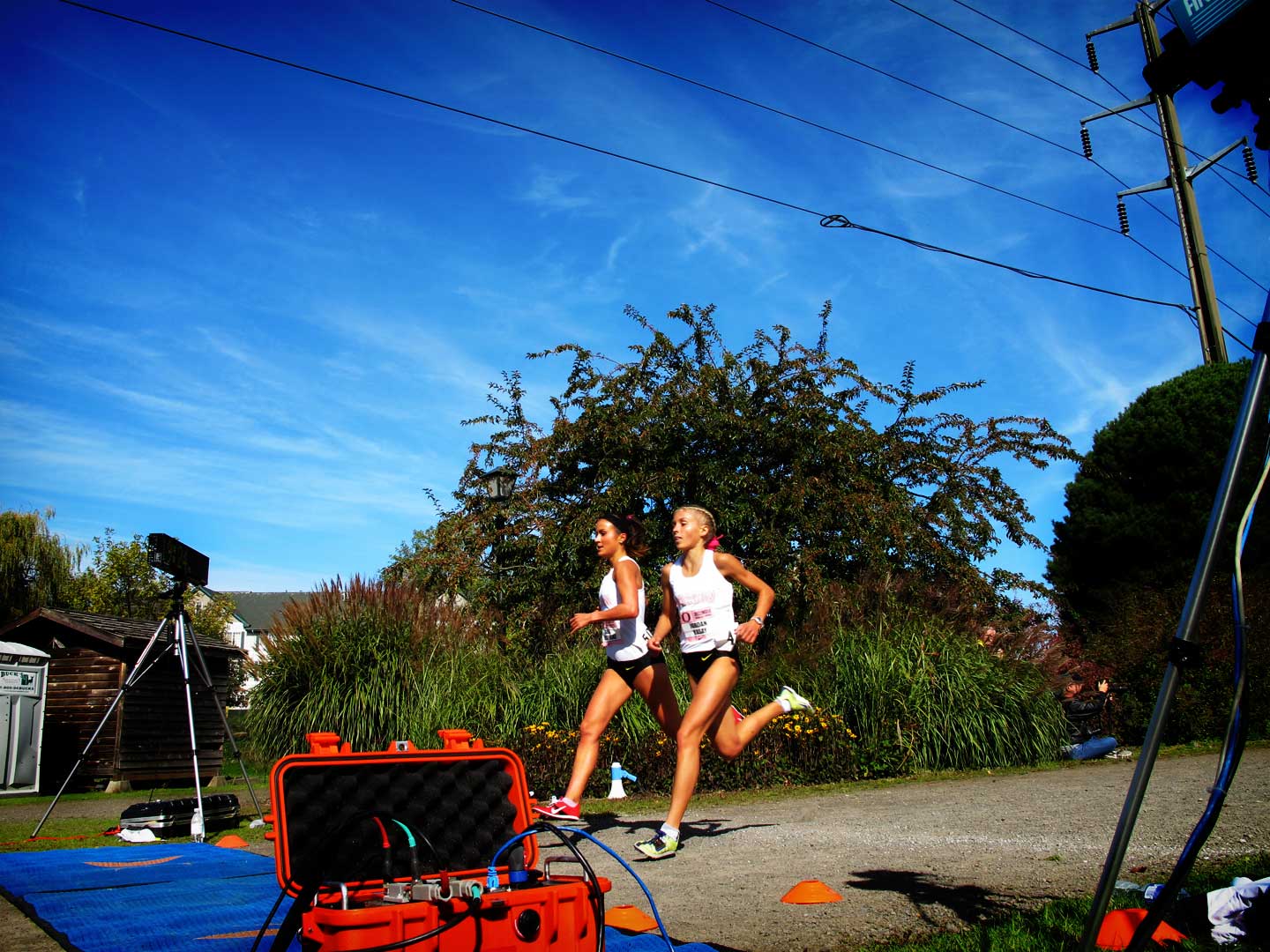
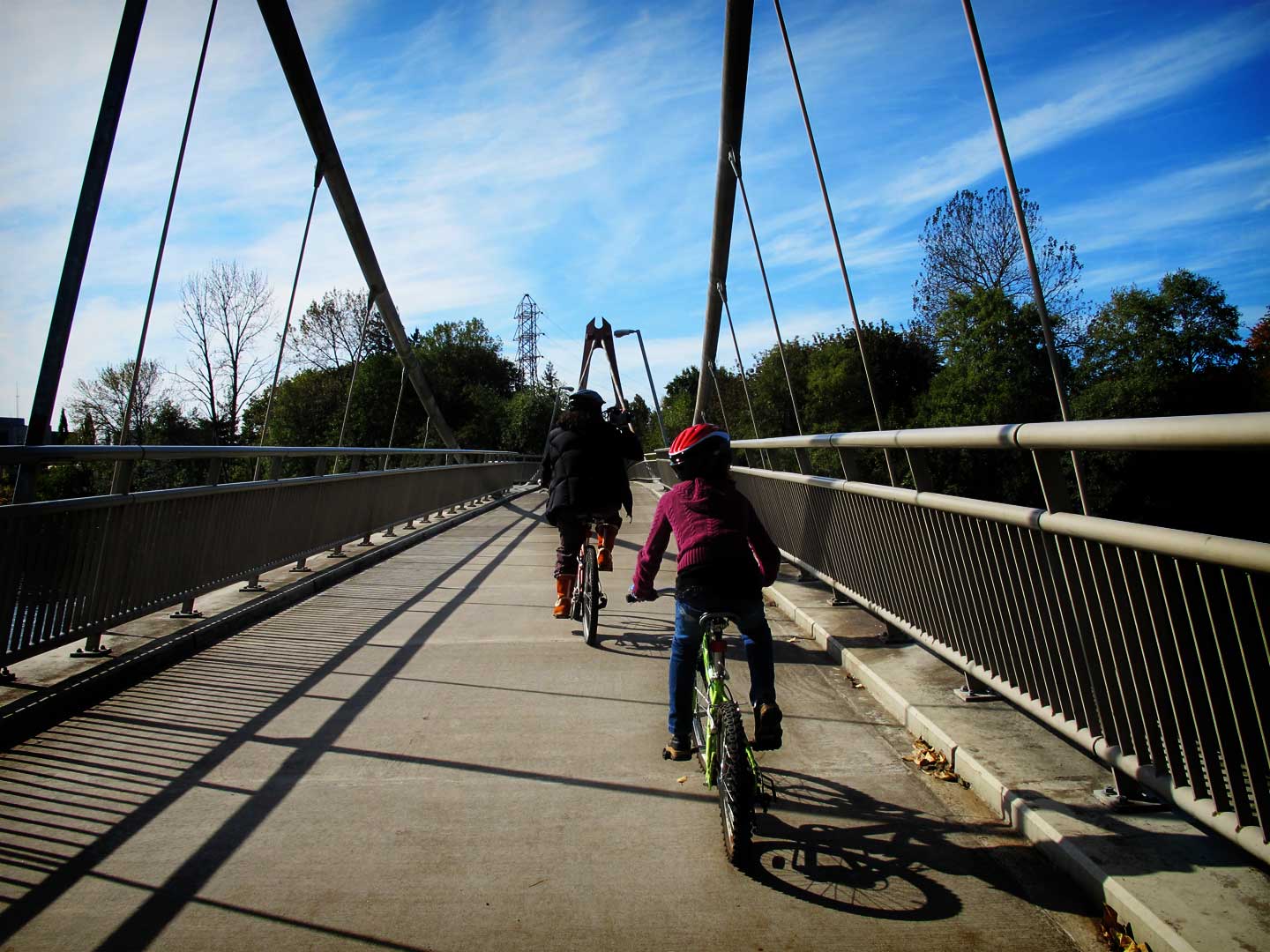
>On Saturday our little family jumped on our bikes and rode over to the Bill Dellinger Invitational cross country meet at Alton Baker park. The day was bright and sunny, but chilly. We had a great time, a good ride, and just plain fun. Lily has been doing some cross country running through Track City. Today she was able to get up close to some top athletes.

The ride to the meet. I am towing 
the trailer with the two little ones.
The men on the course.
Men first and second place finishers.
Univ or Oregon of course.

Men third place.
Again, UofO.

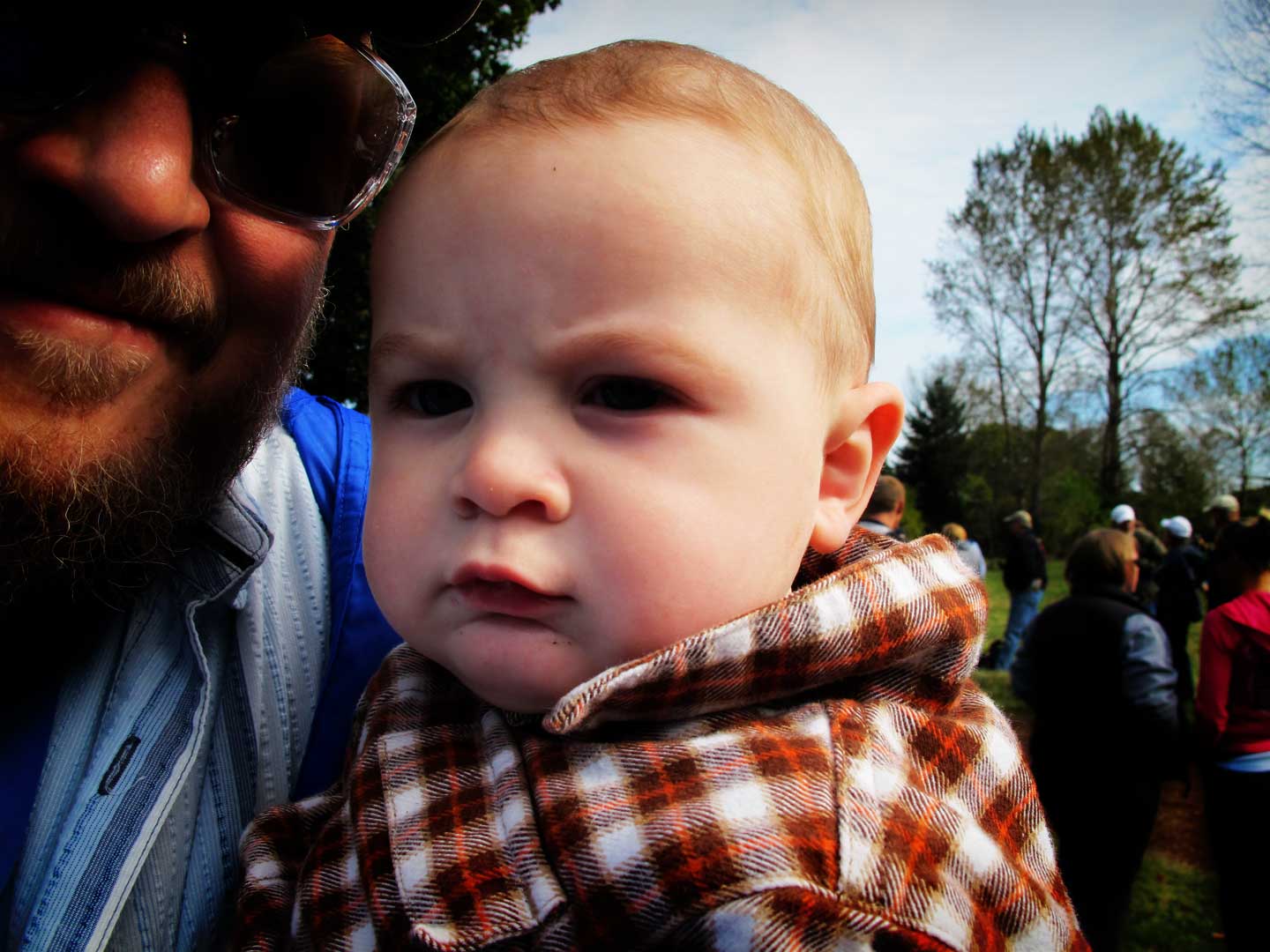
The little man Atticus Roux.
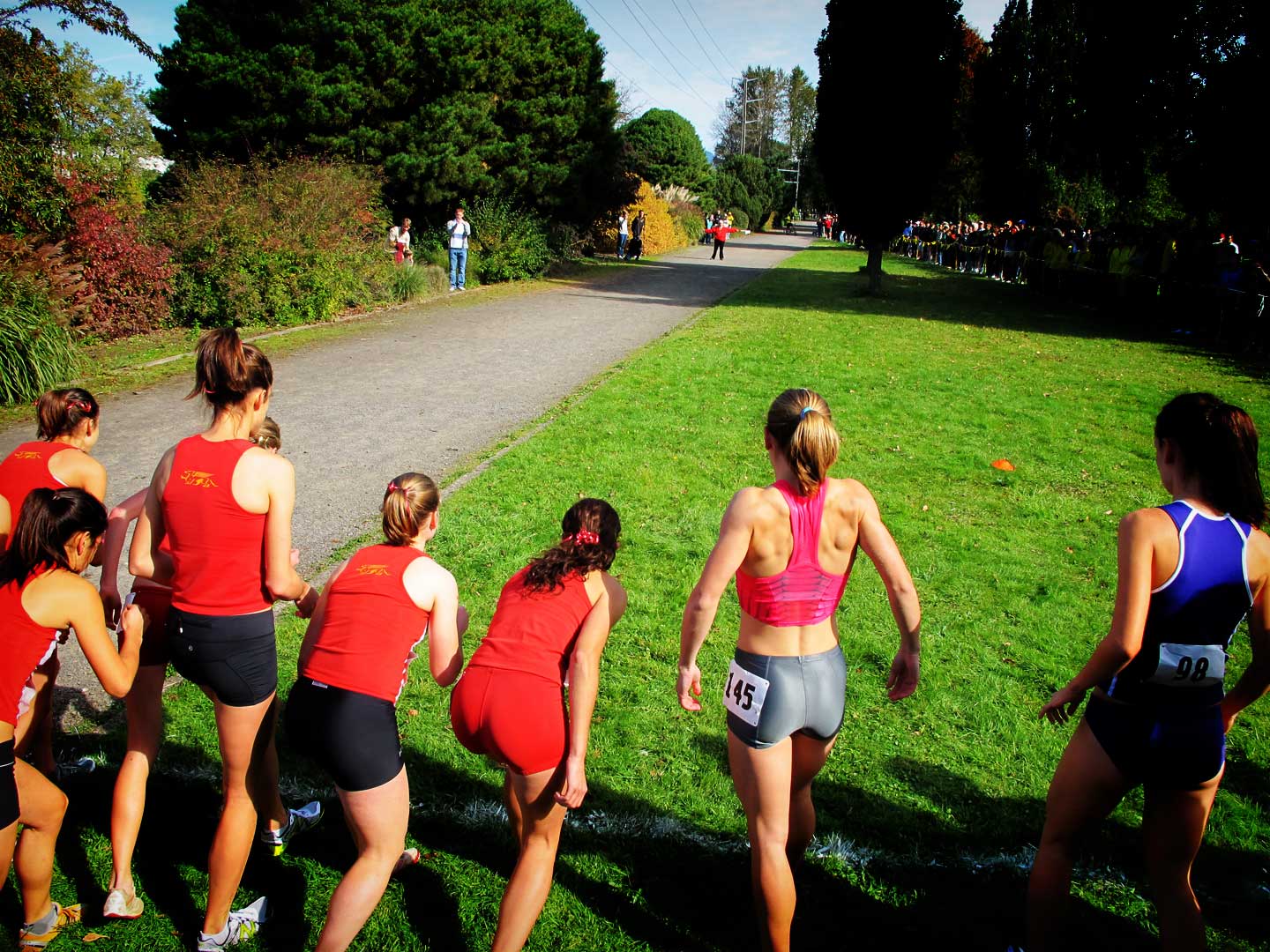
The women seconds before the starting gun.

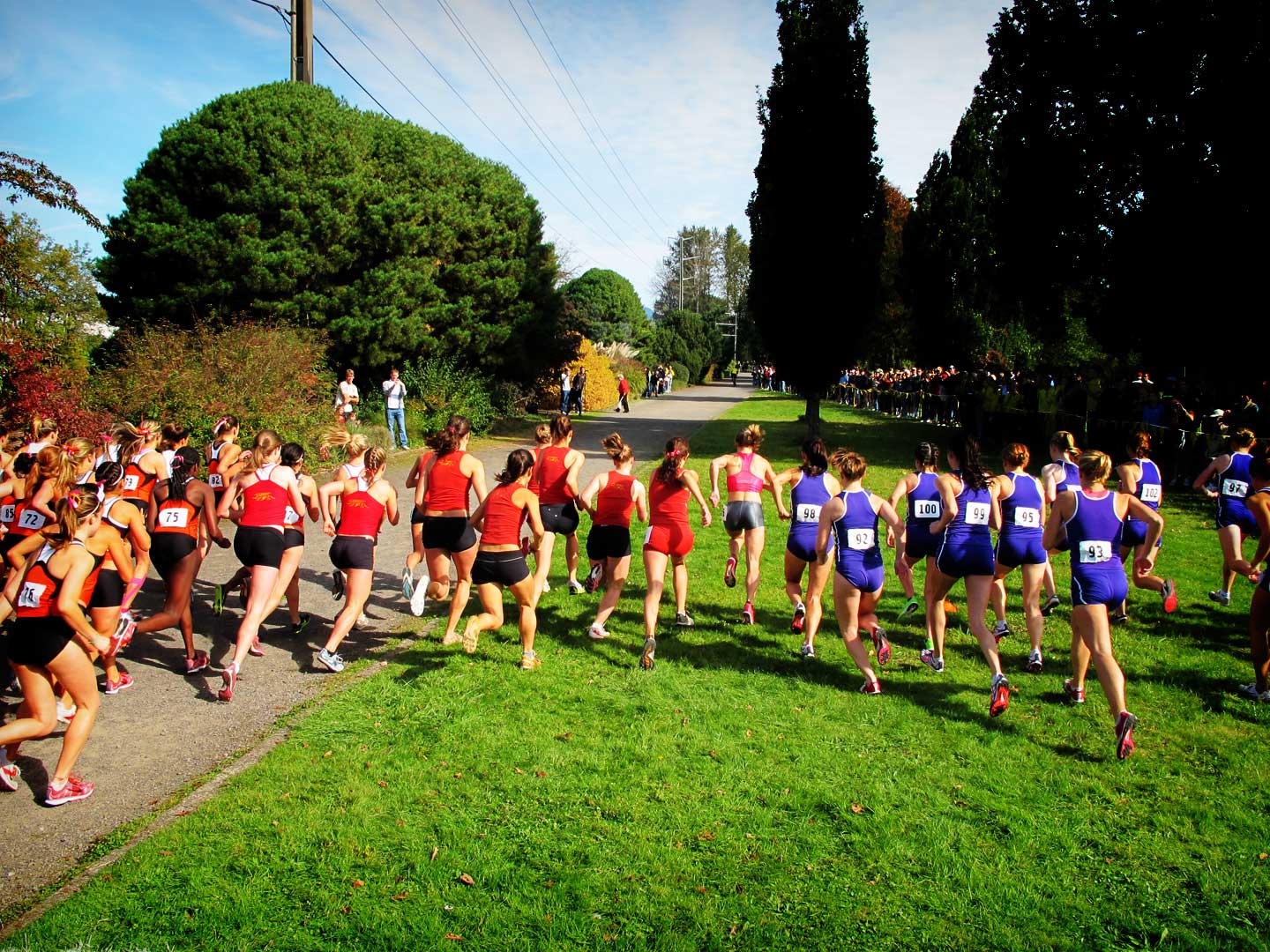
The women take off.

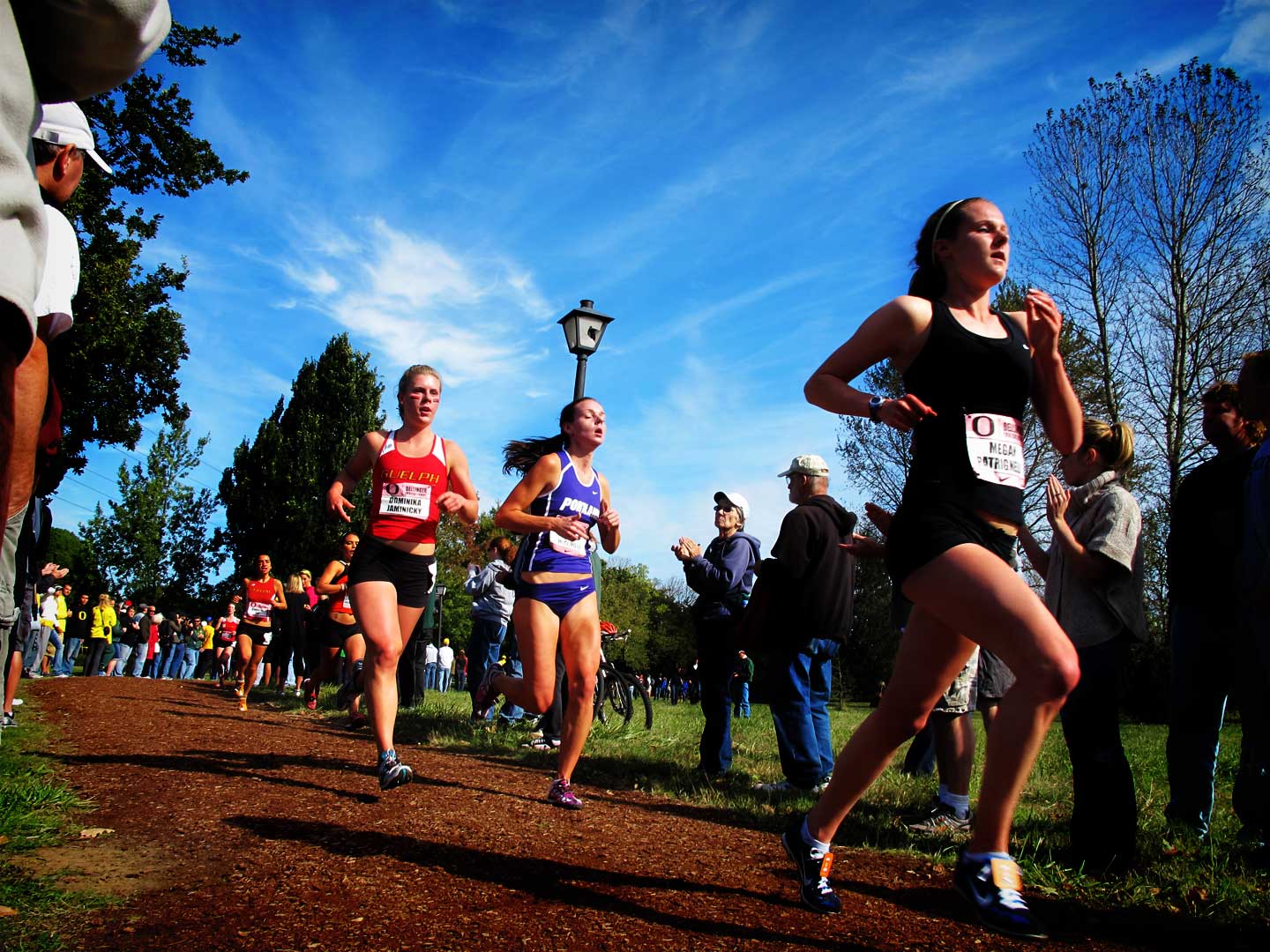
The women on the course.
Women first and second place finishers.
Univ of Oregon or course.
The ride home.

>finishing that walk

>

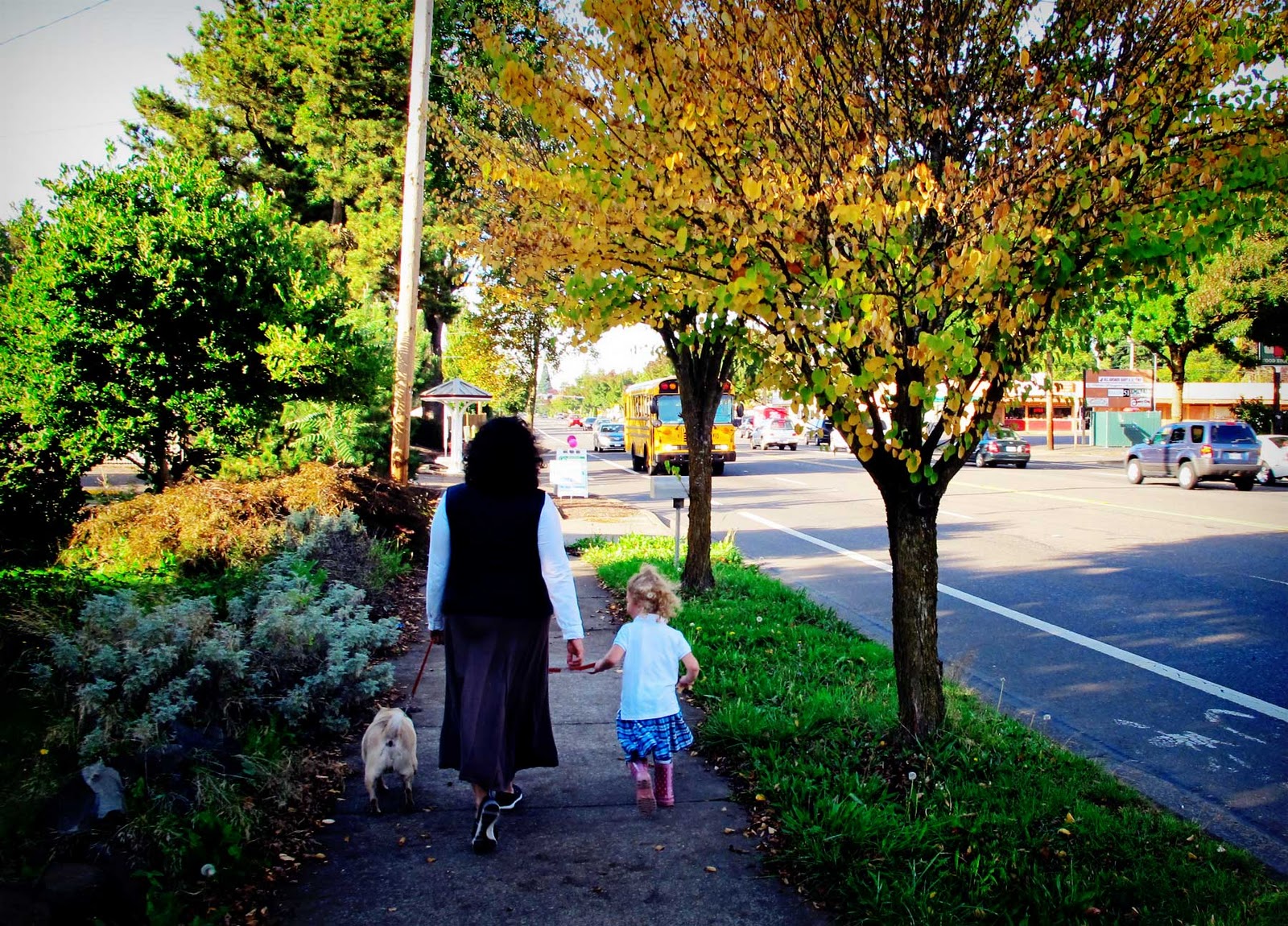
A couple of years ago my wife packed up our almost two year old daughter in the stroller and took a walk down the sidewalk to pick up our then eight year old daughter from ballet. The day was a nice day.
Before my wife could get to the ballet class a driver in an SUV crossed several lanes of traffic and struck my wife and daughter. That nice day turn ugly real quick. Broken pelvis and foot, two weeks in the hospital, several more weeks in a hospital bed at home, constant pain.
The other day we took a walk down the same road to pick up our eldest daughter from ballet. You could say this was the day that walk from two years ago was finally finished. Though pain still lingers for my wife, I cannot thank God enough these two are still alive and with us.
Two years after. Finishing the walk.

>Bicycling in traffic is a dance you lead

>

I love this video; it is very simple and elegant, yet full of wisdom.
A note on cycling infrastructure and principle:
What you see here are great examples of vehicular cycling. I am becoming more and more a fan of this kind of cycling. However, while I believe that all cyclists should know how to ride in such a manner, I do not believe cities should uncritically cater to vehicular cyclists by using it as an excuse to spend as little money of cycling infrastructure as they can get away with. There are many levels of cycling ability, and many different needs for cycling. Vehicular cycling is a type of cycling that children should be taught and adults should continually practice or re-learn. Yet, cycling infrastructure should be deployed based on the real needs of all cyclists (up to a point) and a comprehensive understanding the implications of design for all cyclists. What is important to realize is that there is no single formula for creating an ideal cycling environment. I would not generally take my kids on a ride in the manner of the cyclists in the video, though I ride this way myself when appropriate. For example, if there is not a clearly designated bike path I will take the lane. If there is a bike lane then I will take the lane, but only if the car speeds are high and to do so engenders good will with motorists. My goal is to ride safely, with confidence, knowing I am traffic along with the cars, and I try to strike a safe balance (key word safe). This sometimes means riding with the auto traffic and sometimes using the bike lane. But I refuse to use sidewalks, or get out of the way of cars merely because they honk their horns and demonstrate an attitude that says, “Hey, get out of my way. I’m a car.” Then again, I refuse to “teach” motorists a lesson merely out of principle when I know my wife and kids are waiting for me to arrive home safe. The goal is to ride safe and the method is to be wise.
Ride safe.

>Another excellent reason to have a good bike pump…

>