I love the Tour, it’s one of the greatest sporting events anywhere. It is a crazy festival of sport and speculation. The Tour has been racked by doping the last few years, which is unfortunate. I suppose doping has been a part of processional cycling for decades, but nothing like it’s been that last ten years.
I became a fan of the Tour, however, in the 1980s when Greg LeMond was the great American hopeful and doping was a minor issue. LeMond, the first American to even win a tour de France, eventually won three Tours.
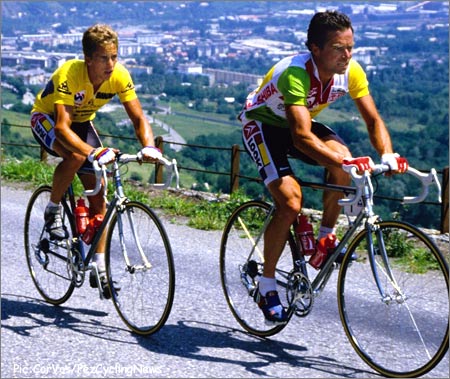
The 1986 Tour de France was LeMond’s first win. Here LeMond races with his teammate Bernard Hinault (five-time winner of the Tour and one of my cycling heroes) up the infamous Alpe d’Huez:
Hinault had set an almost suicidal pace and only Lemond could stay with him. They crossed the line together hand-in-hand. LeMond let Hinault cross the line slightly ahead of him, so Hinault was credited with the stage win. But there was a lot of tension between LeMond and Hinault, which played itself out in the French newspapers. Hinault had apparently said he would help LeMond win that year, but then he raced like he was going to win himself. LeMond whined. I always appreciated how great a cyclist LeMond was, but I thought he carried too much of a victim complex around with him. Regardless, I was hooked. Cycling was the bomb.
Then LeMond was in a hunting accident. He was shot by a shotgun fired by his brother-in-law. He almost didn’t make it and his recovery took a long time. He still has pellets in his body. He came back and won Tour again in 1989, and again in 1990. To me that’s nearly as remarkable as Armstrong’s victories after fighting cancer.
That 1989 Tour had the closest finish in Tour history. Laurent Fignon, the great French cyclist, was ahead of Lemond by only 50 seconds going into the last day of the Tour. That day the race organizers decided it would be an individual time trial rather than the typical group finish. Here is that finish:
LeMond won the Tour by only 8 seconds! That’s after 22 days of racing. Never again has the Tour finished with a time trial.
>So who are you voting for? My vote is still in “wait and see” mode, though I much prefer change over status quo. In that sense I would be for Obama (some change) over McCain (more of the same). But these two are not our only choices. Here is a list of who’s running for president. It is interesting and disconcerting that there are so many candidates, so many hopeful and, dare I say, brazen individuals who would seek the highest office in the land and yet their voices are almost completely silenced by corporate media. Most U.S. citizens only know of McCain and Obama, and some additionally know of Nader. What of the others? Below are videos of just three of those “other” candidates.
Gloria LaRiva: Party for Socialism and Liberation
Bob Barr: Libertarian Party
Kat Swift: Green Party
It is easy to dismiss any presidential candidate who does not stand a significant chance to win. There are many who will vote for Obama because he appears to represent something very different than the current administration and because he has a chance to win. In all likelihood, though, Obama will not bring about the kind of change this country truly needs, but he will likely be a superior president than Bush.
There is still a big problem in U.S. politics, for what we have in our nation’s capitol is more like a single party with two factions than any substantial differences. That party, whether it’s the Democrat faction or the Republican faction, is still pro big business, pro lobbyists, pro U.S. imperialism (rough and tough, or kinder gentler), and pro power politics. We are told to love our country, but should not the command to love one’s neighbor ultimately triumph over love of country?
The truth is, the revolution that started this country, and has continued in one form or another (abolition, suffrage, labor rights, civil right, etc.), is a threat to the current status quo. How much of that revolution are we willing to give up as long as we are promised personal peace and prosperity? How long will we continue to describe our form of government as a democracy but desire that someone else do the heavy lifting? Are we willing to both seek and accept real change? Personally I find this a real challenge, and I don’t have any clear answers. Which begs the question: Who (and what) are you voting for?
[I’m not really asking for your answer here, I’m just posing the the question as a thought experiment.]
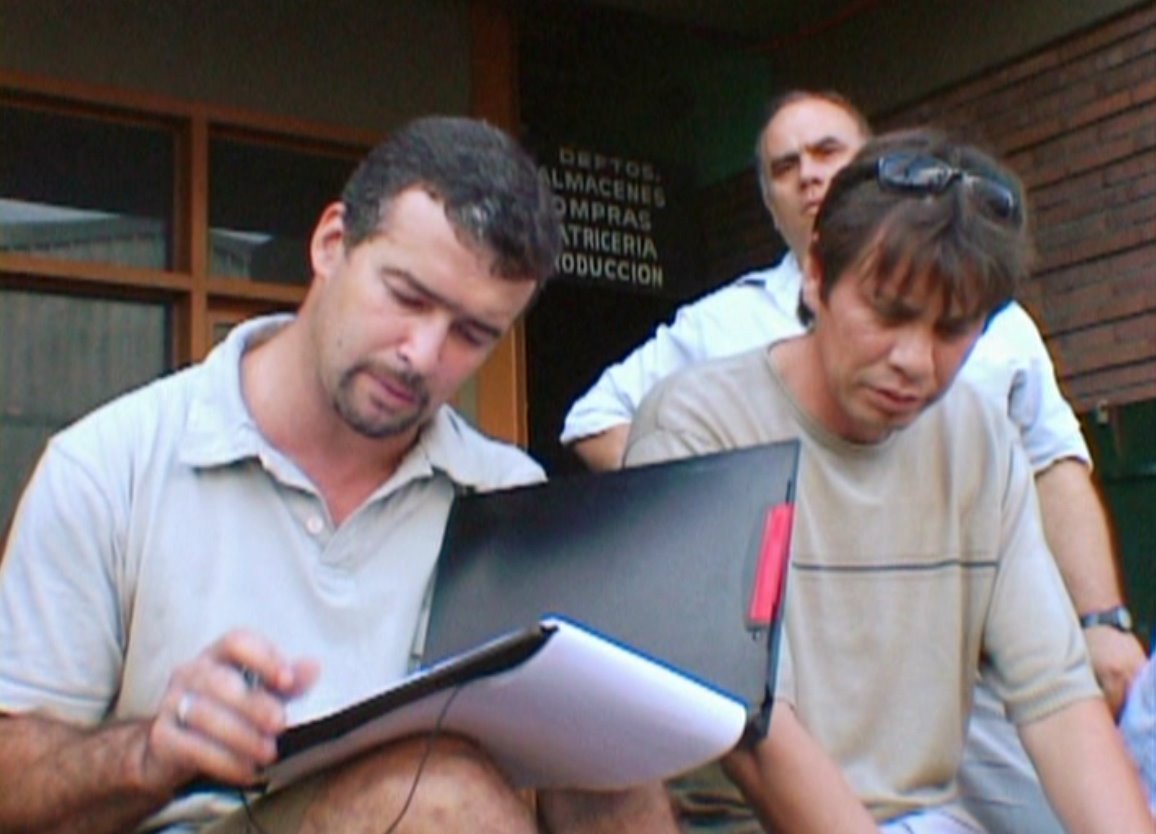
>There are violent revolutions and there are more peaceful ones. Some revolutions are based on ideals and theories and Utopian visions. Others grow out of simple needs for decent jobs and human dignity. The later is the story of the documentary film The Take (2004).
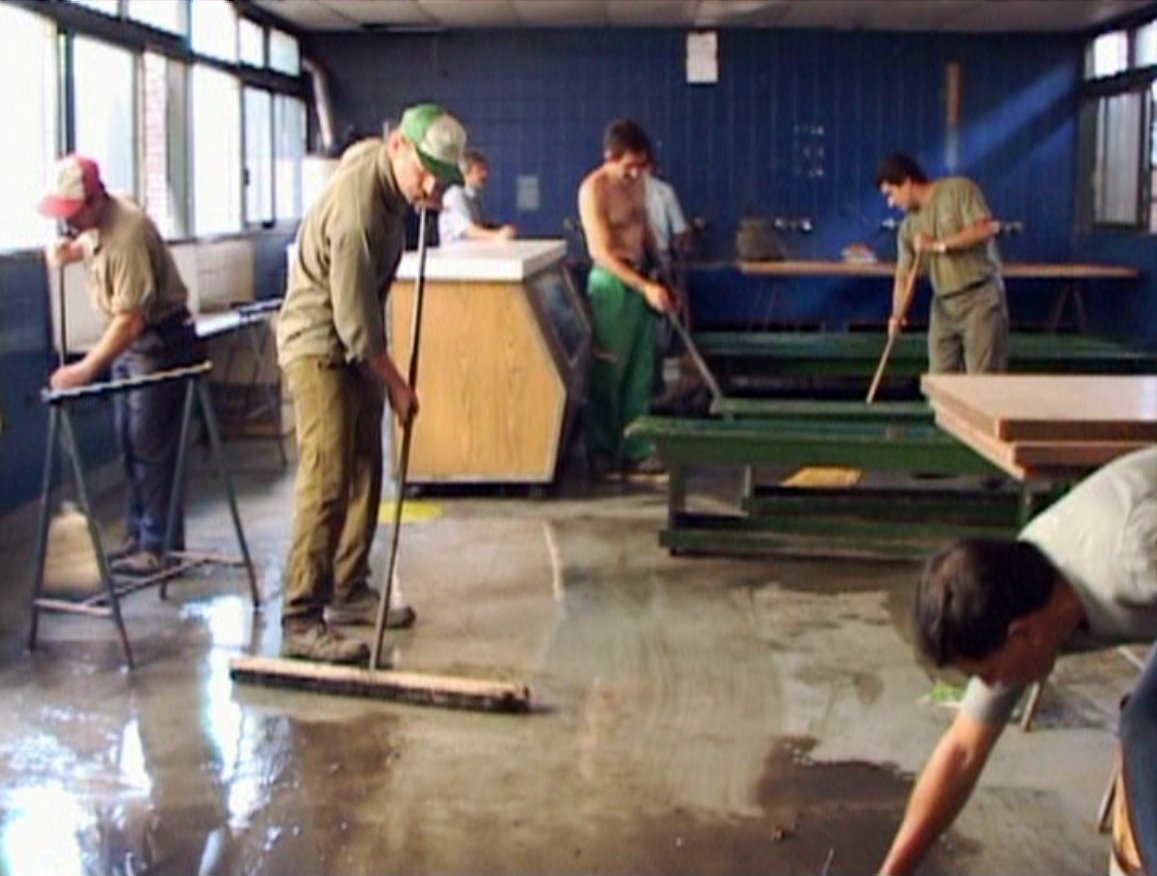
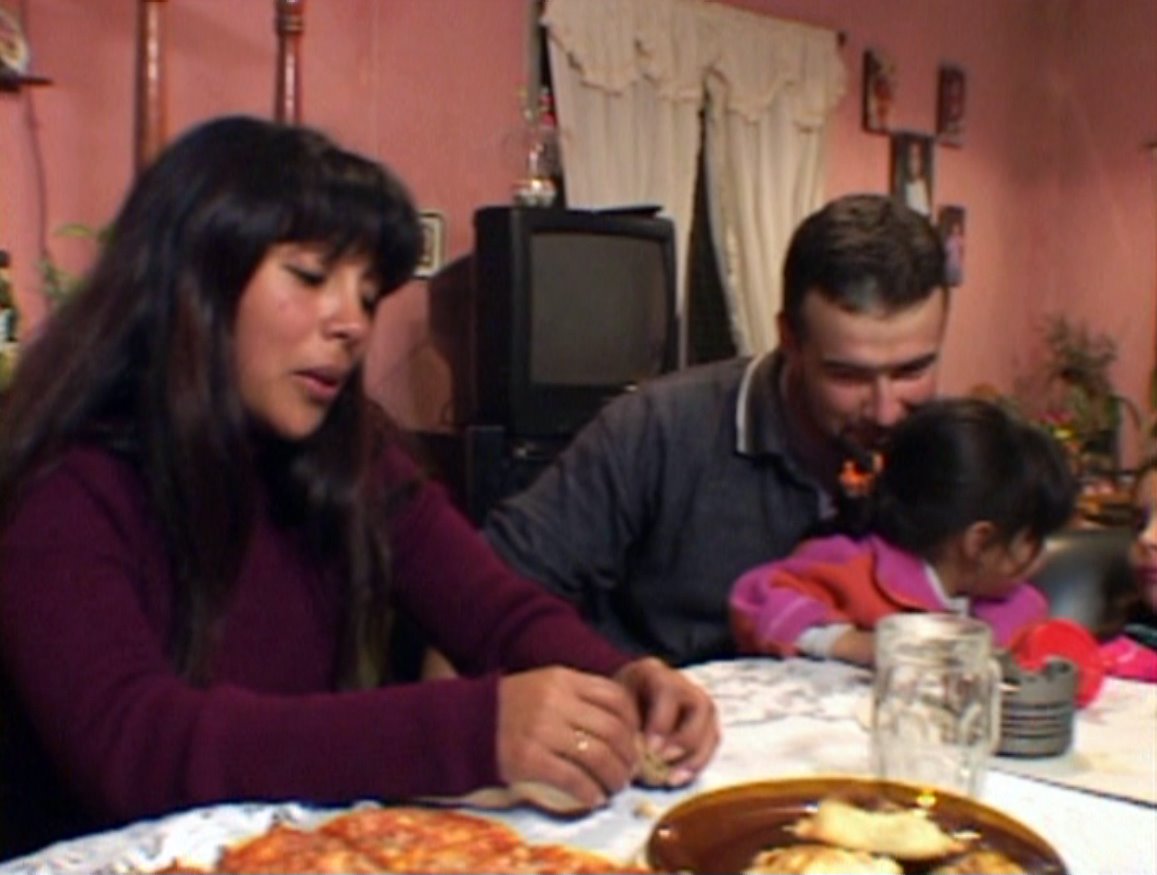
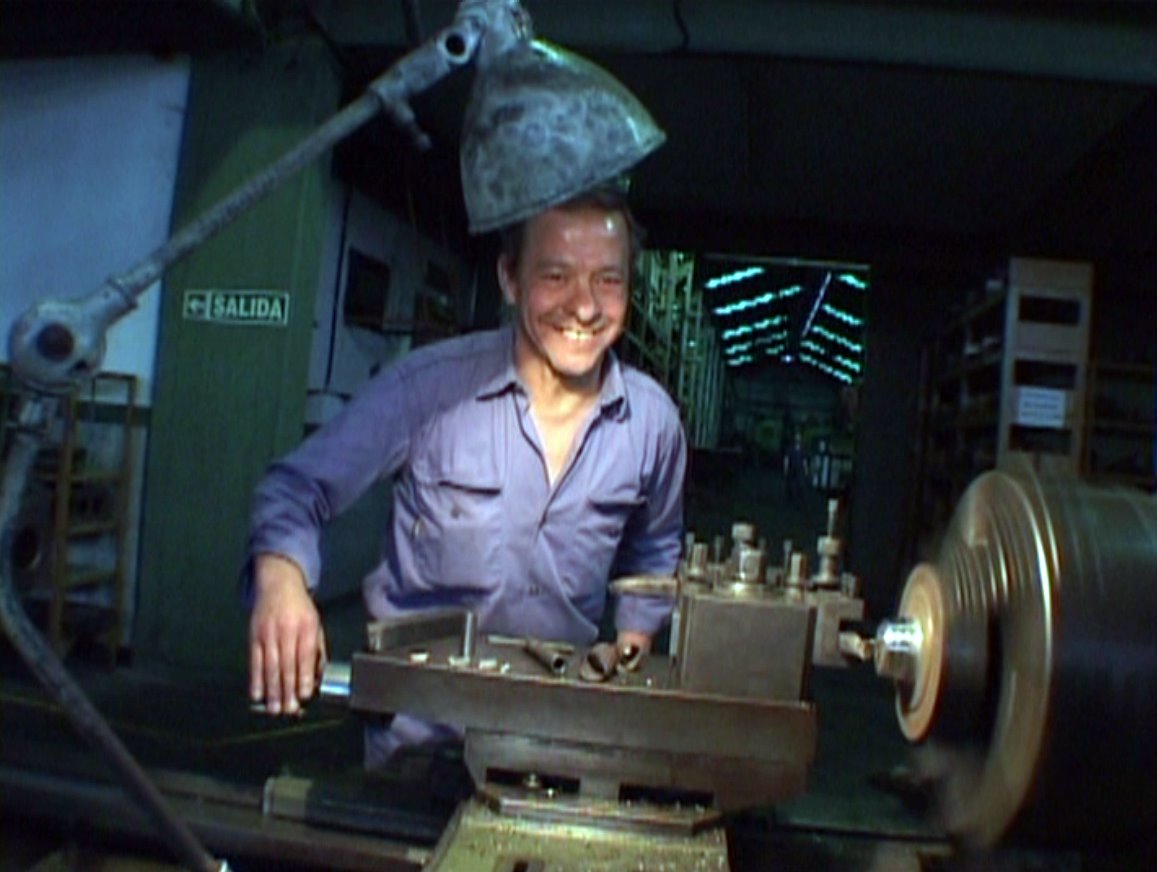
Created by Avi Lewis and Naomi Klein, The Take chronicles the struggles of out-of-work laborers in Argentina trying to take over abandoned factories and run them for themselves. Driven by basic necessity rather than ideology, these workers desire the simple ability to have a job and provide for the basic needs of their families in the wake of devastating economic policies by the county’s capitalist leaders.
What is truly wonderful about this film is it ability to tell a powerful story, set it within a complicated historical context, and do so while showing the very human realities of the struggle. In other words, it’s not really about revolution, or jobs, or capitalism versus a kind of collectivism. It is a story about people.
And yet, even though it is a story about people, it is also a story about a revolution. Argentina once had a thriving economy. But then new strategies were introduced by a government set on getting themselves rich as whatever cost. The country went into a downward spiral. Factories closed, unemployment skyrocketed, and the World Bank and IMF offered the kind of help one gets only from enemies who claim to be friends. The problem with bad macro-economics is the inevitably tragic micro-economic fallout. Simply, it’s the burden placed on the families who can no longer afford to feed themselves, go to the doctor, or pay rent.
But in Argentina something new began happening. The workers went back to the shuttered factories in which they formerly labored and re-opened them. These workers took over the means of production, produced products, sold them, paid their bills, gave themselves paychecks, and ran the factories collectively. The former owners, who legally were still the owners, were kept out, often by court orders based on Argentine laws, and mostly by the sheer tenacity of the workers who put their hearts and bodies on the line.
If there is anything truly remarkable about this story it is the way ordinary people, people with wives and husbands, with kids, with dreams and desires, walk the thin line between despair and possibilities. These are people like me, like you, who want decent jobs, who love their families, love their friends and their communities, who are not seeking power and glory, but only want a chance to live as they should.
Where the film ends is not where the story ends. Some challenges are overcome, but others still loom. The workers get mostly what they seek, but their future is uncertain. The government took a turn towards the left and is therefore more amenable to the workers, but, like all governments, it is still a mixed bag. If anything, The Take is a realistic look at the human struggle for life and liberty, for work and pay, for present needs and future dreams. It is, in short, a story of humanity.
When I think about celebrating this Fourth of July, I find myself wondering about where we are and what has got us here. What most fascinates me, and what I am most amazed by, are the stories of people like you and me who have fought for freedom. I don’t necessarily mean soldiers, but ordinary people who became extraordinary because of circumstances. I mean those who stood up against slavery, stood up for women’s right to vote, stood up for workers’ rights, stood up for civil rights, stood up for you and me.
One of the finest works of historical investigation and writing is Howard Zinn’s remarkable A People’s History of the United States. Throughout that book there are challenges on every page, challenges that remind us what freedom really means and what it takes for people to be free, and just how much freedom is truly a deep, deep longing.
Recently there have been public readings of that book. Here are some excerpts:
Brain Jones reads Frederick Douglass
Lili Taylor reads Susan B. Anthony
Steve Earl reads Joe Hill
This country has always been an experiment. Our freedoms are probably more tenuous than we tend to believe. We have freedoms because they were fought for, because they are still being fought for. Those freedoms will, I’m sure, need to be fought for again. I believe the Fourth of July should be more than a commemoration of 1776. I want to remember how so many ordinary people all along the way have struggled to achieve this country’s ideals. And how many still do. Every Fourth reminds us of how we too are part of this on-going experiment. It is a challenge to each of us to do the work of freedom. I do not want to forget that.
>Inside USA, an English language program on Al Jazeera recently did an interview with Noam Chomsky. I have never watched or read anything from Al Jazeera, that I know of. I did not realize they had an English version, but I guess that makes sense.
From the website, Inside USA says this about its mission:
Inside USA’s mission is to strip away the spin, and highlight some of the real issues in America – poverty, violence, race, health, and immigration.
We will be speaking to people on the ground – not television pundits, but real people with stories to tell – a full spectrum assault of American voices -young, old, white, black, immigrant, rich, and poor.
Here is the interview with Noam Chomsky:
Part one:
Part two:
I have always found Chomsky fascinating. His work on East Timor and Latin America is groundbreaking. So is his work on US politics. Maybe his biggest contribution is his relentless focus on power, that is, political, social, imperial, military power, and its role in shaping how the world functions. This focus puts him somewhere else than simply “left” in terms of politics. The great irony is that although he most likely should be labeled as a radical his views are very close to what most ordinary people think, even if they think they must disagree with Chomsky.
The other day I inadvertently created one of the best double features that I’ve ever seen: First, the fictional narrative La Chinoise (1967) and then, second, the documentary The Weather Underground (2002), based on the revolutionary group of that name.
Silhouetted hands in La Chinoise.
What makes this double features so powerful? We live in an age where violence against human beings in the name of some cause (religious jihad, war on terror, patriotism, personal peace and prosperity, etc.) is accepted by many generally reasonable people. The U.S. government and TV pundits are currently debating whether torture is okay, or whether certain kinds of torture can be called something else to get around legal requirements. Some argue that extreme force, including the killing of innocent people (collateral damage) in order to send a message (to those who would dare to use violence as a means of sending a message), is an acceptable response to terrorist acts – in other words, matching fatal violence with increased levels of the same.
But does violence work? I suppose it depends on what are one’s goals. In general, though I would argue, violence does not incite peace.
La Chinoise plays out the philosophical debates underlying these issues within a somewhat humorous and heavily symbolic world that might be called godardian. La Chinoise is a fictional tale of what underlies potential violent action, and of political idealism amongst the educated children of the bourgeois. La Chinoise is also considered to have presaged (and possibly encouraged) the student protests in Paris that occurred exactly one year after the film’s release.
The Weather Underground, on the other hand, exposes the reality of those actions and their implications by showing what actually played out in the U.S. In other words La Chinoise says “suppose” and The Weather Underground says “regard.”
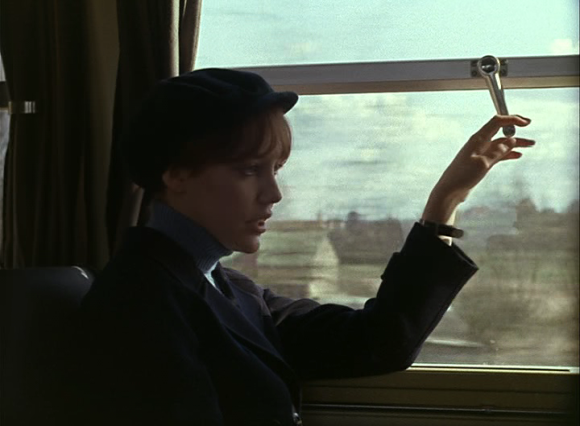
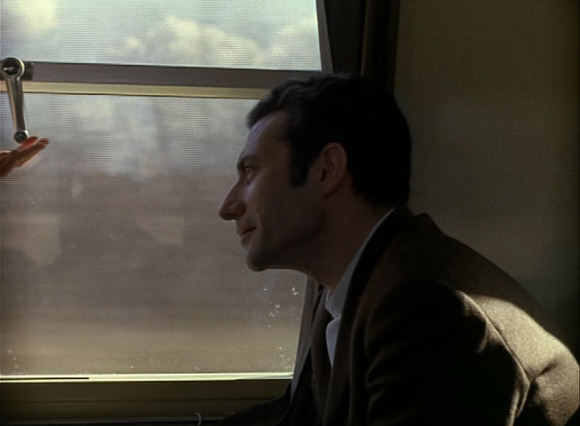
La Chinoise is a kind of remarkable film. I say kind of remarkable because it is also enigmatic and therefore its remarkableness is still very much open to interpretation and evaluation (but isn’t most Godard?). One asks is Godard serious or making fun? Is the film a polemic or a comedy? Is it meaningful or ultimately empty? I can’t say. Many others have done a far better job than I at exegeting the film. But I can say there is one scene I believe is the centerpiece of the film, at least philosophically. That scene is the discussion on the train between Veronique and Blandine Jeanson (playing himself).
Veronique argues for violence.
In that scene they talk about the value and implications of using terrorism in the service of a cause. Veronique, and the revolutionary cell of which she is a part, is planning on using a bomb to kill some students and teachers at the university in order to jump-start a revolution. She argues that the bomb will convince others of the seriousness of their cause. Jeanson argues that violence will not produce the results she is looking for. In fact, killing others will only cause everyone to turn against her and her political group.
Jeanson argues for non-violence.
From my perspective Veronique seems very naive. However, many people felt similarly in the 1960s and early 1970s. I suppose some still do. What would drive a person to such conclusions as Veronique? The Weather Underground explores just such a question.
Haskell Wexler films the Underground.
The activist group The Weather Underground began as the Weathermen, a radical outgrowth of Students for a Democratic Society. The film The Weather Underground is a history of that group and the times in which it functioned. It is one of the best documentaries I have seen.
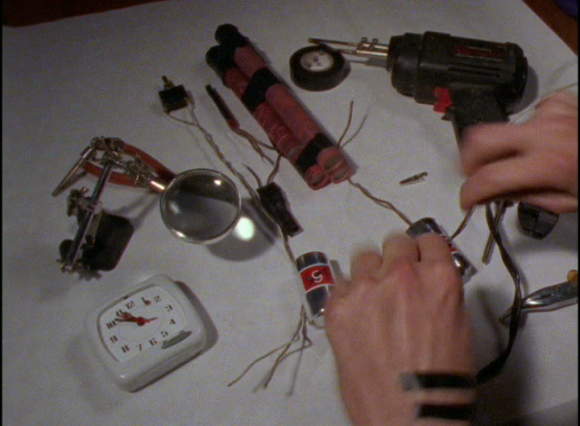
Bomb making.
What drove the Weathermen was a desire to change the world. Frustration in the slowness of change, and even the continued deterioration of certain concerns (such as the escalating war against the Vietnamese), gradually led the group down the path toward violent action.
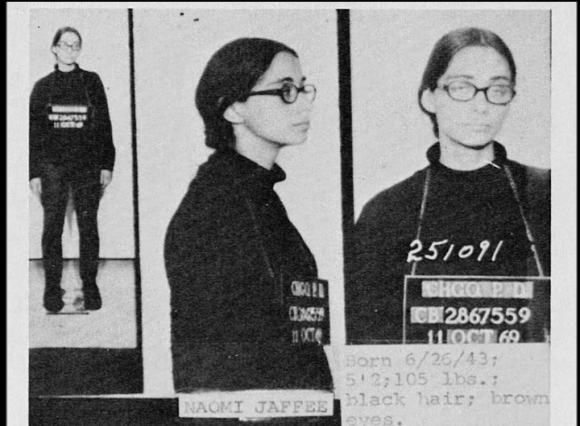
A revolutionary gets nabbed.
Much of the film includes interviews with former members of the group. It is fascinating to hear them describe what choices they made, why they made those choices, and what they think of them now. There is a lot of regret for some of the former members. In a sense the film pulls back the romantic veneer of the 1960s anti-war movement and shows a more realistic complexity. What we get is something that makes La Chinoise appear to be both more profound and more like a cartoon of itself.
 So the Tour de France is on! Yes!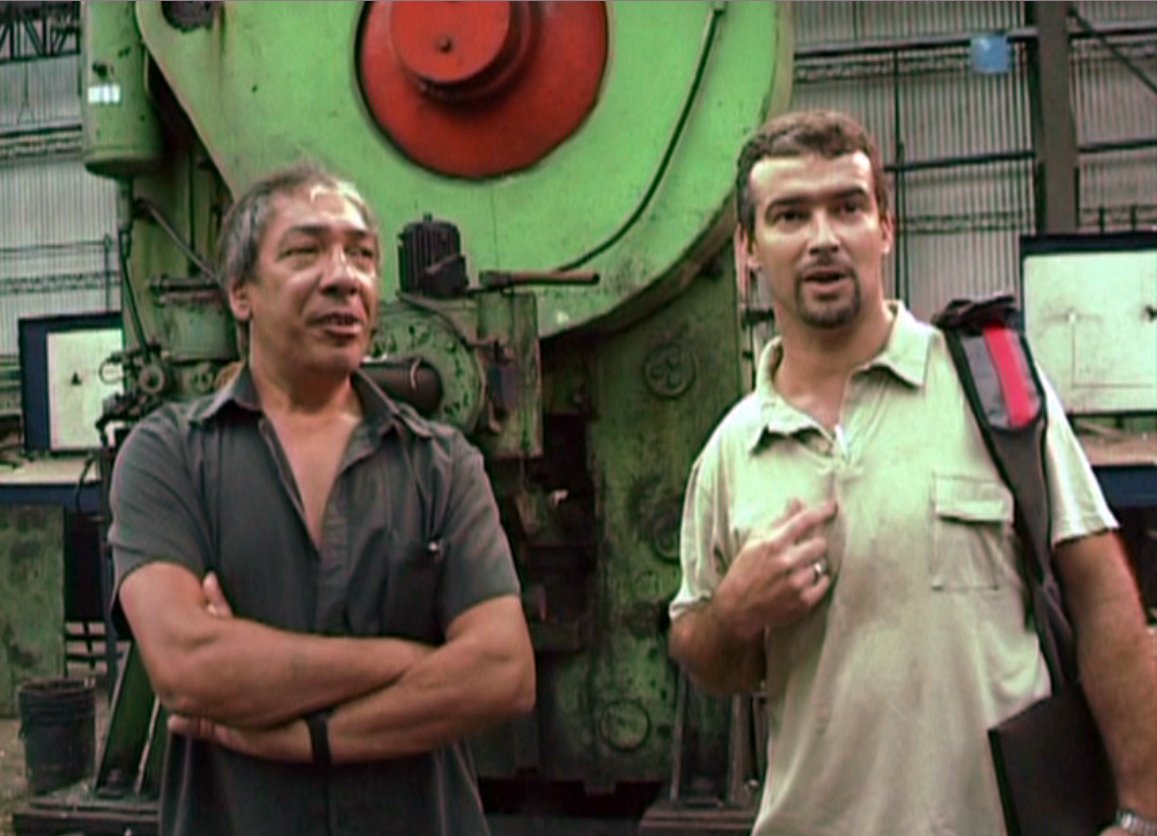



 pilgrimakimbo