a glimpse at a mystery

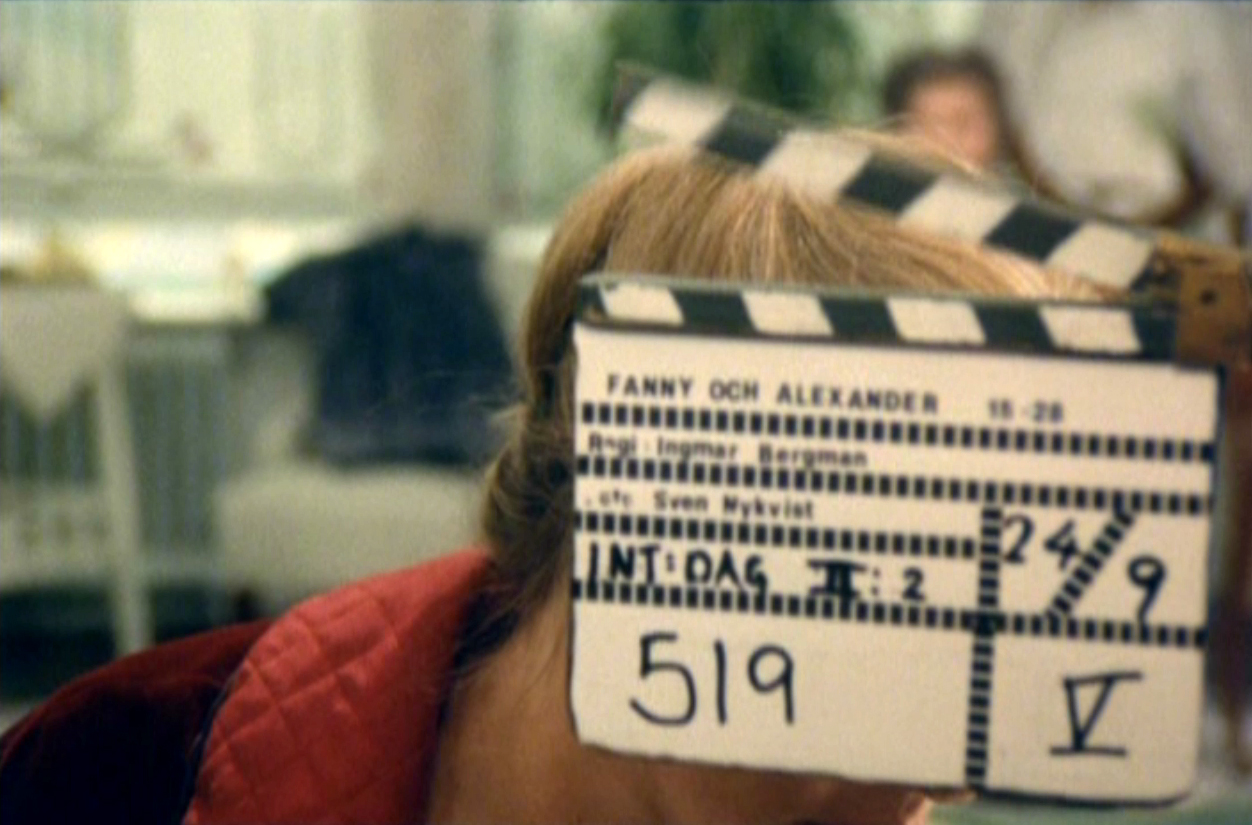
In Dokument Fanny och Alexander (1986) – a.k.a. The Making of Fanny & Alexander – the camera (our camera) observes the film crew at work. We are as a fly on the wall, and yet closer still. Like many great documentaries, this film is premised on letting the subject reveal itself over time, naturally, without manipulation. Except for brief intertitles offering some explanation (and providing section headings) the film merely observes the activities of shooting a film, and especially of the director interacting with his actors and crew. The film is a subtle and intimate look into the relationships formed between these individuals.

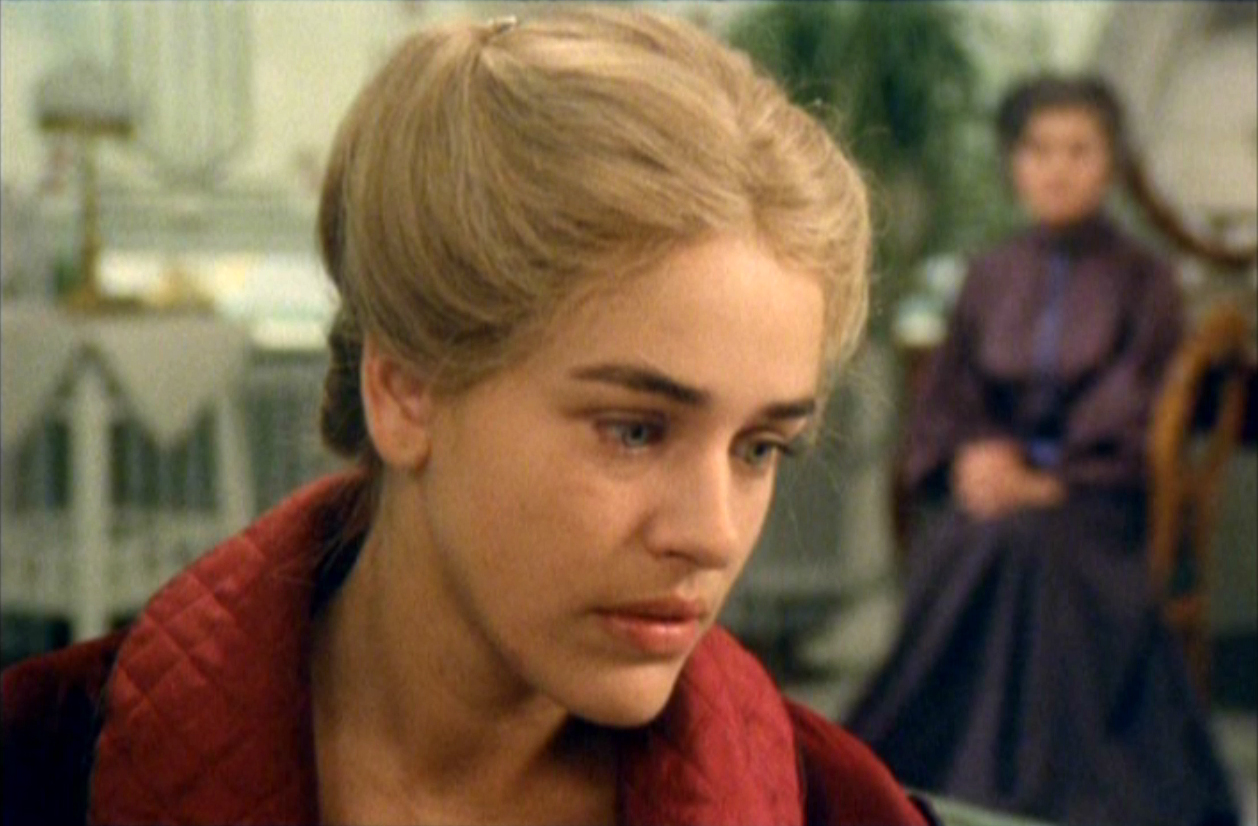
I was struck by the film’s beauty and power. For example, I love the moment when filming the deathbed scene where Emilie Ekdahl (Ewa Fröling) comes to view the body of her husband. We get to see the scene being filmed from different angles, with the director, Ingmar Bergman, working with his actors and cinematographer, Sven Nykvist, on pacing and blocking. We get a glimpse at the insides, as it were, of a masterpiece – as though we were visiting the construction site of a cathedral and were seeing stone set upon stone.

What is so remarkable about a work of art is that there is often something transcendent and unexplainable about the final product, and yet the making is just people doing what they do. Artmaking may be a calling, a gift, a burden, but it is also a very human, even ordinary, activity.

Here we have Emilie Ekdahl looking at her husband.

And here we have Bergman looking at Ewa Fröling as she plays Emilie.

One might think that an actor would struggle with the director being only a couple of inches out of frame watching every movement one makes, but Bergman’s actors seem to thrive on that intimacy. Bergman develops a trusting relationship with his key actors to such a depth that their acting and his directing work symbiotically, organically, fully in the moment. And yet, what one sees in this documentary are the functional, goal oriented, working relationships coming together to finish a project and create a product.

If one looks for a mystical connection flowing between director and actor one finds nothing – for we really only see, because the camera can only see, the surface of things. But, if one looks for pointers to the mystery of filmmaking, they are everywhere, and they all point to the end-product, Fanny och Alexander (1982) – a.k.a. Fanny & Alexander.

a considered bibliography

I entered the University or Oregon’s film studies department (Dept. of Telecommunication and Film) in 1984. During that period I took classes from Prof. William Cadbury who, in my opinion, was a great teacher and one of my favorites. In one of his classes he handed out a booklist that I have kept with me all these years. I have re-typed it below (any misspellings are my own). There was also a classical music list, but I have not included it.
The list was created by Prof. Cadbury and his wife, the poet Maxine Scates, for her niece Tracy (hence Tracy’s Booklist), who was entering UCLA as a freshman. The list first appeared in 1980 and was then updated. This is the 2nd edition.

The premise of the list is as follows:

“People are rarely told an opinion of the actual bibliography of fictions (mostly novels, a few stories), of which a cultured person in modern America is master. The following is an opinion of that bibliography. It suggests: don’t waste your time reading lesser books when you read; always have at least one book that you’re in the middle of, and usually have it be one of these. The list is divided into translations and English language originals; it is presented in full awareness of the presumption in doing so, and in the hope that the utility will override the presumption.”

(from the introduction)

Naturally, this list is a personal one, and one might feel it is a bit dated (but not very much). The non-fiction section is also skewed towards the arts, which is okay by me. And for myself this list represents the considered opinion of an older and wiser person who, after engaging for many years both intellectually and emotionally with college students felt the neccessity to impart some idea of what it means to be a cultured person – not in totality, but at least a slice of that ideal.

If you see any misspellings, etc., please let me know.
Tracy’s Booklist: 2nd Edition
BOOKS ORIGINALLY NOT IN ENGLISH
Balzac, Honoré de: Eugénie Grandet; Old Goriot; Lost Illusions
Borges, Tomas: Labyrinths
Borowski, Tadeusz: This Way for the Gas, Ladies and Gentlemen
Camus, Albert: The Stranger; The Plague
Cervantes, Miguel: Don Quixote
Chekhov, Anton: The Lady with the Dog and Other Stories
Colette: My Mother’s House; Sido
Condé, Maryse: Segu
Cortazar, Julio: Blow-Up
Döblin, Alfred: Berlin Alexanderplatz
Dostoyevsky, F.: The Brothers Karamozov; Crime and Punishment; The Idiot; Notes from Underground
Eco, Umberto: The Name of the Rose
Flaubert, Gustave: Madame Bovary
Garcia Marquez, G.: 100 Years of Solitude
Kafka, Franz: The Trial; The Castle; “Metamorphosis”; “In the Penal Colony”
Levi, Primo: If Not Now, When?; The Periodic Table
Lustig, Arnost: Night and Hope; The Unloved
Mahfouz, Naguib: The Thief and the Dogs;
Miramar
Malraux, André: Man’s Fate
Mann, Thomas: Death in Venice; The Magic Mountain; Joseph and His Brothers
Murasaki, Lady: The Tale of Genji
Nabakov, Vladimir: Pale Fire
Narayan, R. K.: The Financial Expert; The Man-Eater of Malgudi
Pavese, Cesare: The Moon and the Bonfire
Proust, Marcel: Remembrance of Things Past
Rulfo, Juan: Pedro Paramo
Schwartz-Bart, André: The Last of the Just
Sembene, Ousmane: God’s Bits of Wood
Stendhal: The Red and the Black; The Charterhouse of Parma
Tolstoy, Leo: War and Peace; Anna Karenina

ENGLISH LANGUAGE:
Achebe, Chinua: Things Fall Apart
Amis, Kingsley: Lucky Jim
Arnow, Harriet: The Dollmaker
Austen, Jane: Mansfield Park; Emma; Pride and Prejudice; Persuasion
Baldwin, James: Go Tell It On the Mountain; Another Country;
Tell Me How Long the Train’s Been Gone
Brontë, Charlotte: Jane Eyre
Brontë, Emily: Wuthering Heights
Brooks, Gwendolyn: Maud Martha
Carroll, Lewis: Alice in Wonderland
Cather, Willa: My Anatonia; A Lost Lady
Chandler, Raymond: The Big Sleep; The Long Goodbye
Cherryh, C. J.: “The Chanyr Saga”; the “Cyteen” books
Chopin, Kate: “The Storm” and other stories
Cisneros, Sandra: The House on Mango Street
Conrad, Joseph: Lord Jim; Heart of Darkness; Nostromo
Daley, Grace: Enormous Changes at the Last Moment
Darganyemba, Tsiti: Nervous Conditions
Dickens, Charles: Bleak House; Great Expectations; Hard Times
Eliot, George: Middlemarch
Ellison, Ralph: The Invisible Man
Emecheta, Buchi: In the Ditch
Erdrich, Louise: Love Medicine
Faulkner, William: The Sound and the Fury; Absalom, Absalom
Fielding, Joseph: Tom Jones
Fitzgerald, F. Scott: The Great Gatsby
Ford, Ford Madox: Parade’s End
Forster, E. M.: A Passage to India; Howards End
Fowles, John: The French Lieutenant’s Woman
Glasgow, Ellen: Barren Earth
Golding, William: Lord of the Flies
Gordimer, Nadin: Burgher’s Daughter; Occasion for Loving; July’s People
Green, Graham: The Heart of the Matter; Brighton Rock
Hagedorn, Jessica:
Dogeaters
Hammett, Dashiel: The Thin Man
Hardy, Thomas: Tess of the D’Urbervilles; Jude the Obscure
Hawthorne, Nathaniel: The Scarlet Letter
Head, Bessie: When Rain Clouds Gather
Heller, Joseph: Catch 22
Hemingway, Ernest: The Sun Also Rises
Hogan, Linda: Mean Spirit
Hurston, Zora Neale: Their Eyes Were Watching God
James, Henry: The Ambassadors; The Golden Bowl
Jen, Gish: Typical American
Jones, Gayl: Corregidora
Joyce, James: Portrait of the Artist as a Young Man; Ulysses; Dubliners
Karbo, Karen, The Diamond Lane
Karmel, Ilona: An Estate of Memory
Kincaid, Jamaica: Annie John
Kingston, Maxine Hong:
China Men
Kogawa, Joy: Obasan
Lawrence, D. H.: Sons and Lovers; Women in Love
Lessing, Doris: The Marriage Between Zone 3, 4, and 5; The Golden Notebook;
Shikasta
Lesueur, Meridel: Ripening
Loge, David: Small World
Mansfield, Katharine: Collected Stories
Marshall, Paule: Brown Girl, Brown Stones; Praise Song for the Widow
McCuller, Carson: The Heart is a Lonely Hunter
Melville, Herman: Moby Dick
Meredith, George: The Egoist
Milne, A. A.: Winnie-the-Pooh; The House at Pooh Corner
Momada, N. Scott: House Made of Dawn
Morrison, Toni: Beloved; Sula
O’Brien, Tim: The Things They Carried
O’Connor, Flannery: Wise Blood; The Violent Bear It Away
Olson, Tillie: Tell Me A Riddle
Orwell, George:
1984
Paton, Alan: Cry the Beloved Country
Petry, Ann: The Street
Porter, Katharine Anne: Collected Stories; Ship of Fools
Pratchett, Terry: Moving Pictures
Pynchon, Thomas: Gravity’s Rainbow; V
Rhys, Jean: After Leaving Mr. MacKenzie
Roth, Phillip: Portnoy’s Complaint
Saki (H. H. Munro): The Short Stories of Saki
Salinger, J. D.: The Catcher in the Rye; Nine Stories
Schwartz, Lynne Sharon: Disturbances in the Field; Leaving Brooklyn
Scott, Sir Walter: Rob Roy; The Heart of Midlothian
Silko, Leslie Marmon: Ceremony
Singer, Isaac Bashevis: The Family Moskat; The Magic of Lublin
Stein, Gertrude: The Autobiography of Alice B. Toklas; The Lives
Swift, Jonathan: Gullivers Travels
Tan, Amy: Joy Luck Club
Thackeray, William M.: Vanity Fair
Thomas, D. M.: The White Hotel
Tolkien, J. R. R.: Lord of the Rings
Toomer, Jean: Cane
Trollope, Anthony: Barchester Towers; Phineas Finn
Tutuola, Amos: The Palm-Wine Drinkard
Twain, Mark: Huckleberry Finn
Updike, John: Rabbit Run
Wachtel, Chuck: Joe the Engineer
Walker, Alice: The Color Purple; Meridian; The Short Life of Grange Copeland
Waugh, Evelyn: Vile Bodies; Brideshead Revisited
Welty, Eudora: Collected Stories
West, Nathaneal: The Day of the Locust; Miss Lonelyhearts
White, T. H.: The Sword in the Stone
Wodehouse, P. G.: Blandings Castle
Wolfe, Thomas: Look Homeward Angel
Woolf, Virginia: Mrs. Dalloway; To the Lighthouse; The Waves; Orlando
Wright, Richard: Native Son
Wharton, Edith: The House of Mirth; The Age of Innocence

NON-FICTION:
Baritz, Loren: Backfire
Baxandall, Michael: Painting and Experience in 15th Century Italy
Beardsley, Monroe: Aesthetics
Berger, John: The Success and Failure of Picasso
Bernstein, Leonard: The Unanswered Question
Campbell, Joseph: The Mythic Image
Chomsky, Noam: Language and Mind; Turning the Tide
Des Pres, Terrence: The Survivor: An Anatomy of Life in the Death Camps;
Writing Into the World
Eriksen, Erik H.: Childhood and Society
Freire, Paulo: Pedagogy of the Oppressed
Frye, Northrop: Anatomy of Criticism
Gombrich, E. H.: Art and Illusion
Hacker, Andrew: Two Nations: Black and White, Separate and Unequal
Harding, Vincent: There is a River
Hauser, Arnold: The Social History of Art
Herbert,, Robert L.: Impressionism: Art, Leisure, and Parisian Society
Hollander, Anne: Seeing Through Clothes
Hyde, Lewis: The Gift
Jencks, Charles: Postmodernism
Johnson, Paul: The Birth of the Modern
Kegan, John: The Face of Battle; The Price of Admiralty
Kozol, Jonathan: Illiterate America; Savage Inequalities; Rachel and Her Children
Levi, Primo: Survival at Auschwitz
Monod, Jacques: Chance and Necessity
Neisser, Ulrich: Cognition and Reality
Robert, J. M.: The Pelican History of the World
Schama, Simon:
Citizens
Schell, Jonathan: The Fate of the Earth
Sheehan, Neal: A Bright Shining Lie: John Paul Vann and America in Vietnam
Spiegelman, Art: Maus; Maus II
Weismann, Donald L.: The Visual Arts as Human Experience
Williams, Juan: Eyes on the Prize
Zinn, Howard: People’s History of the United States

I’ve been thinking of adding to this list myself. There are at least a few books I would consider. Suggestions are welcome.
Chasing Rain

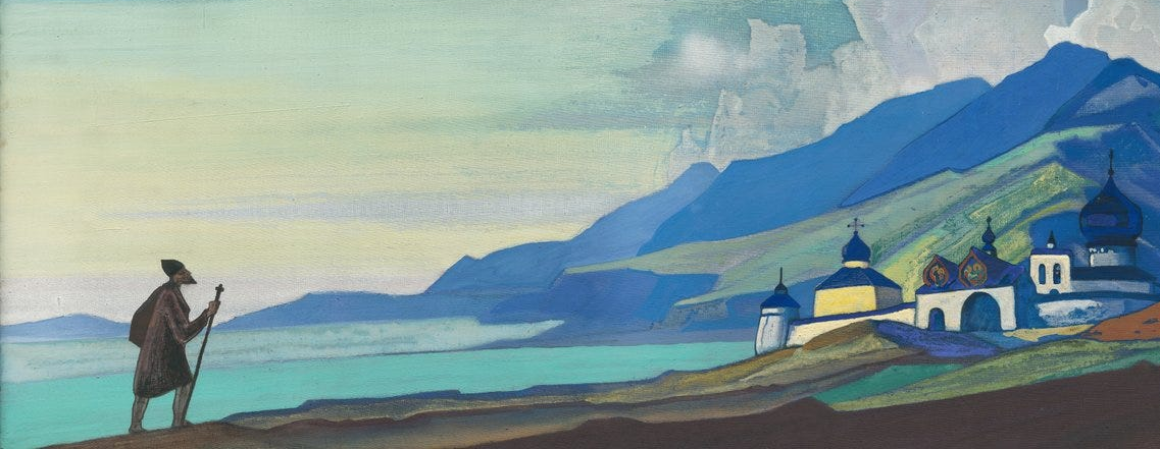
From Palomar we raced lighting;
Thunderhead pounding summer heat,
Electric thrust of pure chaos
Striping the blasted plateau.

With the wind we bolted,
Chasing the rain,
Urgent, irrational intentions;
Our heads out the windows,
Dashes swerving beneath us,
Birds absent from charged ether,
Dark sheets in the distance.

Droplets gathered like old friends,
Dust-caked wipers turning wet;
Dry indelible desert
Melting away.

And the sage carpet,
Transmuted to blue-green
Beneath the hulking sky,
Blurred at the edges
Of our pursuit.

Wide-eyed, mouths open, we reveled.
Our desires quickening
Life into sharp relief,
Anticipation formed into
Pure emotion.

And then, at the edge
Of the long descent,
We stood at the viewpoint,
Above the arid valley,
Stretching our coats like sails,
The wind nearly uprooting us,
Rain on our faces like tears
Of ecstatic joy.

We longed for the rain,
Like wild men look for God,
Like there was nothing else.

-June 1998/May 2007

der letzte kameramann

I recently “discovered,” to both my delight and chagrin, Karl Freund. Who was Karl Freund? Just one of the most influential cinematographers, ever. And I, hack cinephile, had never heard of him. So probably what I am so excited about is old news for most. Anyway…

My search began when I decided to start writing about some of my favorite cinematographers. For some reason (or whim) I wanted to find out who shot Der Letzte Mann (1924), American title: The Last Laugh – a great, great film by F. W. Murnau and a stunning example of German Expressionism. I love that film, but I did not know who shot the thing. So I went looking, and that’s how I found K. Freund.


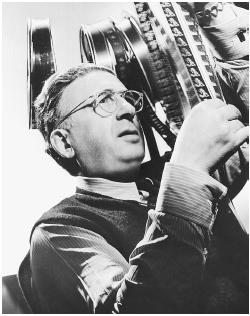
Publicity shot of Karl Freund (date?)

Somehow I feel as though I have stumbled upon a lost or forgotten treasure. And yet, I have come to realize my discovery is really no discovery at all, rather my stumbling is the product of not having paid attention.

Karl Freund (b.1890, d.1969) was one of the most significant and talented cinematographers of all time. His influence probably cannot be measured because it would be impossible to calculate such a force. And yet, I’m sure he does not get the kind of recognition heaped upon more modern cinematographers. Merely taking a look at the list of films he shot conveys a remarkable career.

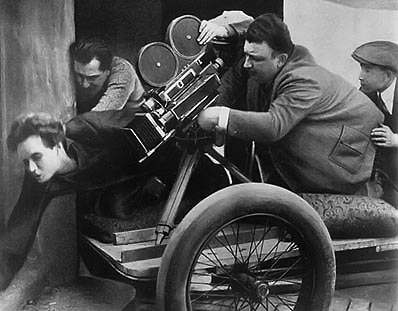
Freund and crew in action (Metropolis?!)

For starters, he began his career as a cinematographer in Yugoslavia in 1912 on the film Jadna majka. He was twenty-two years old at the time. That is the same year that the pioneering cinematographer G. W. Bitzer shot The Musketeers of Pig Alley (aside: Bitzer shot a remarkable 68 films in 1912. Whew!).

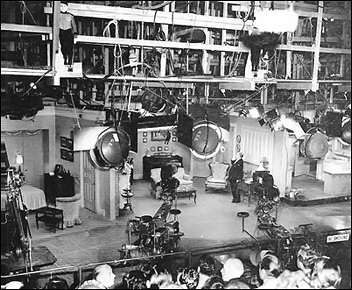
Freund finished out his career developing the three-camera method for live television on the pioneering television show I Love Lucy (for thirteen episodes from 1951 to 1956).

Freund on the set of I Love Lucy checking light
levels before an evening’s shoot.
In between working the earlier days of silent film in Yugoslavia to working during the golden age of television in Hollywood, Freund created an illustrious career. Consider just this sample of films for which he is credited with having shot: The Golem (1920), Chained (1924), The Last Laugh (1924), Metropolis (1927), All Quiet on the Western Front (1930), Dracula (1931), Murders in the Rue Morgue (1932), The Good Earth (1937) for which he won an academy award, and Key Largo (1948). There are many more (133 total) excellent, and average, films he shot not listed here. He also directed several films, including The Mummy (1932).

Something I found interesting is that on Freund’s last film he helmed, Mad Love (1935) he worked with a thirty-one year old cinematographer by the name of Gregg Toland. As we all know, Toland became most famous for his collaboration with Orson Welles on Citizen Kane (1941). But what I also found interesting is that, prior to Kane, Toland had already been nominated for an academy award in cinematography in 1938 for Dead End (1937). And he lost that year to Freund! I think it may be fair to say that Kane‘s stylistic and thematic influences, so obviously rooted in German Expressionism, can be traced back, in part, to Freund’s influence on Toland, both through collaboration and through friendly competition.

We should never forget how brilliant many filmmakers were even though they worked within studio systems and not as so-called “free” artists. Freund made his career with studios such as UFA, Universal Pictures, MGM, Warner Brothers Pictures, and CBS Television. And yet, he seemed to find his own way and produce great work.
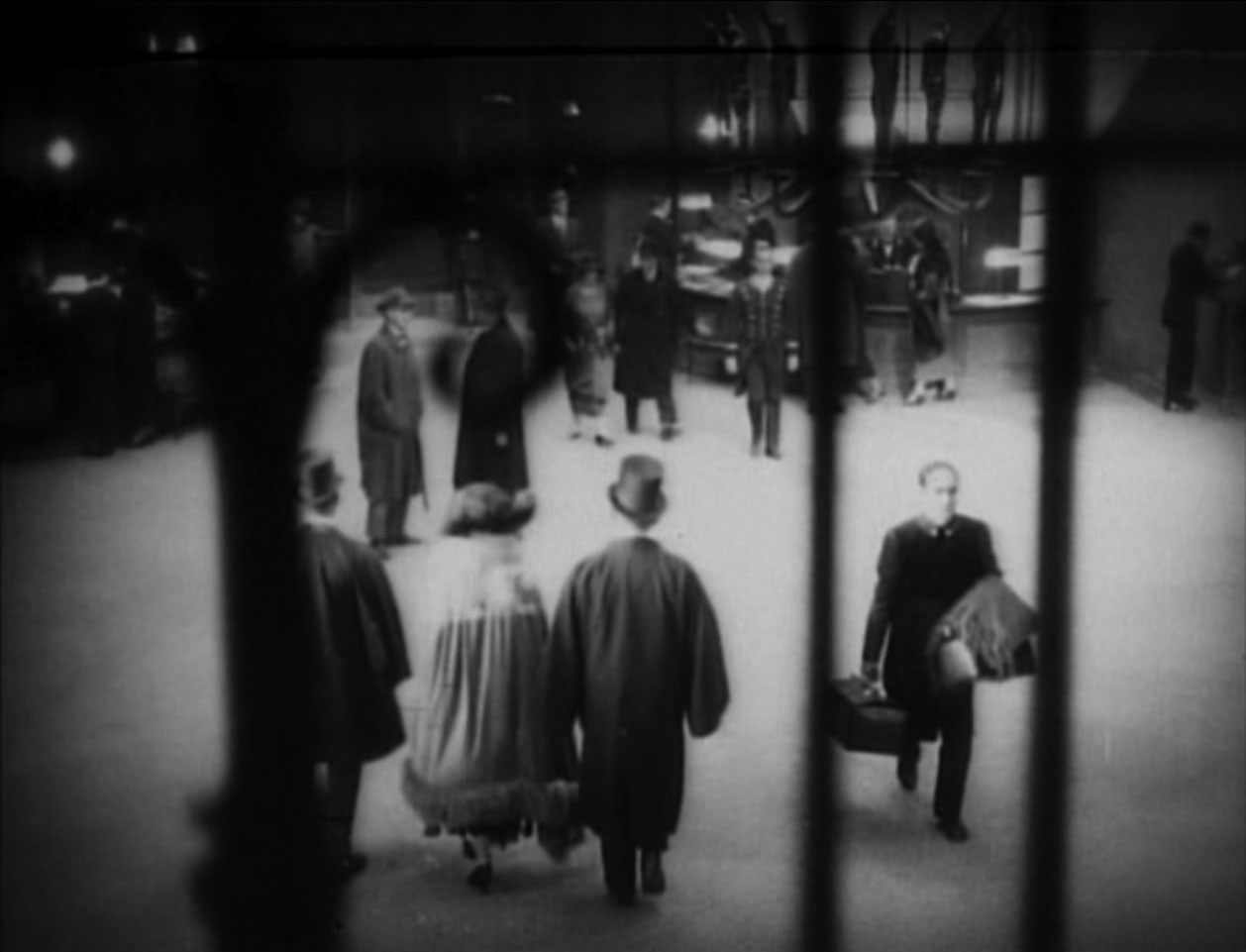
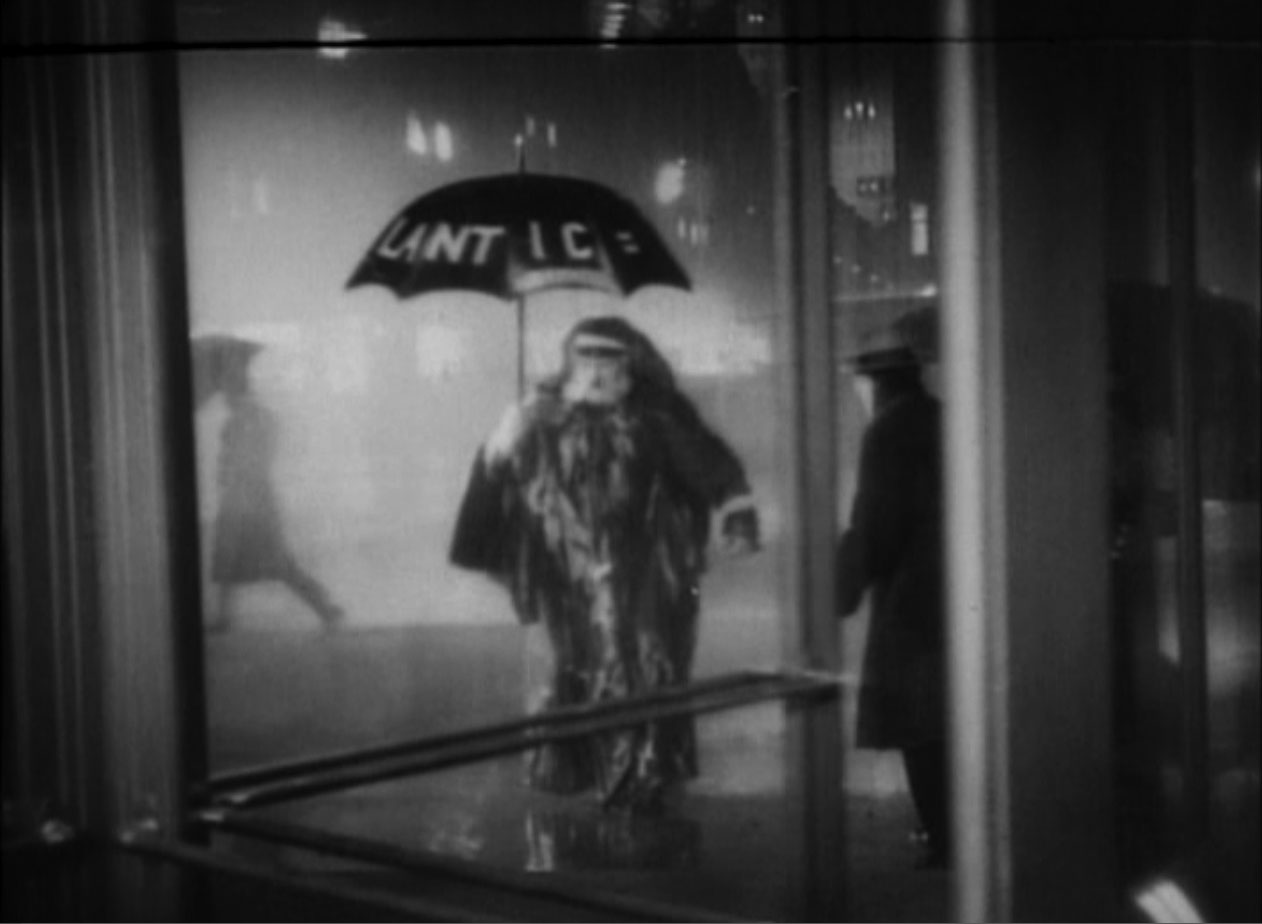
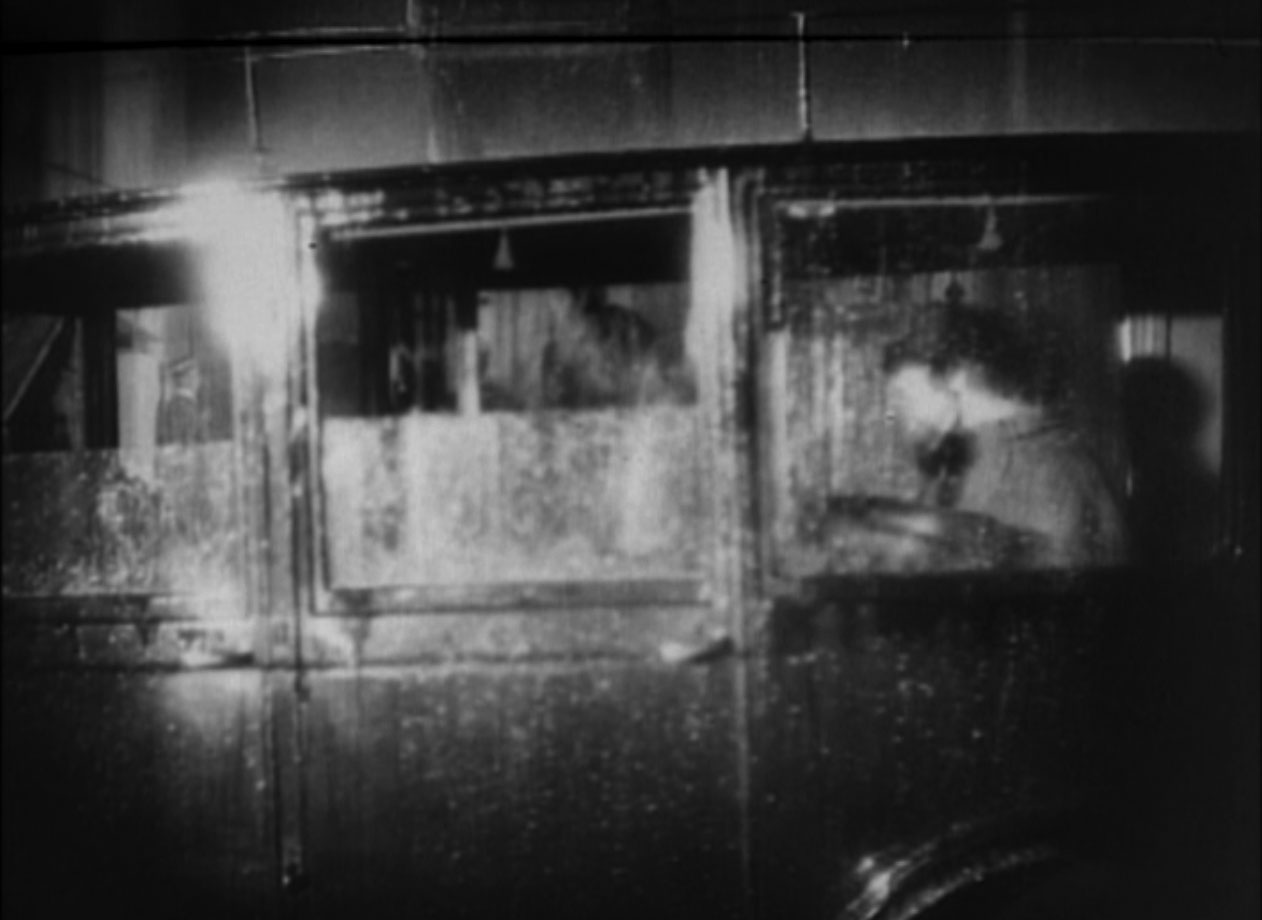
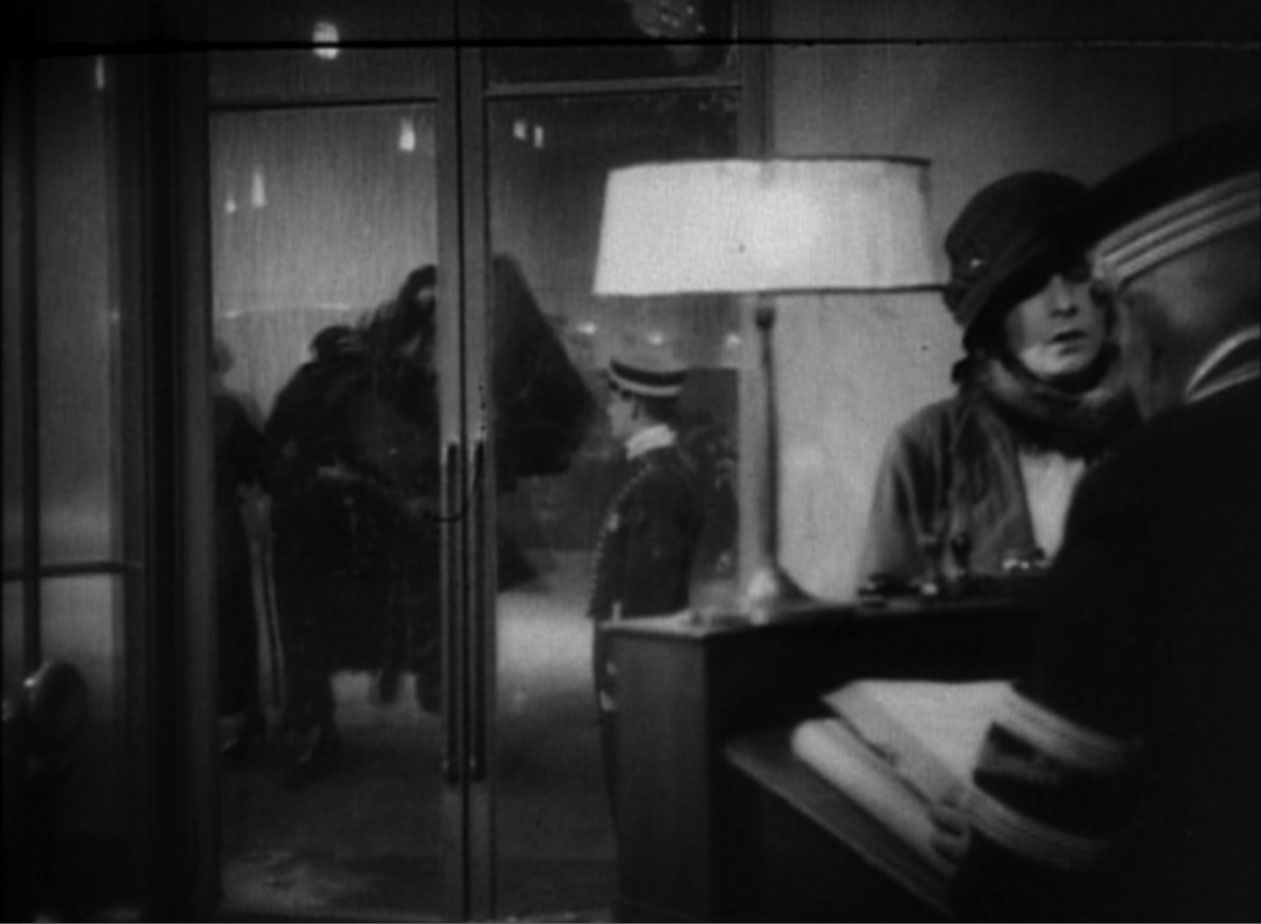
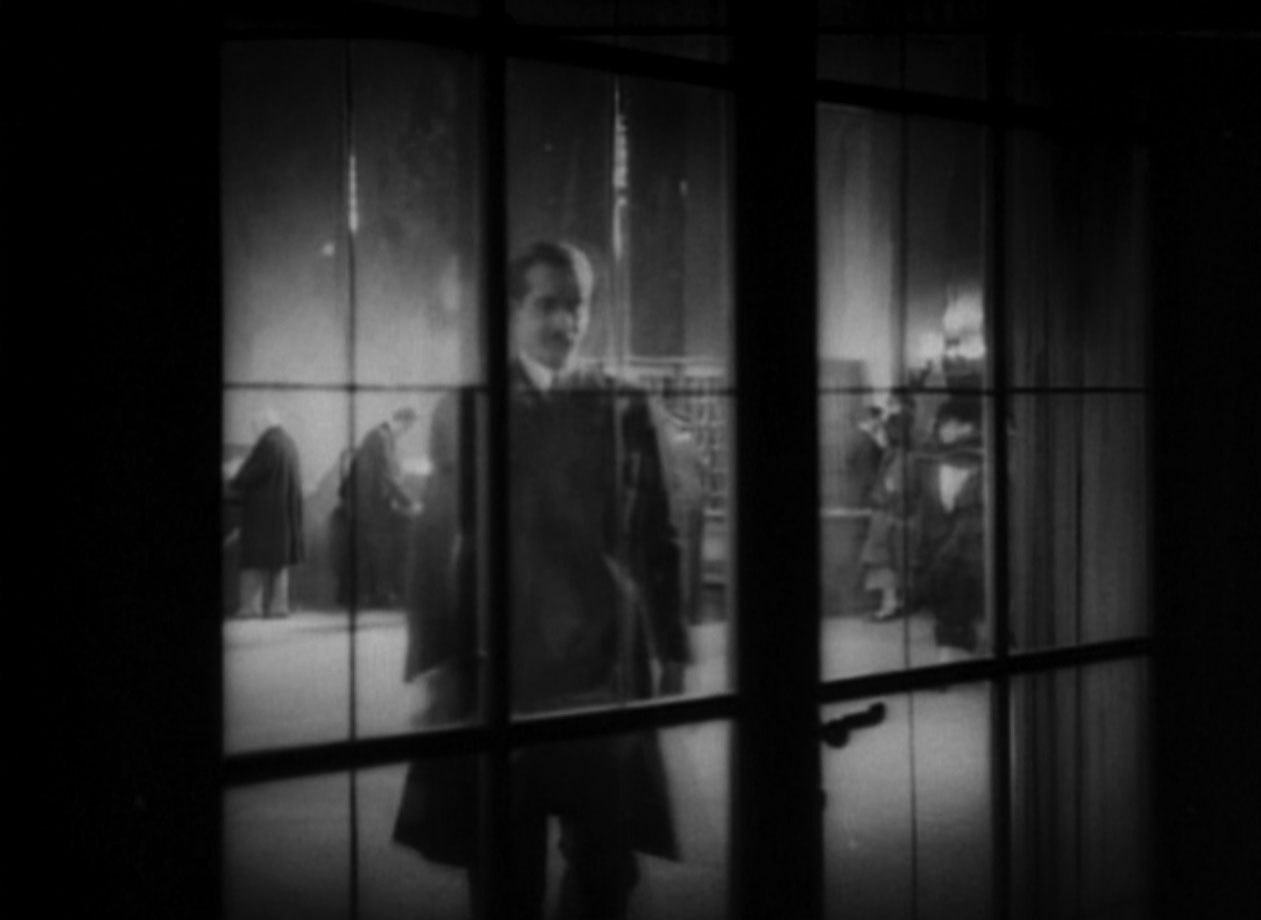
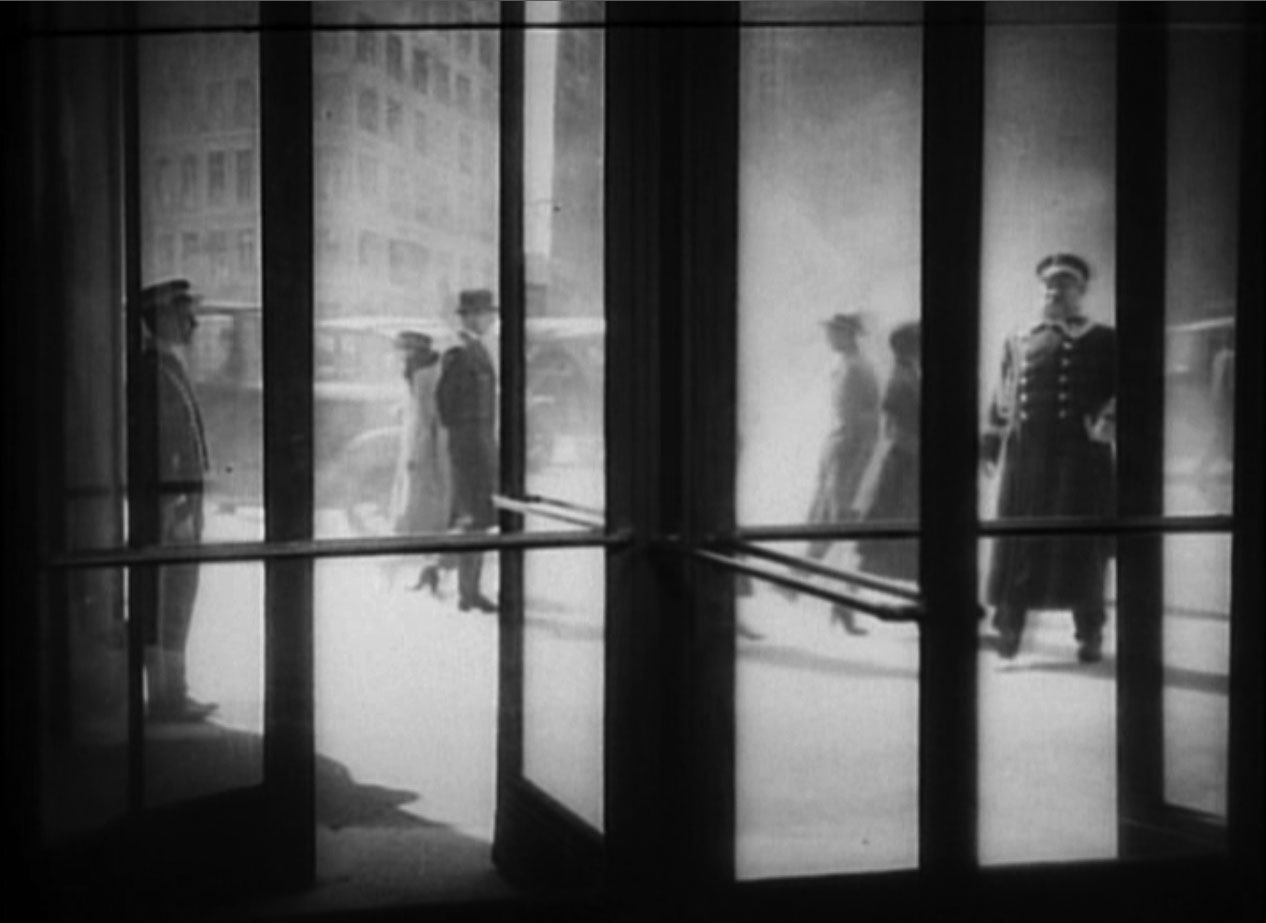
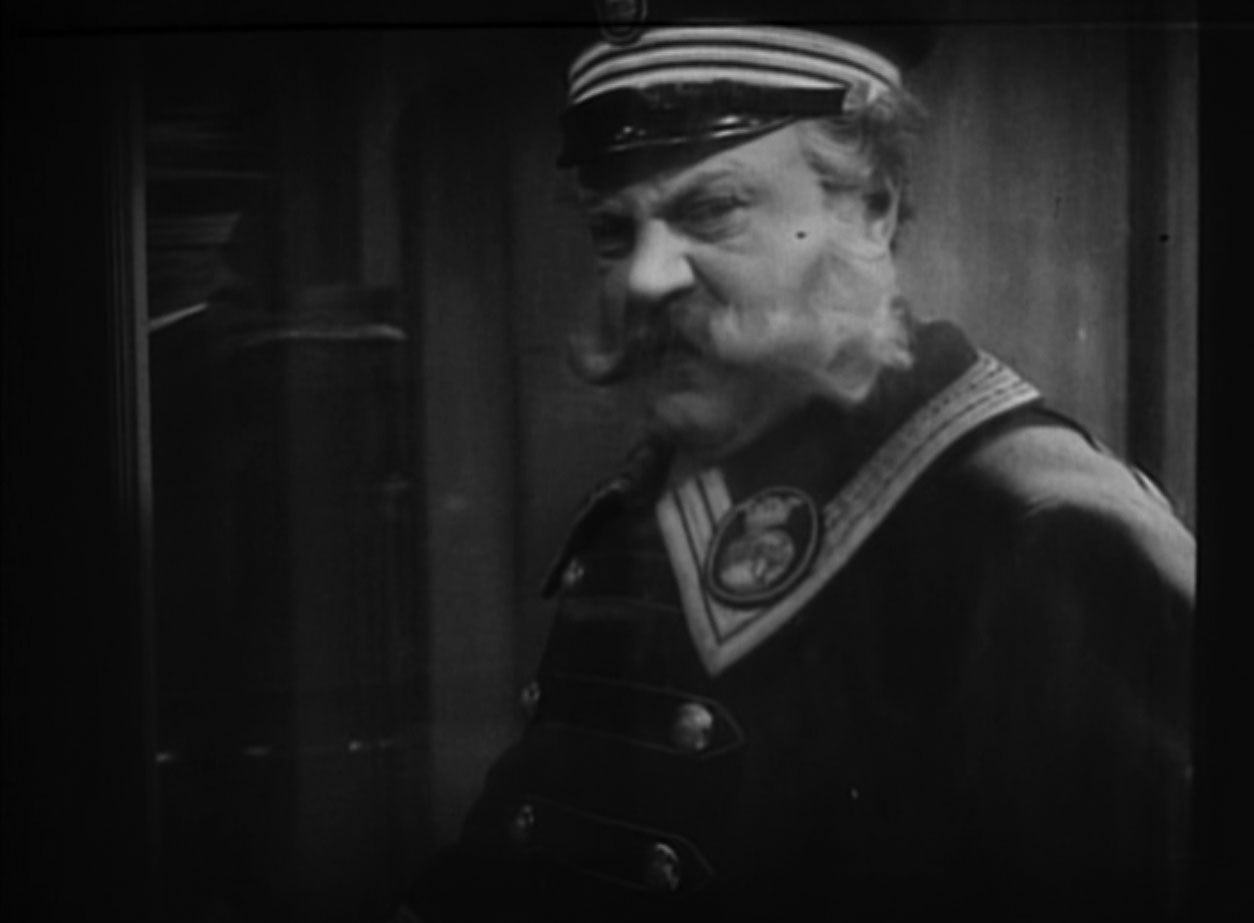
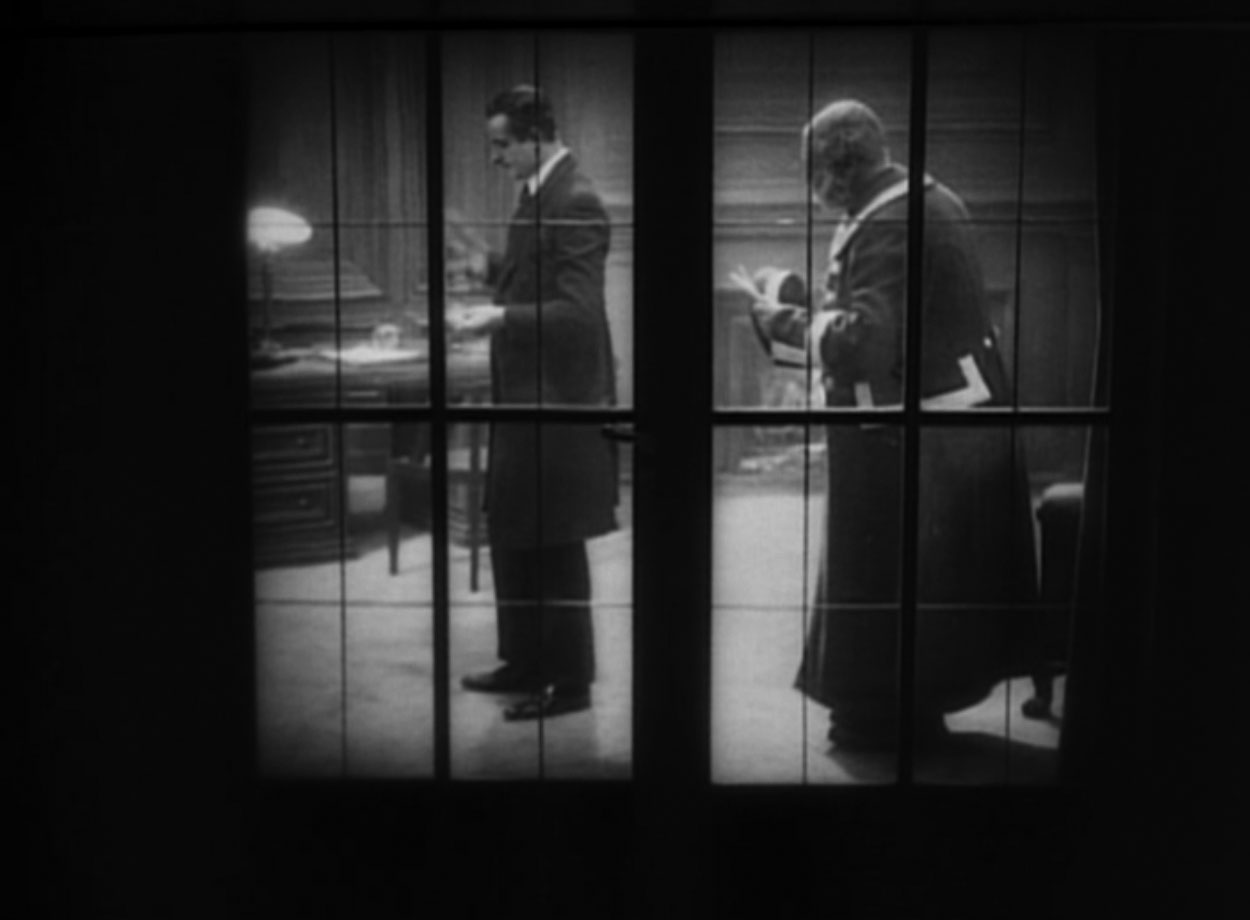
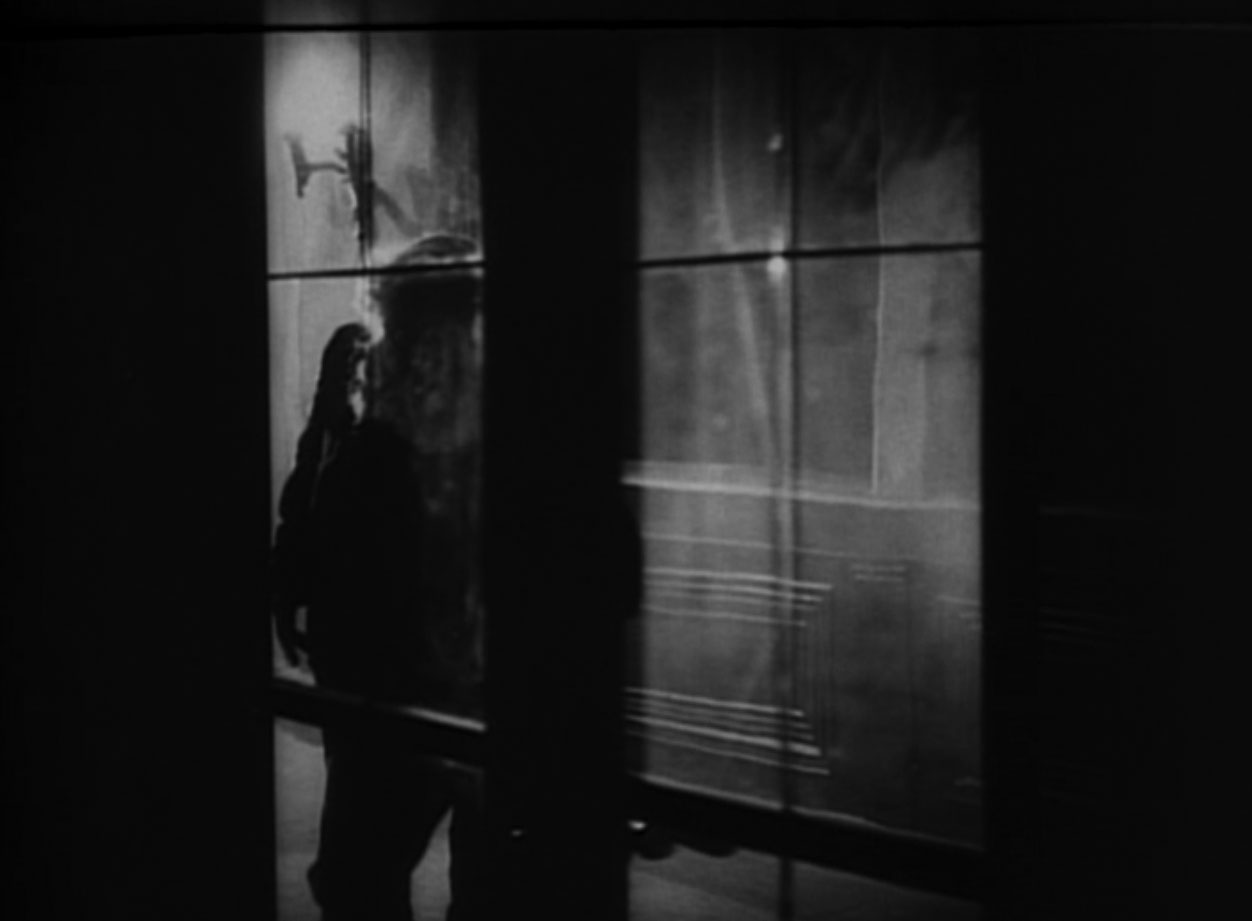
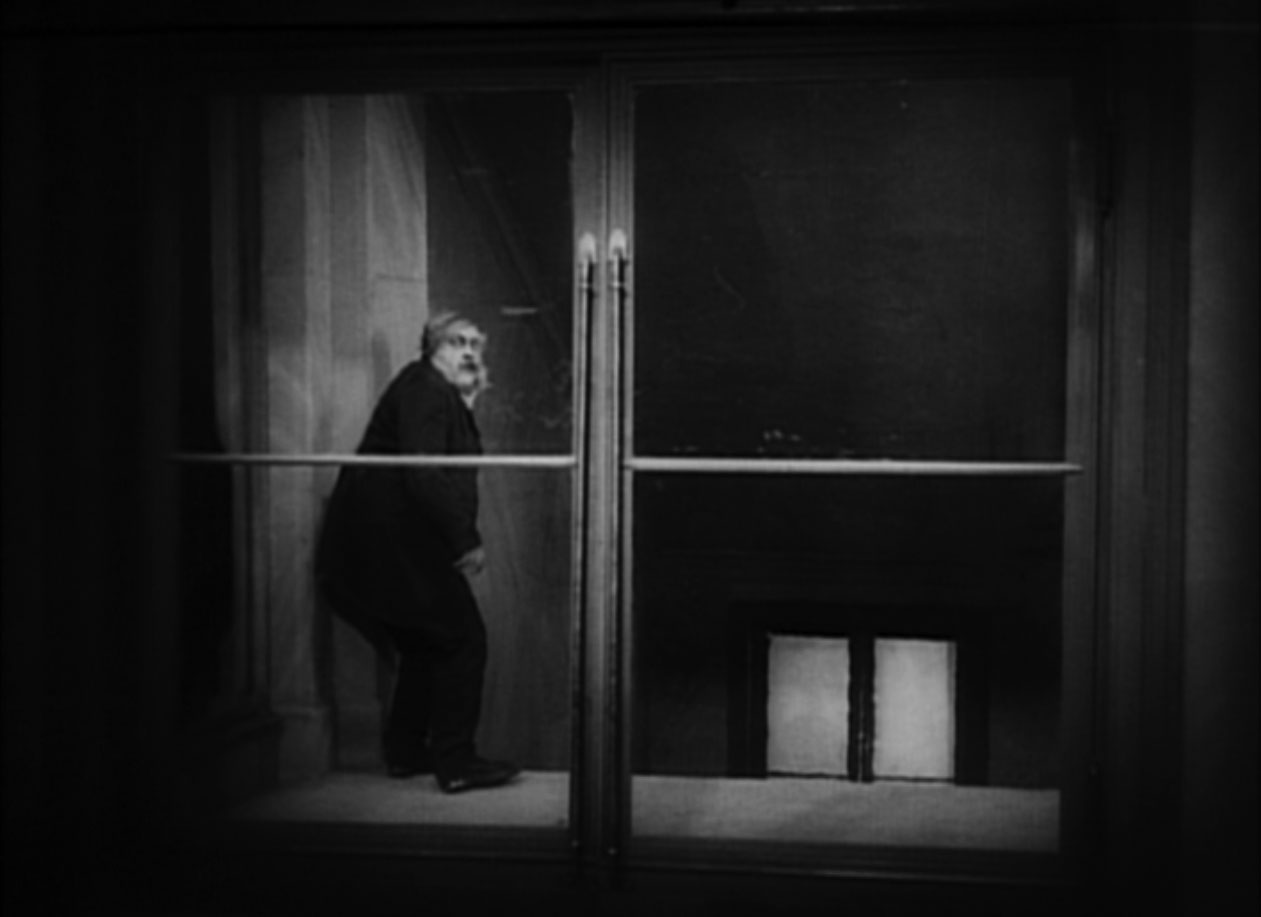
In Der Letzte Mann (or The Last Laugh) Karl Freund produced many beautiful and stunning images, including wonderful camera movements and complicated tracking shots. One thing I noticed was how much of the film is photographed looking through things: glass, rain, smoke, railings, etc. The following are twelve quick screen grabs showing this “looking through” aesthetic.

The film opens with the camera riding down in an elevator to the lobby of the Hotel Atlantic.

A number of shots feature the great revolving glass door of the hotel entrance.

Here we see both through the rain glistened windows of the automobile and through the open window to the other side.

A shot in depth with our hero struggling with a heavy steamer trunk outside the hotel doors.

The hotel manager walking back to his office.

The revolving doors again, during the day time.

Our hero walking through the revolving doors. Notice the subtle reflections on the glass.

Our hero being given his walking papers by the hotel manager.
Our hero sneaking in to the hotel at night.
Shadow images of people through frosted glass.
Our hero sneaking out of the hotel.
The hotel dining room with diners in the distance behind frosted glass.
One of my majors in college was Art History. During that time I studied the grand sweep of artistic production from pre-historical cave paintings to post-modern art. On a time-line, cinema is almost just a blip, a little over a hundred years old. What I find so interesting is that with an artform of such limited history, there is still so much to discover and re-discover. For me, the personal discovery of Karl Freund is a real treat.

100 Spiritual Films

When I was a boy I went to a summer camp that was run by the Baptist church of which my family was a part. At that camp I saw the famous/infamous Christian exploitation (christploitation?) film A Thief in the Night (1972). I say exploitation film for two reasons: (1) the film has that kind of low-budget, relentless, somewhat campy style one finds in other exploitation films, and (2) the film clearly falls into the category of the “scare them to Jesus” works of “art.” Certainly I was a scared little boy. For years I was haunted by that film. Fortunately I have grown up and only carry the scars.

When I was in college I lived in a couple of different co-op living places (20-25 students, loosely managed, trying to get along, etc.). I remember some of the the best times were watching great films and then having long discussions after. What I discovered during that time was the spiritual nature and power of films. A power, and I should say truth, significantly deeper and more profound than with films such as A Thief in the Night. In particular, I remember some great discussions around Grand Canyon (1991), Mindwalk (1990), Henry V (1989), The Last Temptation of Christ (1988), and Drugstore Cowboy (1989).

Recently I came across the Art & Faith forum site and noticed the biggest category of discussion centers around film. They even have a Top 100 Spiritual Films list, which I have reproduced below. The link for each film will take you to the Art & Faith write-up of that film. As one would expect from a Christianity-based site called Art & Faith, there are some particularly “christian” films, like the obvious films about Jesus and saints (some of which are excellent – Pasolini’s version of the Gospel story, for example). But there are also some films one might not expect, like those by Kieslowski, or by Rossellini, or films from Japan, etc. For me, I don’t see any contradictions, but for some Christians this list might be a bit of a shock. That is one reason I list the Top 100 Spiritual Films list here:

1 Ordet (aka The Word)
2 Le Fils (aka The Son)
3 The Miracle Maker (aka The Miracle Maker: The Story of Jesus)
4 The Gospel According to Matthew (aka Il Vangelo Secondo Matteo)
5 The Diary of a Country Priest (aka Le Journal D’un Curé De Campagne)
6 The Passion of Joan of Arc (aka La Passion De Jeanne D’arc)
7 The Decalogue (aka Dekalog)
8 Babette’s Feast (aka Babettes Gæstebud)
9 A Man Escaped (aka Un condamné à mort s’est échappé ou Le vent souffle où il veut)
10 Andrei Rublev (aka Andrey Rublyov)
11 Balthazar (aka Au Hasard Balthazar)
12 The Seventh Seal (aka Det Sjunde Inseglet)
13 Ikiru (aka To Live)
14 Winter Light (aka Nattvardsgästerna)
15 The Mission
16 The Apostle
17 Three Colors Trilogy
18 Jesus of Nazareth
19 Jesus of Montreal (aka Jésus De Montréal)
20 The Flowers of St. Francis (aka Francesco, giullare di Dio)
21 Dead Man Walking
22 Stalker
23 Magnolia
24 La Promesse
25 Sunrise: A Song of Two Humans
26 Tender Mercies
27 A Man for All Seasons
28 Wings of Desire (aka Der Himmel über Berlin)
29 Day of Wrath (aka Vredens dag)
30 Yi Yi: A One and a Two (aka Yi yi)
31 The Hiding Place
32 Wild Strawberries (aka Smultronstället)
33 Rosetta
34 After Life (aka Wandafuru raifu)
35 The Sacrifice (aka Offret – Sacrificatio)
36 To End All Wars
37 Chariots of Fire
38 Shadowlands
39 The Big Kahuna
40 Not of This World (aka Fuori dal mondo)
41 Schindler’s List
42 Millions
43 The Straight Story
44 A Taste of Cherry (aka Ta’m e guilass)
45 The Passion Of The Christ
46 Becket
47 Wit
48 Open City (aka Roma, città aperta)
49 Nazarin (aka Nazarín)
50 Secrets & Lies
51 Romero
52 Places in the Heart
53 It’s A Wonderful Life
54 Ponette
55 Les Misérables
56 Luther
57 Tokyo Story (aka Tokyo Monogatari)
58 Hell House
59 Breaking The Waves
60 Crimes And Misdemeanors
61 To Kill a Mockingbird
62 The Mirror (aka Zerkalo)
63 The Last Temptation Of Christ
64 The Gospel of John
65 Hotel Rwanda
66 Fearless
67 Solaris (aka Solyaris)
68 The Night Of The Hunter
69 Cries and Whispers (aka Viskningar och rop)
70 Stromboli
71 Stevie
72 Dogville
73 My Night at Maud’s (aka Ma nuit chez Maud)
74 Black Robe
75 Close-Up (aka Nema-ye Nazdik)
76 The Apu Trilogy
77 Werckmeister Harmonies (aka Werckmeister harmóniák)
78 Waking Life
79 Koyaanisqatsi (aka Koyaanisqatsi – Life Out of Balance)
80 Peter and Paul
81 13 Conversations About One Thing
82 The Sweet Hereafter
83 Dersu Uzala
84 Trial of Joan of Arc (aka Procès de Jeanne d’Arc)
85 Summer (aka Le Rayon vert)
86 Fiddler on the Roof
87 The Bicycle Thief (aka Ladri di biciclette)
88 The Year Of Living Dangerously
89 Money (aka L’Argent)
90 The Elephant Man
91 Faust
92 Molokai: The Story of Father Damien
93 A Moment of Innocence (aka Nun va Goldoon)
94 Jean de Florette / Manon of the Spring (aka Jean de Florette / Manon des Sources)
95 Sansho the Bailiff (aka Sanshô dayû)
96 Lilies of the Field
97 The Wind Will Carry Us (aka Bad ma ra khahad bord)
98 The Addiction
99 The Song of Bernadette
100 Tales of Ugetsu (aka Ugetsu monogatari)

I have not seen all the films of this list, in fact there are a lot I have not seen. But I will say that the ones I have seen are all great for those late-night discussions around the core issues of living and being human. And some of the films offer great opportunities to discuss the power of art and film – as a kind of bonus. In general, I think this is a great list.

>a legacy

>Yesterday I watched Nashville (1975) and then followed it up with A Prairie Home Companion (2006). This is a review of neither, rather just a small reflection. In short, watching these films got me thinking about mortality.

I chose Nashville because it is a film I have always wanted to see and it is on my “must see” list (my own film challenge). I chose A Prairie Home Companion because I figured I should see Altman’s last film, and it was just sitting there on the shelf at the library looking right at me. And then it occurred to me that this might make a great double feature. But alas, it is not a great double feature. Nashville is undeniably a masterwork, A Prairie Home Companion is much less. I suppose, at a deeper level, it might be an interesting comparison for someone else to do. I’m sure someone already has.

[Nashville = quintessential Altman, a paragon of his oeuvre. A Prairie Home Companion = less like an Altman film and more like a muddled Alan Rudolph film.]

What I did think about is the idea of a career-arc, and how quickly time flies, and how the span of time can disappear when you have two DVDs in your hand that represent work done 30 years apart. Consider these two parings of images:

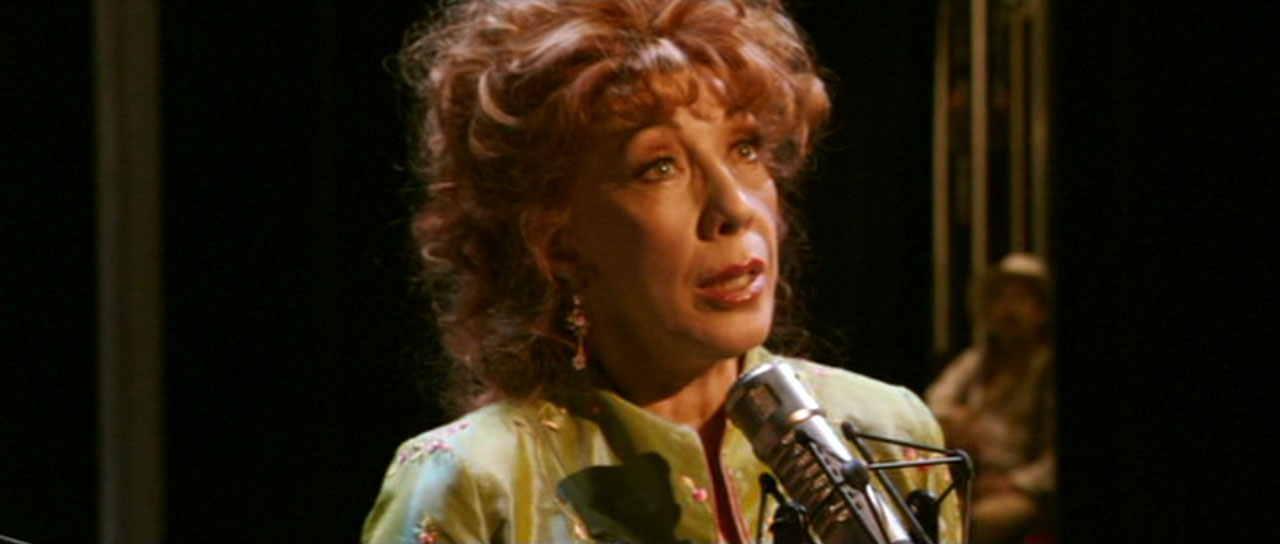
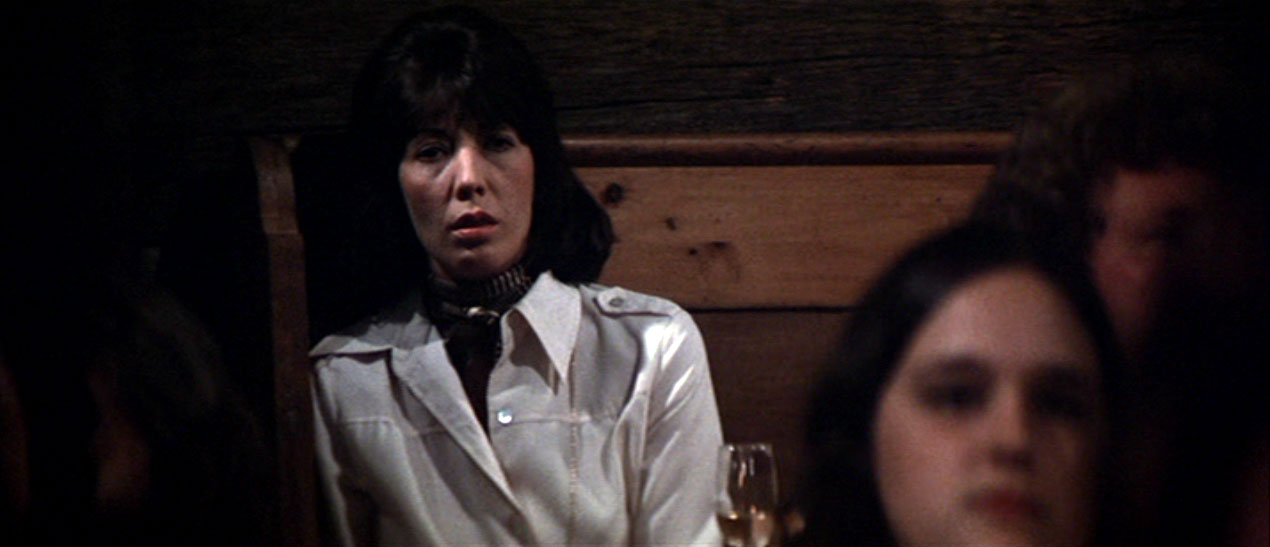
Tomlin in A Prairie Home Companion


Tomlin in Nashville


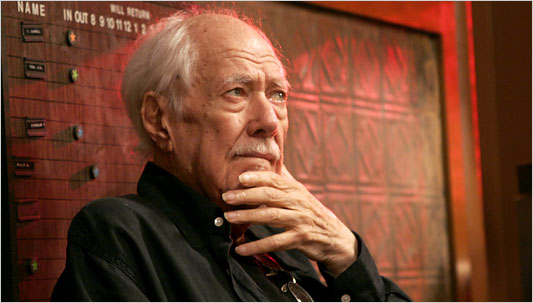
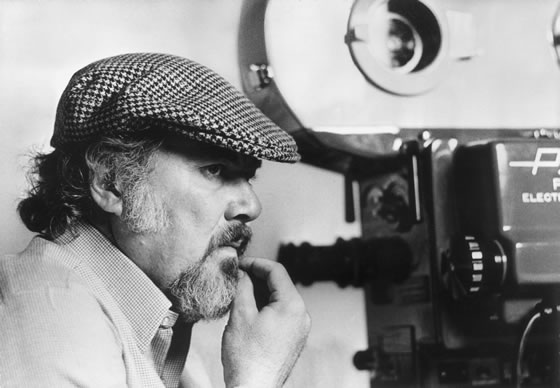
Altman on the set for A Prairie Home Companion


Altman in 1974 (on the set for Nashville?)

Both of these individuals are (Tomlin) or were (Altman) gifted artists. But like me, they are mortal. I am reminded of that quote attributed to Woody Allen: “I don’t want to achieve immortality through my work. I want to achieve it through not dying.” I found watching these two films back to back to be a somewhat sobering experience (and therefore a good experience). I found myself wondering what it is that I will leave behind when I’m gone. What will be my legacy?

>being content (more or less)

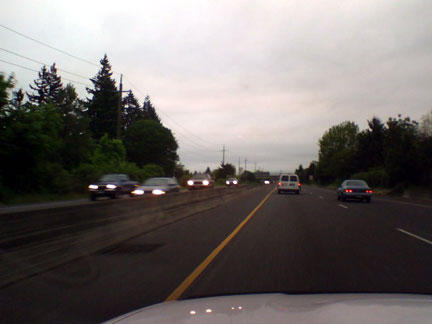
>my drive to work (6:15 AM)

my arrival at work

my desk at work

I became convinced years ago that the purpose of life is not to find ultimate fulfillment in one’s job. I believe this to be true even for those who have found the “ideal” job. Regardless, I do have a job (thank God) which takes up a great deal of my time. I am also in school, going after a Masters degree, and I have a family (thank God even more), all of which are “full time” in one way or another. But I am a lover of art as well, not least of which includes cinema. Like many others in similar situations, I ask myself where can art fit into my life so that I get what I need without placing a burden on my relationships, or jeopardizing the rest of my life, or feeling guilty that I am catering to frivolous things.

I don’t have a clear answer and I don’t know if there is one. But I think I can boil it down to some essentials:

  • Art is inherently good (self-justifying) and deserves a place in one’s life.
  • Life is not about work, but it is also not about art.
  • Life is about loving others and seeking wisdom. How that plays out in one’s life is unique to each person.
  • Time management is not a bad thing.
  • Being content (“sophrosune”) is a good thing to strive after.
  • There are too many films to watch and too many books to read in one’s lifetime, and there are more arriving every day. So pace yourself, set appropriate expectations, and take a deep breath.
  • People are more important than works of art.
  • It’s really a question of life, so you have to figure it out for yourself.

And at the end of my work day, I go home (or to school and then home) and reconnect with my family. Then I try to get things done that need to be done, and I look over at that stack of movies and hope I might fit them in to my life. Invariably I return some films without watching them, only to check them out again (I get most of them from the library) and once again try to fit them in.

So, I make my way through each day, each week, each year, seeking a fuller life. I try to be smarter, wiser, more loving, and more reliable. And, of course, I try to get more art into my life. In short, I am like anyone else, muddling through in my own selfish way trying to be less selfish. I wish you all better success than I.

my drive home (4:00 PM)

>inside Outer Space

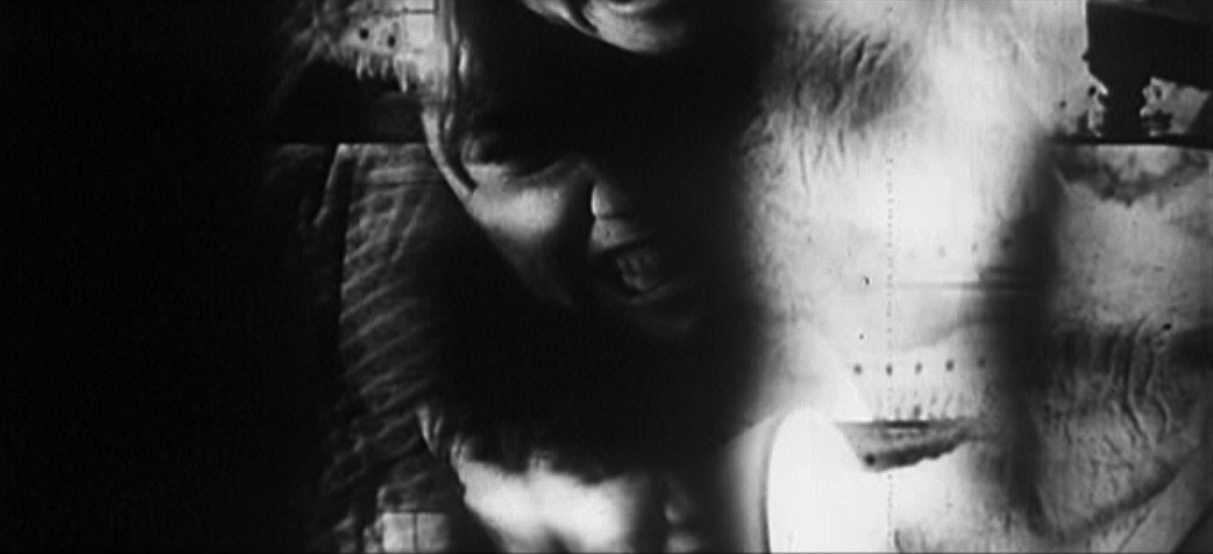
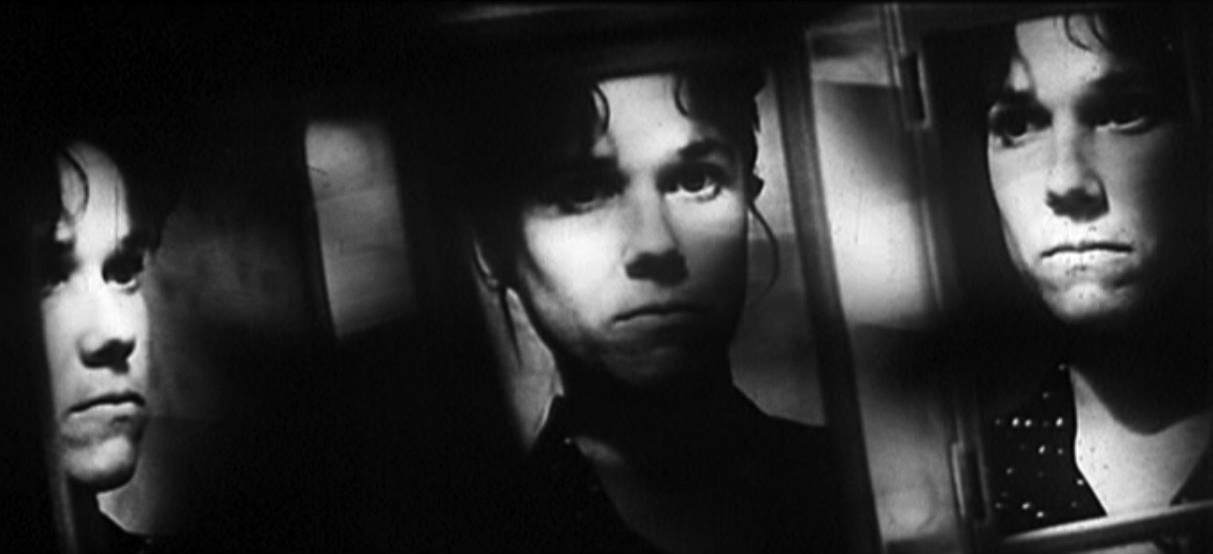
>There is no doubt that Peter Tscherkassky’s Outer Space (1999) is a nearly maniacal and transformative assault on the viewer. One cannot finish the film (only 10 minutes in length) without experiencing a deeply visceral response. This is not a review per se, but an exploration of the film’s meaning, and a call for other perspectives.

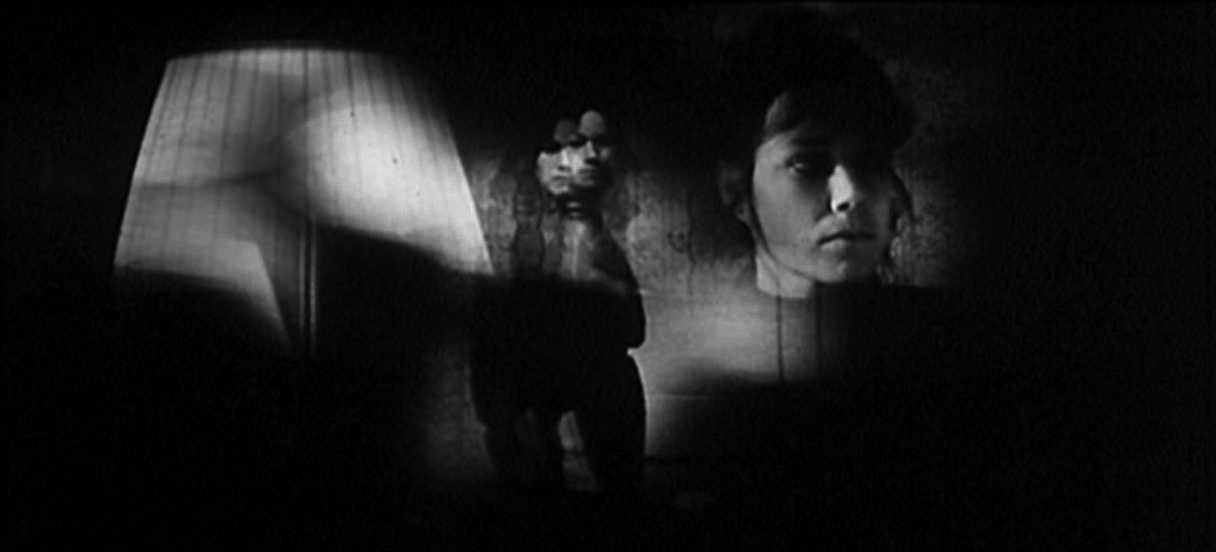
The narrative, or what there is of a narrative, is apparently rather straightforward: A woman (played by Barbara Hershey – though it is found footage from Sidney J. Furie’s 1981 film The Entity) enters a house and seems to be “attacked” by mysterious forces, which may be the film itself (explanation later), and then she seems to disappear/fade into blackness. Consequently, one could classify this film within the common “woman as victim” horror genre, but I think that may limit our understanding.

Regarding the physical film itself being one of the forces, or maybe the only force, attacking the woman has been wonderfully discussed at Senses of Cinema by Rhys Graham in Outer Space: The Manufactured Film of Peter Tscherkassky. Graham places Tscherkassky’s work in a theoretical context by stating:

. . . Tscherkassky is playfully exploding the notion of “film as a mirror” articulated by Christian Metz which was, in turn, stated in opposition to Bazin’s narrative concerned statement that film is a window to the world. As he fragments Metz, who before him fragmented Bazin, we know that Tscherkassky is searching for something more.

This fragmenting is central to Outer Space and to Tscherkassky’s oeuvre in general (so I understand, Outer Space is the only film of his I’ve yet to see). Graham goes on to say:

This is not simply an act of subversion, but something like the fractured cut and paste ethics of avant-garde composers; a mode of using the violent rhythms of delay, rupture, fragmentation, looping and degraded image and sound.

The question I have is whether or not the violent fragmentation of Outer Space is, in fact, an act of violence upon the woman in the film (as part of the narrative), or is it to be understood as a kind of commentary alongside the narrative, a meta-narrative of sorts. Or better yet, a doppelganger at a visually psychic level. In other words, might it be that what the viewer witnesses is the tormented struggle of a multiple personality disorder visually represented in such a way as to convey both the struggle and the terror of that struggle, and in such a way as to elicit within the viewer feelings of almost macabre panic. And all this regardless of whether Tscherkassky had Bazin or Metz in mind at all.

Note: Screen grabs from Outer Space are nearly impossible to obtain with any accuracy because no amount of screen grabs can convey anywhere near the true essence of the film or the viewing experience, especially the hyper-frenetic visuals, not to mention the unusual audio track. But here are several images that highlight some moments in the narrative.

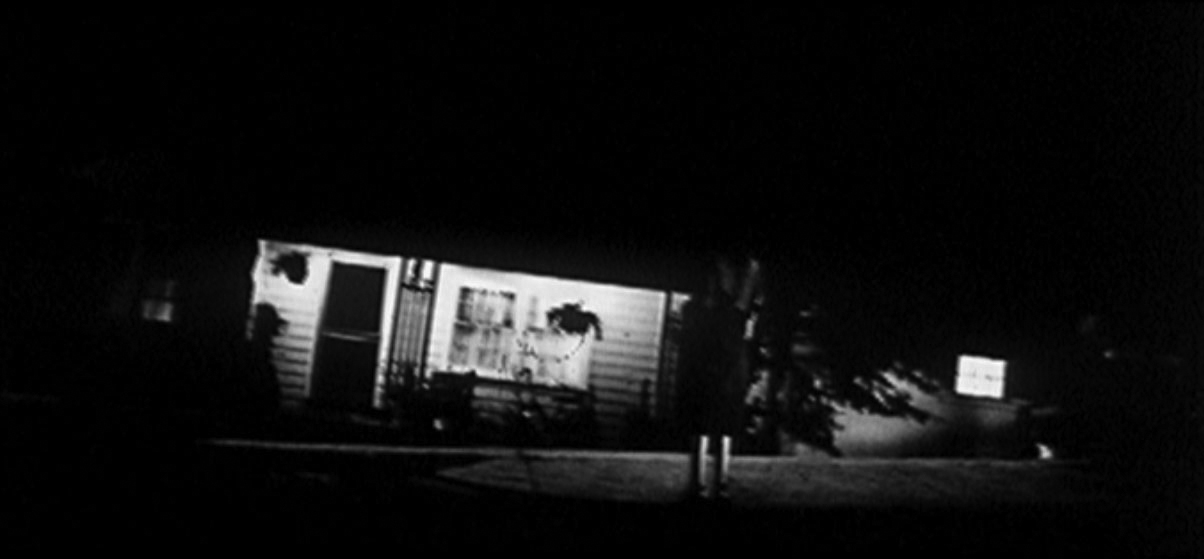
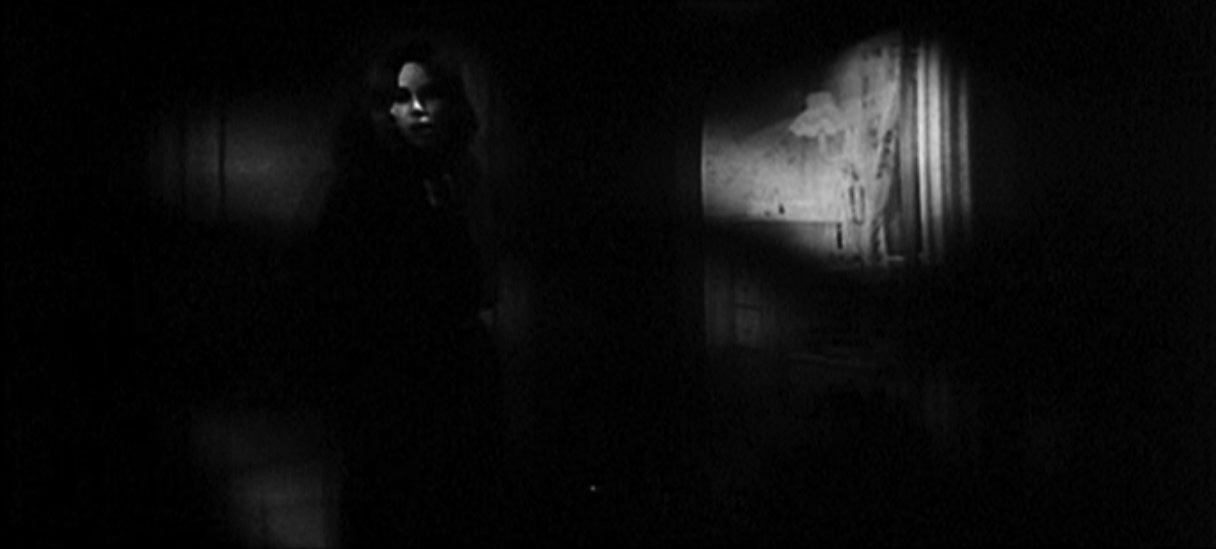
There is a house at night. At first it is just a house, then we see a woman standing outside the house. The house is tilted to the right. Note: at this point the film’s visuals already appear highly unstable often with mere flashes and hints of both the subject and the physical image in a frenetic and almost random manner. This carefully crafted accentuating of the film’s physicality offers reminiscences of scratchy and poorly threaded 16mm educational films shown in school classrooms of days gone by. It should be noted as well that Outer Space is a film that lives in darkness, revealing itself only in bits and pieces, and moves back and forth between the denotative and the connotative without concern for the viewer’s capability for discernment. (Like I said, screen grabs just don’t do it justice.)

The woman begins walking towards the house.

The soundtrack pops and crackles. There is a hint of eerie music, made even more effective by being pushed to the background. There is also no context for the house. The setting seems to be nighttime, but one could also posit that the house might just a well be floating in nothingness – almost like the empty space between time periods in Time Bandits (1981). Now that’s a reference you didn’t expect!

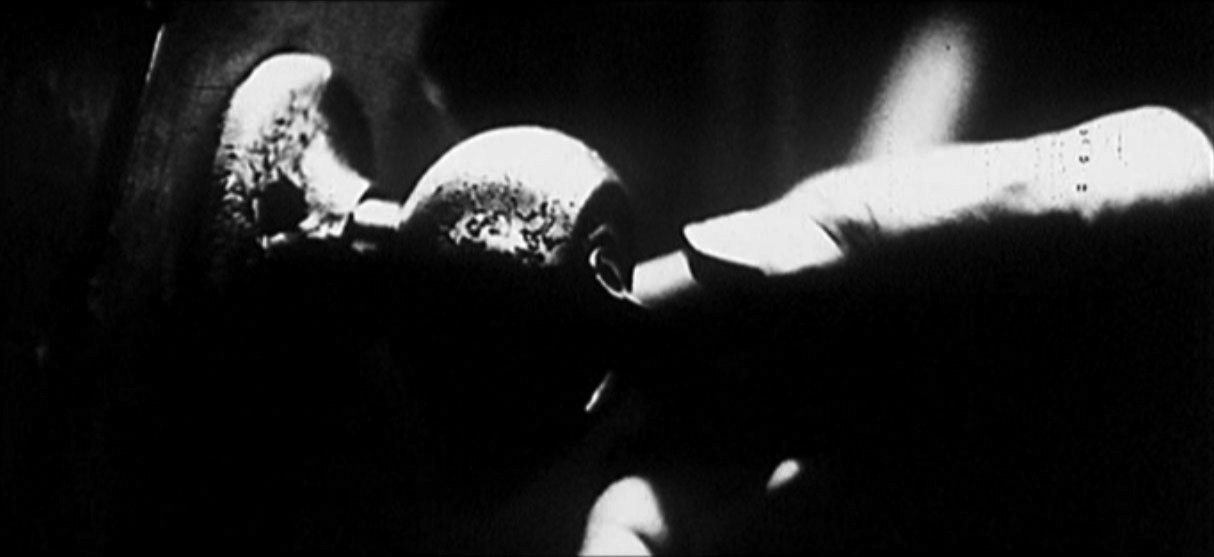
Then a hand reaches for a door knob…

…grabs the knob…

…and turns it.

I highlight this apparently simple action because of its psychic symbolism. I was reminded of Maya Deren’s Meshes in the Afternoon (1943) and its use of psychological symbolism, not least of which include the key, the house with its rooms and staircase, and the going through doors. The narrative in Meshes is not about the world “out there” but the world deep inside one’s subconsciousness (or someone’s subconsciousness). I argue that Outer Space functions in much the same way. The house is not a house, but a psychic space. Turning the door knob is the act of opening up that space.

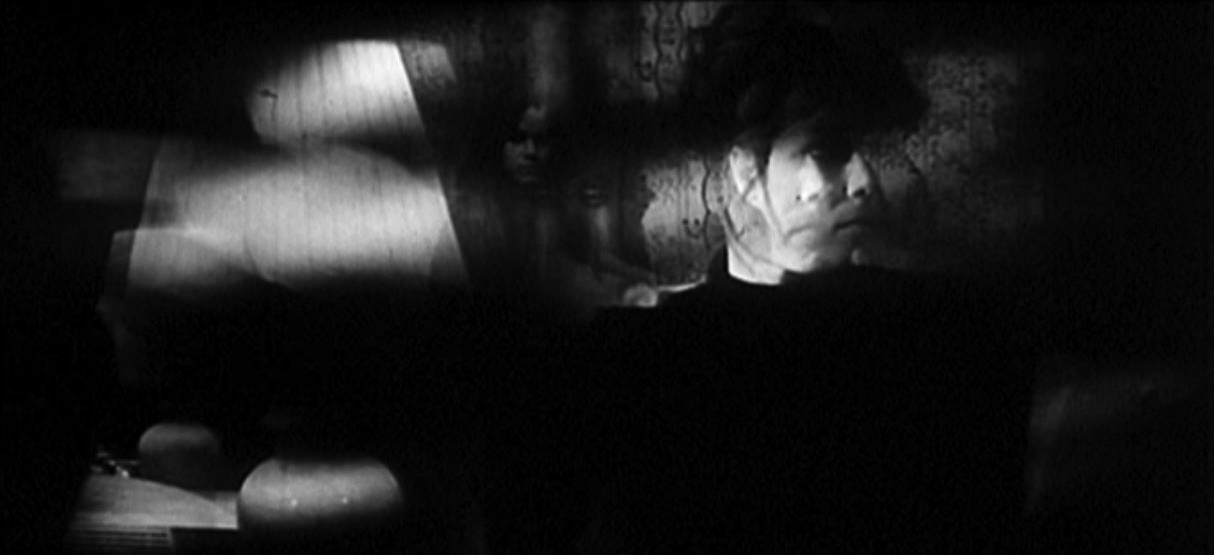
The woman enters the house. Almost immediately there is the possibility of more than one instance of her. In other words, another, second woman appears that is also the first woman, but with her hair down rather than up – the same yet different.

The second woman appears at first faintly in the background…

…then more prominently…

…then the first woman disappears (fades) as the second woman remains. At this point multiple images of the woman come and go, as though competing for a place in the psychic space.

Eventually there are three women seen in the film, all the same woman, yet all slightly different. The film’s frenetic qualities increase and the women seem to compete for dominance, both with each other and with the film.

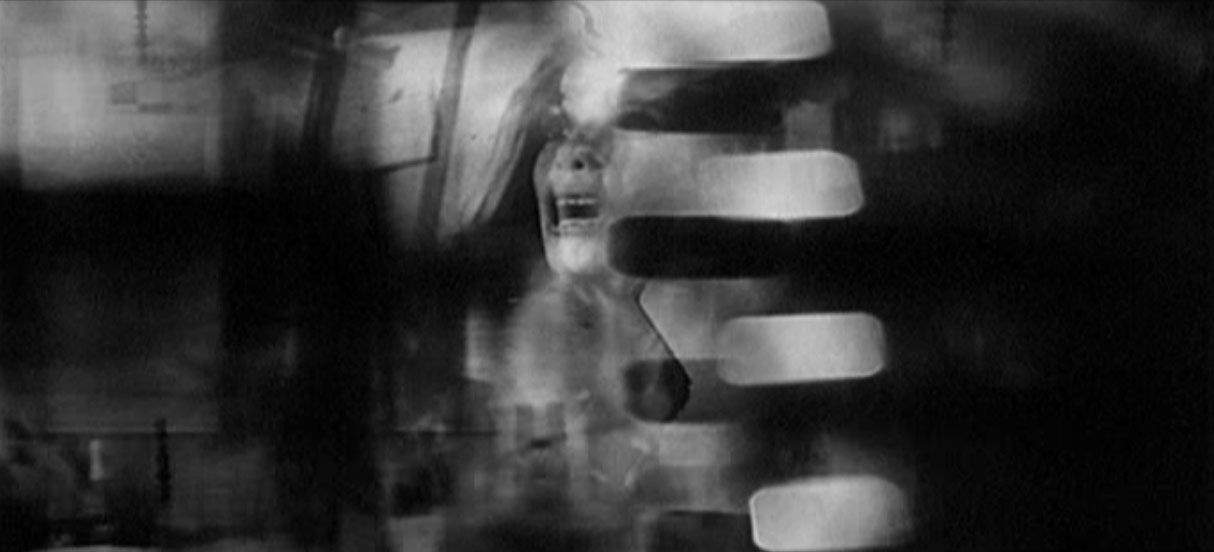
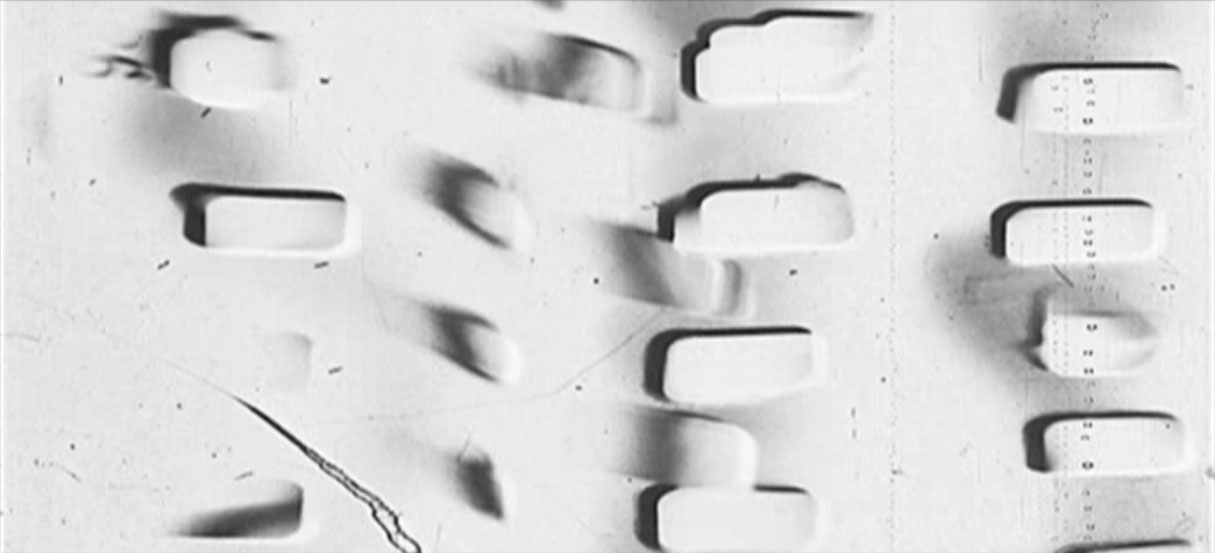
And then, in this already disquiet film, the film seems to jump its sprockets and come free. Notice the sprocket holes through the middle of the image (below).

The woman becomes fearful as the physical film begins to take over the narrative space.

Eventually the physical aspects of the film (sprocket holes, frames, etc. – along with a soundtrack hard to describe) completely take over.

At this point the viewer is now being assaulted by the film via an intense stroboscopic effect. And eventually the physical film begins to subside and the house once again asserts itself.

We come closer to the house, look into its windows and see the woman again. The film seems to assert itself again over the woman. But the woman (is it the first woman?) directly fights, almost as though attacking the viewer or camera. She attacks and attacks…

…but as she does so, she also begins to fragment…

…and eventually she must come to a point of apparent resignation.

And then she slowly disappears into the darkness.

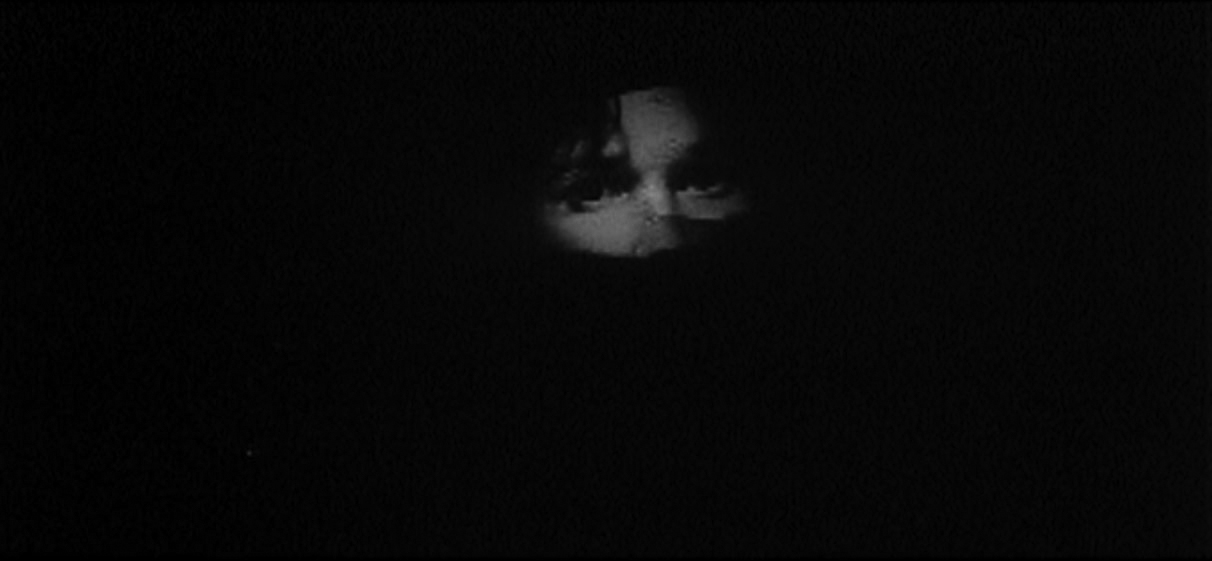
What we are left, at the end of the film is once again where we began, in blackness. The woman has faded into a non-contextual blackness, into nothingness.

The physicality of the film as a narrative element raises the question of the “film as mirror” and thus film as theory of film. But is this really what this film is concerned with? Is this truly a story of a woman and a film fighting each other? Or might we see the tremendous noise (visually and audibly) created by the film as a kind of metonymic foray into the disturbing psychological depths of a person fighting at their inner core – whether it be a spiritual fight or a psychological one? In this sense, the film is not about a woman fighting against a/the/all film, but a woman struggling with deep forces within her. Tscherkassky has had to grapple with the key issue that every artist must grapple, that is how best to convey one’s ideas or instincts with the materials at hand. In Outer Space he succeeds brilliantly – and leave us a kind of post-modern talisman with evocative muscle.

Outer Space is available on DVD from Other Cinema as part of the collection Experiments in Terror.